Phonk is a subgenre of hip-hop and trap built on grainy samples of 1990s Memphis rap, a ringing cowbell melody, distorted 808 bass and chopped-and-screwed vocals. Most modern phonk runs at 130 to 160 BPM and sounds like a cassette that has been dubbed too many times. Since the late 2010s it has become one of the internet's most recognisable sounds.
This guide covers where phonk came from, how to recognise it by ear, the production habits behind its dusty grit, its subgenres (drift phonk, Brazilian funk phonk and others) and the artists worth knowing. Not sure whether a cowbell-heavy track is phonk or plain trap? Drop a clip into our free AI music genre detector; it reads the tempo, the 808s and the lo-fi texture to place it.
What Is Phonk?
Phonk fuses the early-1990s Memphis underground with modern trap production. You can spot it by the cowbell melodies, the overdriven 808 bass and vocal samples pitched down until they sound woozy and sinister. Producers soak everything in tape hiss and saturation, so even a track finished last week sounds like a worn-out tape.
Mainstream trap aims for crisp, radio-ready clarity; phonk goes the other way and stays rough, dark and nostalgic. It sits close to trap and hip-hop, but the Memphis inheritance (the cowbell, the horror-tinged samples, the DIY attitude) sets it apart. The scene grew up on SoundCloud and later on TikTok and YouTube, with record labels arriving late, if at all.
History & Origins
The roots go back to the Memphis rap scene of the early-to-mid 1990s. DJ Spanish Fly, Tommy Wright III, DJ Squeeky and the early Three 6 Mafia (then Triple Six Mafia) sold murky cassettes full of horrorcore lyrics and cowbell loops. Many of those tapes slowed their vocals in the style DJ Screw had pioneered in Houston. That underground Southern sound is what phonk producers would later sample.
The modern genre took shape on SoundCloud in the early-to-mid 2010s. SpaceGhostPurrp and his Raider Klan collective revived those Memphis samples, and the tag "phonk", a slurred spelling of "funk", stuck to the style. A second wave came around 2020 to 2022 with drift phonk: faster, harder and built around the cowbell, it spread on TikTok and YouTube as the soundtrack to car-drifting and gym clips. DVRST's "Close Eyes" and Kordhell's "Murder in My Mind" each passed hundreds of millions of streams and took a niche sample culture worldwide.

Key Characteristics & Sound
You can usually pick out phonk by these traits:
- Tempo: commonly 130 to 160 BPM, with drift phonk at the top of that range or above it.
- Cowbell: a ringing, melodic riff, the single most recognisable phonk signature.
- 808 bass: overdriven and often gliding between notes, much dirtier than a clean trap 808.
- Vocals: Memphis-rap samples, chopped, pitched down and slowed until they sound hypnotic.
- Texture: tape hiss, vinyl crackle and heavy saturation that make the mix sound old on purpose.
- Mood: dark and a little sinister, closer to a horror soundtrack than to party music.
A slurred vocal, a cowbell melody and a distorted 808 under tape hiss almost always mean phonk. Tempo and intensity shift by subgenre:
| Subgenre | Typical BPM | Feel |
|---|---|---|
| Classic / Memphis Phonk | 120–140 | Woozy, sample-heavy, nostalgic |
| Drift Phonk | 140–160 | Aggressive, cowbell-driven, hype |
| House Phonk | 128–150 | Four-on-the-floor, danceable |
| Brazilian / Funk Phonk | 130–150 | Baile-funk percussion, bouncy |
| Chill / Ambient Phonk | 110–130 | Mellow, atmospheric, laid-back |
Instruments & Production
Phonk is made almost entirely inside a DAW, from samples and drum machines; FL Studio is the community favourite. The usual toolkit:
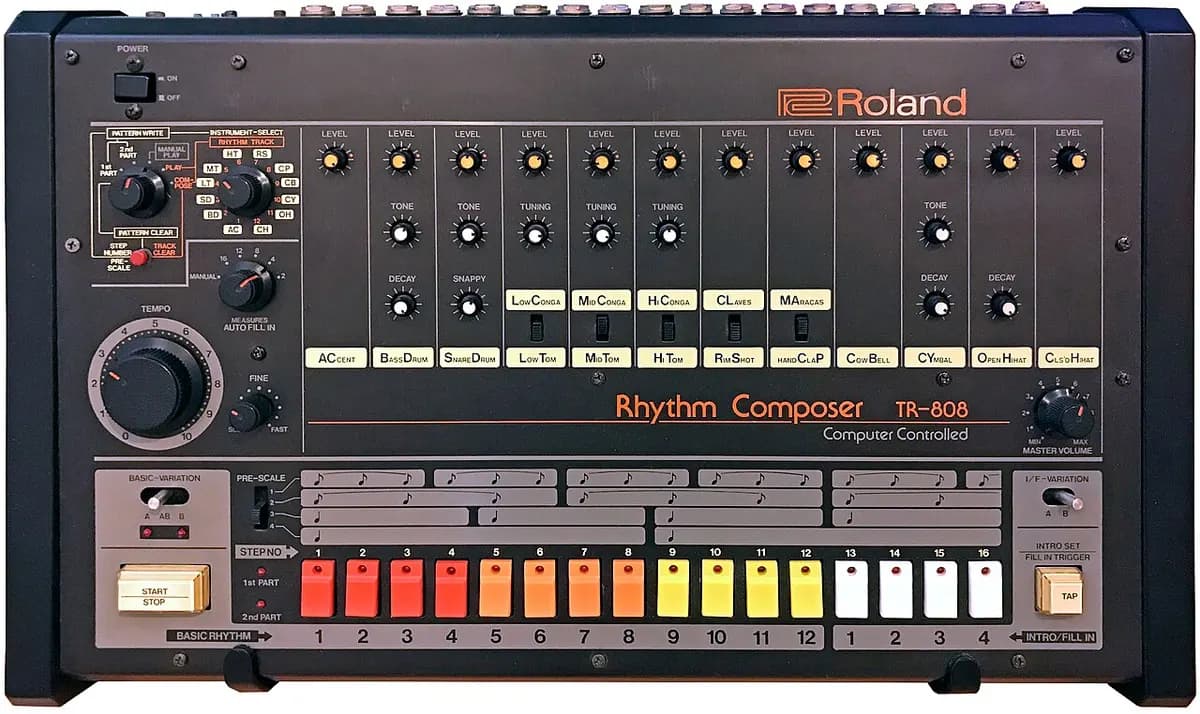
- The cowbell, usually a Roland TR-808 cowbell sample, played as a melody instead of as percussion.
- 808 bass, saturated until it distorts and often bent between notes.
- Sampled vocals: short snippets of 1990s Memphis rap, pitched down and slowed to a crawl.
- Trap drums, with tight hi-hat rolls, snappy snares and rimshots.
- Lo-fi processing such as tape saturation, bitcrushing and heavy compression.
Roughness is the point. Producers push levels into the red, chop samples crudely and treat clipping as part of the sound, which is where phonk's grainy, underground character comes from.
Subgenres of Phonk
Phonk has split into several recognisable styles:
- Drift phonk is the fast, cowbell-heavy sound of TikTok and YouTube car culture.
- Classic or Memphis phonk stays closest to the source, woozy and built on 1990s Memphis loops.
- House phonk puts phonk over a four-on-the-floor house beat.
- Brazilian or funk phonk is a large scene that mixes phonk with baile-funk rhythms and vocal chops.
- Aggressive or rage phonk pushes distortion to the extreme for gym playlists.
- Chill or ambient phonk is slower and closer in mood to lo-fi beats.
Because the genre lives online, these styles bleed into each other and new hybrids keep appearing. The cowbell and the 808 are what they all share.

Notable Artists & Tracks
Names from the 1990s to now:
- DJ Spanish Fly and Tommy Wright III, Memphis originals whose tapes phonk producers still sample.
- SpaceGhostPurrp, whose early-2010s releases helped define SoundCloud phonk.
- DVRST, best known for "Close Eyes", one of the biggest drift-phonk tracks.
- Kordhell, whose "Murder in My Mind" was a viral drift-phonk breakout.
- Kaidenn, Soudiere and DJ Smokey, producers at the centre of the modern underground.
- Freddie Dredd, whose "Cha Cha" puts his own vocals over phonk textures.
- Ghostface Playa, with the drift-phonk staple "Why Not".
- MoonDeity and Playaphonk, both prolific in the aggressive and drift scenes.
To hear the whole arc, play a DJ Spanish Fly tape first and then "Close Eyes".
Phonk vs Trap
Phonk grew out of trap and uses the same drum vocabulary, so the two are easy to confuse. They differ mainly in texture and mood:
| Trait | Phonk | Trap |
|---|---|---|
| Origin | 1990s Memphis rap, revived ~2010s online | 2000s Atlanta |
| Tempo | 130–160 BPM | 130–150 BPM (often half-time feel) |
| Signature | Cowbell melody, screwed vocals | Rolling hi-hats, clean 808s |
| Texture | Lo-fi, distorted, tape hiss | Polished, clean, radio-ready |
| Mood | Dark, nostalgic, sinister | Braggadocious, club-ready |
How AI Detects Phonk
A genre model recognises phonk by several cues at once: the cowbell melody, the overdriven 808, the slowed vocal samples, tape hiss over the whole mix and a tempo usually between 130 and 160 BPM. It compares that combination with hundreds of genre profiles. Phonk borrows so much from trap and hip-hop that the result is a set of weighted scores, with trap and hip-hop often close behind.
Try it: open the Genre AI music genre detector, give it a few seconds of audio, and see whether it separates a drift-phonk cut from a clean trap beat. For the theory, read how AI music genre detection works, or our posts on what phonk is and what drift phonk is.
In our own tests, Genre AI gives its most confident Phonk readings to tracks with a cowbell riff over a distorted 808 at 140 to 160 BPM, under a layer of tape hiss. Clean up the low end and swap the cowbell for rolling hi-hats, and the model leans toward Trap. Strip the drums and slow the track down, and it moves toward Hip-Hop or Lo-Fi. The runner-up scores are shown next to the top result, so you can see how close the call was.