Industrial began in 1976 as an art project, not a genre: a small group of British artists using tape loops, noise and shock imagery, releasing records on a label whose slogan was "industrial music for industrial people". By the early 1990s its methods (machine rhythm, sampling, distorted vocals, metal percussion) had reached arena rock, and they are still in use in techno and in mainstream pop production.
This guide covers the original scene, the electronic and rock branches that grew from it, what the sound is made of, and which records to start with. To hear how a track reads to a classifier, run a few seconds through our free AI music genre detector.
What Is Industrial Music?
The word covers two related things, and most confusion about it comes from mixing them up.
The original industrial (1976–1983) was experimental music made with tape, feedback, primitive synthesisers and found sound, presented alongside performance art and deliberately transgressive imagery. It was not dance music and often had no steady rhythm at all.
The industrial that most listeners mean today descends from what happened next: the addition of a hard, repetitive machine beat. That produced electronic body music (EBM) and electro-industrial in Europe and Canada, and then industrial rock and metal in North America, where the same textures were welded to guitars.
Both strands share a few habits. Rhythm comes from machines and sounds like percussion in the literal sense: hammering and metallic. Noise is treated as a musical element. Speech is sampled from films and broadcasts. Vocals are processed until they stop sounding like a person. The mood is hostile and tense, and it usually stays that way to the end of the track.
History & Origins
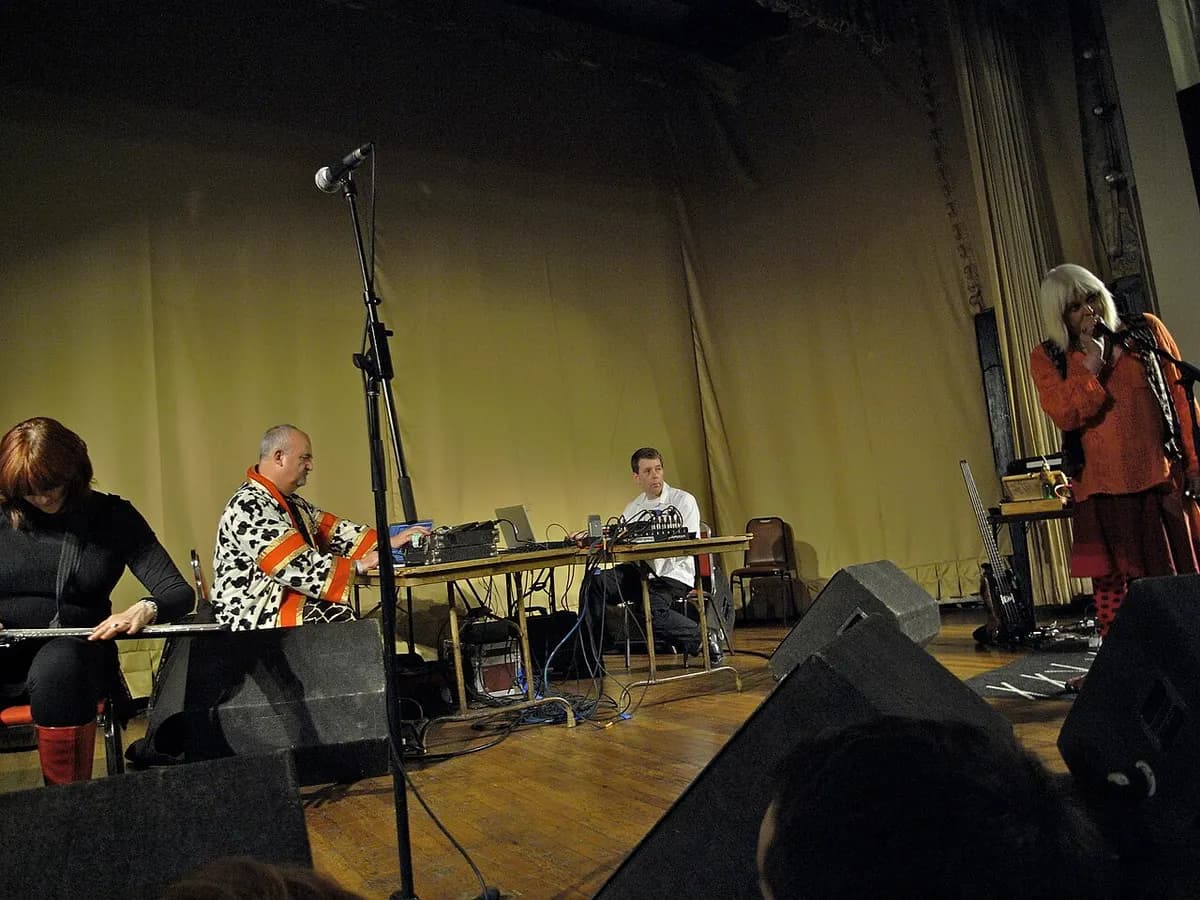
The starting point is Throbbing Gristle, formed in 1975 out of the performance-art group COUM Transmissions. Their label, Industrial Records, named the genre, and The Second Annual Report (1977) set out the method: tape manipulation, homemade electronics, and subject matter drawn from atrocity and the media.
Parallel work followed quickly. Cabaret Voltaire in Sheffield brought dub and funk rhythms into it; SPK in Sydney and Z'EV in the United States worked with metal percussion; and in West Berlin, Einstürzende Neubauten built instruments from scrap metal and power tools, which made the industrial metaphor literal.
Between about 1980 and 1984 the rhythm hardened. In Düsseldorf, DAF stripped their sound down to sequencer, drums and voice and called it Körpermusik, body music. Belgium's Front 242 used the phrase "electronic body music" in the notes to No Comment (1984), and the sequenced bass, steady kick and barked vocals of that record became the EBM template; Nitzer Ebb, from Essex, followed in the same vein. In Vancouver, Skinny Puppy laid dense sampled collages over programmed beats and created electro-industrial.
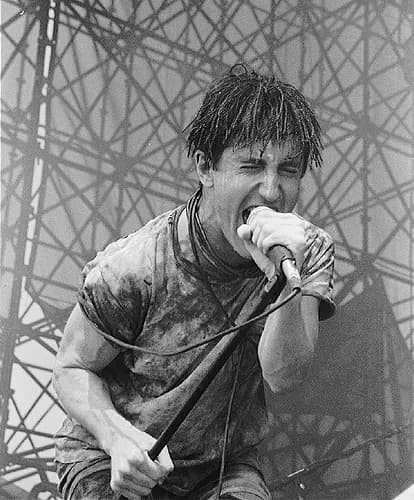
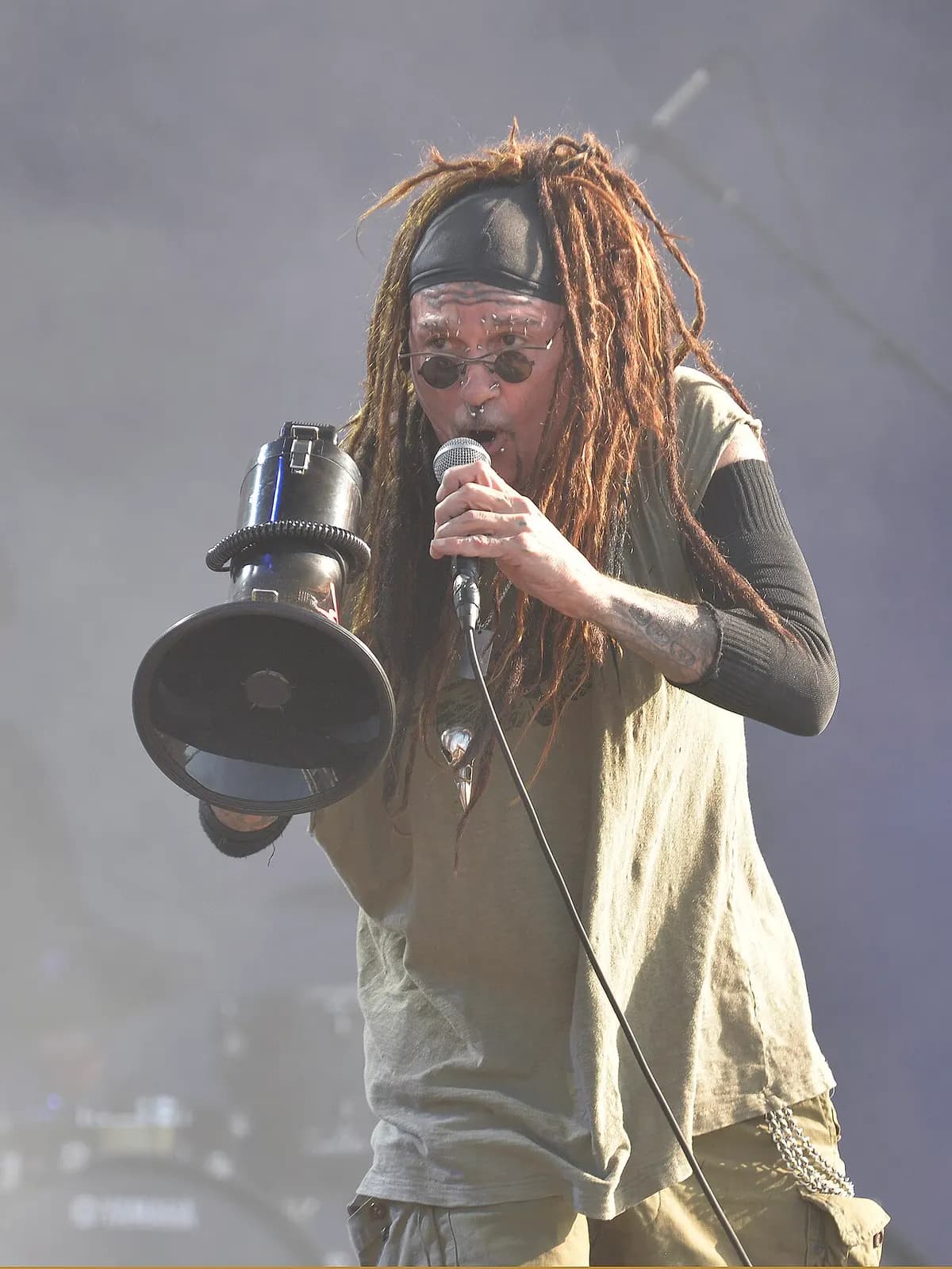
North America then made it loud. Ministry moved from synth-pop to distorted guitars on The Land of Rape and Honey (1988) and went further on Psalm 69 (1992). Nine Inch Nails' Pretty Hate Machine (1989) and The Downward Spiral (1994) turned the vocabulary into songs; the second was certified quadruple platinum in the US. KMFDM, Front Line Assembly, Fear Factory and Marilyn Manson followed. In Germany, Rammstein built Neue Deutsche Härte on the same foundation, and by 2019 they were playing football stadiums across Europe.
Since the 2000s much of the activity has moved back to the dancefloor. Industrial techno (Berlin's harder clubs, and artists such as Ancient Methods, Perc and Blawan) took the distorted kick and metallic percussion into techno, while aggrotech and dark electro carried on in the goth club scene. Distorted drums, sampled machinery and processed vocals are now common in pop too, where nobody calls them industrial.
Key Characteristics & Sound
What identifies an industrial track:
- Machine rhythm: programmed, repetitive, deliberately mechanical, often with a distorted kick.
- Noise as material: feedback, static, scrap-metal percussion and field recordings used as instruments.
- Tempo: broad. Most rock and EBM material sits at 90–140 BPM; industrial techno and the hardcore-adjacent styles run faster.
- Processed vocals: distorted, vocoded, shouted or whispered; rarely presented cleanly.
- Sampling: speech from films, news and propaganda, used as texture and as commentary.
- Sequenced bass lines that repeat without variation across long stretches.
- Guitars, where present, played like machines: chugging, gated and chopped into rhythmic patterns instead of riffs.
- Themes: control, technology, war, the body, media manipulation.
How the branches of the family differ:
| Trait | Original Industrial | EBM | Industrial Rock/Metal | Industrial Techno |
|---|---|---|---|---|
| Period | 1976–1983 | 1980s onward | 1988–2000 | 2010s onward |
| Rhythm | Often absent | Sequenced 4/4 | Live or programmed rock beat | Distorted 4/4 kick |
| Tempo | Variable | 115–135 BPM | 90–140 BPM | 130–150 BPM |
| Guitars | Rare | None | Central | None |
| Vocals | Spoken, treated | Shouted commands | Screamed and sung | Minimal or absent |
| Reference album | The Second Annual Report | Front by Front | The Downward Spiral | Ancient Methods (12"s) |
Instruments & Production
Industrial is defined more by its methods than by its instruments:
- Tape manipulation and loops: the original toolkit, later replaced by samplers and DAWs doing the same job.
- Found metal and power tools: Einstürzende Neubauten's sheet metal, springs and drills, still the image most people associate with the genre.
- Drum machines pushed into distortion: the TR-909 and its successors overdriven until the kick becomes a wall.
- Analogue sequencers for the repeating bass line at the centre of EBM.
- Vocal processing chains: distortion, ring modulation, vocoding, pitch shifting.
- Sampled dialogue from film and news, often placed where a chorus or a hook would go.
- Heavy compression and clipping: loudness treated as part of the sound, years before the loudness war reached pop.
Subgenres & Related Styles
The family around it:
- EBM (electronic body music): sequenced, danceable, shouted; Front 242, Nitzer Ebb.
- Electro-industrial: denser and darker; Skinny Puppy, Front Line Assembly.
- Industrial rock and metal: the guitar branch; Nine Inch Nails, Ministry, Fear Factory, Rammstein.
- Aggrotech and dark electro: the harsh goth-club branch of the 2000s.
- Power electronics and noise: the extreme end that stayed avant-garde; Whitehouse, Merzbow.
- Industrial techno: the modern club form; see hard techno for its neighbours.
- Neue Deutsche Härte: the German stadium version; Rammstein, Oomph!.
- Post-Punk and synth-pop: the scenes industrial grew up alongside, which shared venues, labels and some members with it.
Notable Artists & Albums
Where to start:
- Throbbing Gristle: The Second Annual Report (1977), 20 Jazz Funk Greats (1979).
- Einstürzende Neubauten: Kollaps (1981).
- Cabaret Voltaire: Red Mecca (1981).
- Front 242: Front by Front (1988).
- Skinny Puppy: Too Dark Park (1990).
- Ministry: Psalm 69 (1992).
- Nine Inch Nails: The Downward Spiral (1994).
- KMFDM: Nihil (1995).
- Rammstein: Sehnsucht (1997).
- Author & Punisher: Beastland (2018), made by one man playing machines he built himself.
Three records for the arc: The Second Annual Report for the origin, Front by Front for the rhythm, The Downward Spiral for the version that reached the mainstream.
How AI Detects Industrial
Industrial is an odd case for a classifier because it is noisy and periodic at once. Most noisy audio has no regular pulse, and most audio with a regular pulse is tonal. Industrial repeats inharmonic, metallic sounds on a strict grid, and few other styles do that.
Genre AI's live model has no industrial label, so the answer depends on the branch. Guitar-based material should land on metal or alternative; EBM and electro-industrial on electronic labels, sometimes synth-pop; industrial techno on techno, the same label that covers hard techno. The original 1970s recordings fit none of these well. Test one in the Genre AI music genre detector.
Genre AI has no Industrial label, and the style splits along its own history. Going by what each branch contains, Nine Inch Nails and Ministry should read as Metal or Alternative (the Indie / Alternative label in the Rock family); Front 242 and Skinny Puppy as Electronic; modern industrial techno as Techno. Early Throbbing Gristle is the hard case. A recording with no stable tempo, no tonal centre and no conventional instruments has no close match in a taxonomy built from popular music, so expect low confidence and a scattered result. For a project that set out to fall outside music as it was then defined, that is a fair outcome.