
Progressive metal is the formal ambition of progressive rock played with the weight and precision of metal. It arrived in the second half of the 1980s, when American bands who had grown up on Rush and Iron Maiden started writing ten-minute pieces in shifting metres, building albums around a single story, and putting instrumental skill at the centre.
This guide covers the ancestry, the records that fixed the template, what the music actually does bar by bar, and why the style is one of the harder things to label automatically. To hear how a track with four metre changes reads to a machine, run a section through our free AI music genre detector.
What Is Progressive Metal?
Progressive metal is metal written as through-composed pieces. A track is likely to run past seven minutes, pass through several distinct sections that never return in the same form, change metre without warning, and give a written instrumental passage as much space as the vocal. Distortion, downtuned guitars and double-kick drumming supply the weight; the architecture comes from progressive rock and, at a distance, from classical form.
Most of its records avoid the verse–chorus loop, the fixed tempo and the four-minute radio length. That puts a heavy load on the players: a long piece with many written sections has to be played exactly, every night. AllMusic traces the earliest bands, Fates Warning and Queensrÿche, to a love of Yes and Rush combined with admiration for Iron Maiden and Judas Priest.
Two things separate it from progressive rock. The first is timbre: the guitar is the primary voice, saturated and low-tuned, where prog rock often hands the lead to Hammond organ, Mellotron and Moog. The second is rhythmic character: prog rock's complexity is usually melodic and harmonic, while prog metal's is percussive, built from riff cycles that will not line up with the bar. Both traditions borrow from classical form and jazz harmony.
History & Origins
The direct ancestors are two bands that were never metal. King Crimson's Red (1974) supplied the model of a distorted, dissonant, rhythmically hostile guitar record, and its 1981 line-up added interlocking polymetric guitars. Rush did the practical work: the Canadian power trio's 2112 (1976) and Moving Pictures (1981) showed that odd metres, a twenty-minute side and hard rock volume could coexist and sell. "YYZ" opens in 10/8, and "Tom Sawyer" moves into 7/8 for its instrumental section. Iron Maiden's galloping long-form pieces and Metallica's multi-part arrangements on Master of Puppets (1986) supplied the metal half of the equation.
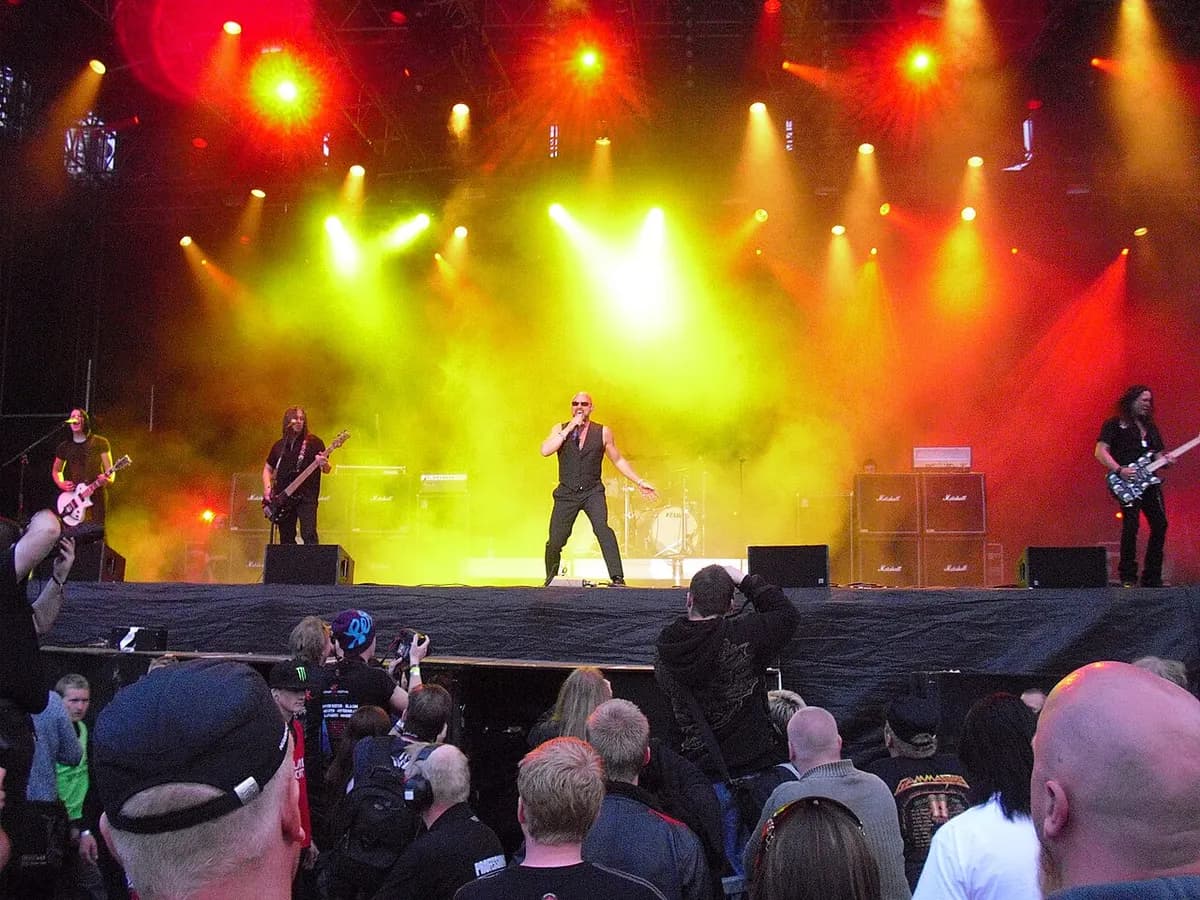
The genre proper begins in the United States around 1986–1988 with two bands from opposite coasts. Fates Warning of Hartford, Connecticut, on Metal Blade, moved from Iron Maiden-styled writing to the extended, unstable structures of Awaken the Guardian (1986) and No Exit (1988). Queensrÿche of Bellevue, Washington, made the record that carried the idea outside the underground: Operation: Mindcrime (1988), a full concept album about a drug-addicted political assassin, narrated in character across the whole running order. Its successor Empire (1990) went multi-platinum and put "Silent Lucidity" in the American top ten.
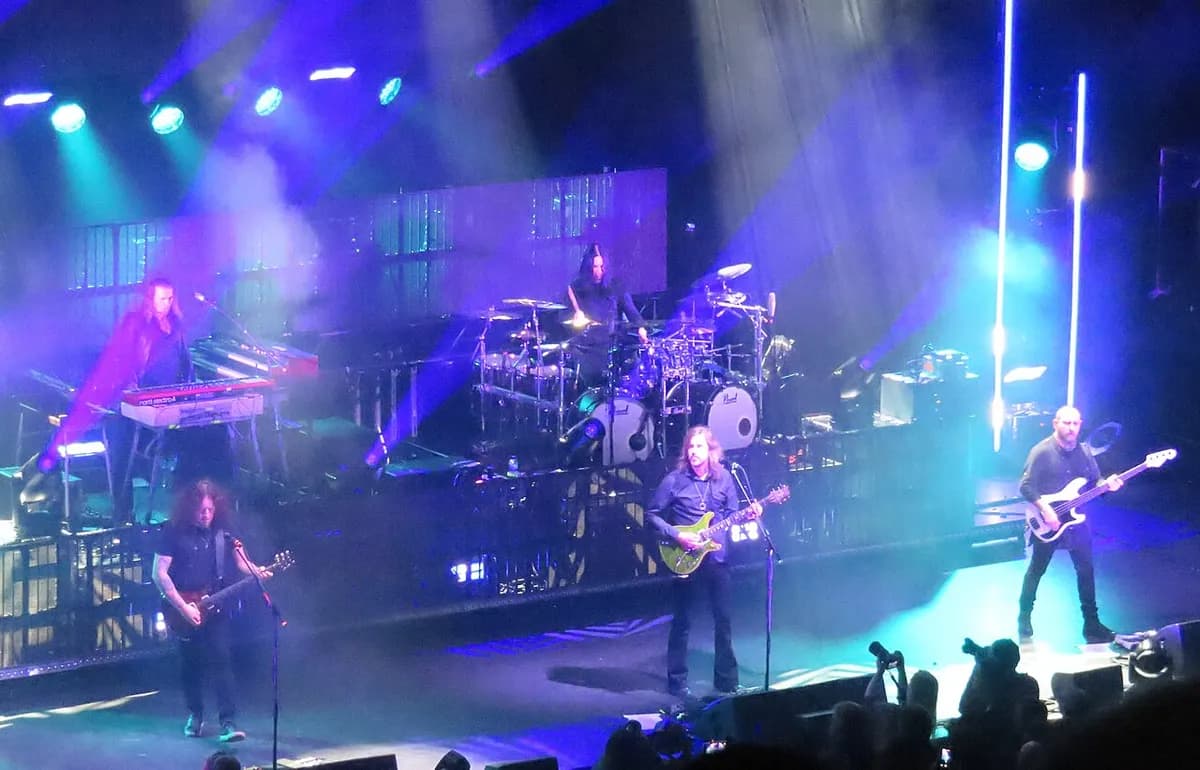
The defining record arrived in 1992. Dream Theater, formed in 1985 by three Berklee College of Music students in Boston, released Images and Words on Atco with "Pull Me Under", an eight-minute song that Mike Portnoy later called "a fluke" for MTV and radio play. It received heavy MTV rotation and remains the band's only single with that kind of success, which is why their compilation is titled Greatest Hit. The album has the traits the genre is still known for: seven-minute pieces, unison guitar-and-keyboard runs, a high clean tenor, and instrumental sections written note for note. The band pushed further with Metropolis Pt. 2: Scenes from a Memory (1999), a murder-mystery concept album whose instrumental "The Dance of Eternity" packs more than a hundred time-signature changes into about six minutes; published counts vary, and Revolver gives 108.
In parallel, extreme metal ran the same experiment. Watchtower (Austin) and Voivod (Quebec) built technical, dissonant thrash metal in the late 1980s; Death's Human (1991) and Cynic's Focus (1993) turned death metal into something jazz-literate, with fretless bass and vocoder. Opeth of Stockholm came out of the same death metal world. Their Blackwater Park (2001), produced by Steven Wilson, alternates growled death metal with acoustic folk passages inside single pieces, and Heritage (2011) dropped growls entirely for a 1970s prog sound.
The 1990s and 2000s broadened the field. Tool emerged from Los Angeles with Ænima (1996) and Lateralus (2001), reaching an audience far outside metal; Meshuggah of Umeå, Sweden, developed the polymetric riff language that later produced djent; Mastodon (Atlanta) and Between the Buried and Me (Raleigh) rebuilt the form from a hardcore and sludge starting point. Among current bands, Haken from London and Leprous from Notodden, Norway, both record for InsideOut Music, a German label with a large progressive roster.
Key Characteristics & Sound
What marks a track as progressive metal:
- Length and form: typically 6–15 minutes, in sections that do not recur; whole albums built as one narrative.
- Odd and shifting metres: 7/8, 5/4, 9/8, 11/8 and mid-piece changes. Tool's "Schism" spends long stretches alternating bars of 5/8 and 7/8, and one analysis counts 47 metre changes in it; "Lateralus" moves between 9/8, 8/8 and 7/8, with verse syllable counts following the Fibonacci sequence.
- Polymetre: a riff cycle of an odd length repeating over a steady 4/4 drum grid until the two realign. It is Meshuggah's central device.
- Tempo: often unstable. One piece can move between very slow and very fast sections, so a single BPM figure means little.
- Two vocal registers: trained clean singing and growled or screamed delivery, frequently in the same song. Opeth built a career on the contrast.
- Keyboards as an equal voice: unison lines with the guitar, and solos traded like a jazz front line.
- Extended harmony: modal writing, diminished and Phrygian dominant material, borrowed chords and delayed cadences.
- Concept lyrics: narrative or philosophical, often spread across a whole album.
- Wide dynamics: clean arpeggios or acoustic guitar dropping in beside full-band passages, often without a transition.
How the style sits against its neighbours:
| Trait | Progressive Metal | Progressive Rock | Thrash Metal | Metalcore |
|---|---|---|---|---|
| Peak period | 1988–present | 1969–1977 | 1983–1991 | 2001–2010 |
| Typical BPM | 60–200, shifting | 60–180, shifting | 180–220 | 100–180 |
| Time signatures | Shifting, odd | Shifting, odd | Mostly 4/4 | Mostly 4/4 |
| Vocals | Clean and growl | Clean | Shouted | Scream plus clean chorus |
| Track length | 6–15 min | 7–25 min | 4–6 min | 3–5 min |
| Reference track | Pull Me Under | Close to the Edge | Master of Puppets | The End of Heartache |
Instruments & Production
The gear list explains a great deal of the sound:
- Seven- and eight-string guitars: the Ibanez Universe, built for Steve Vai in 1990, made the seven-string a production item. Meshuggah first recorded Nothing (2002) on detuned seven-strings, because their custom eight-strings were not ready, and re-recorded the rhythm guitars on eight-strings for the 2006 reissue.
- Tight, gated high-gain tone: the palm-muted chug has to stop dead between notes for a polymetric figure to be legible, so the guitars are recorded dry, close and heavily edited, unlike the long, blooming chords of doom metal.
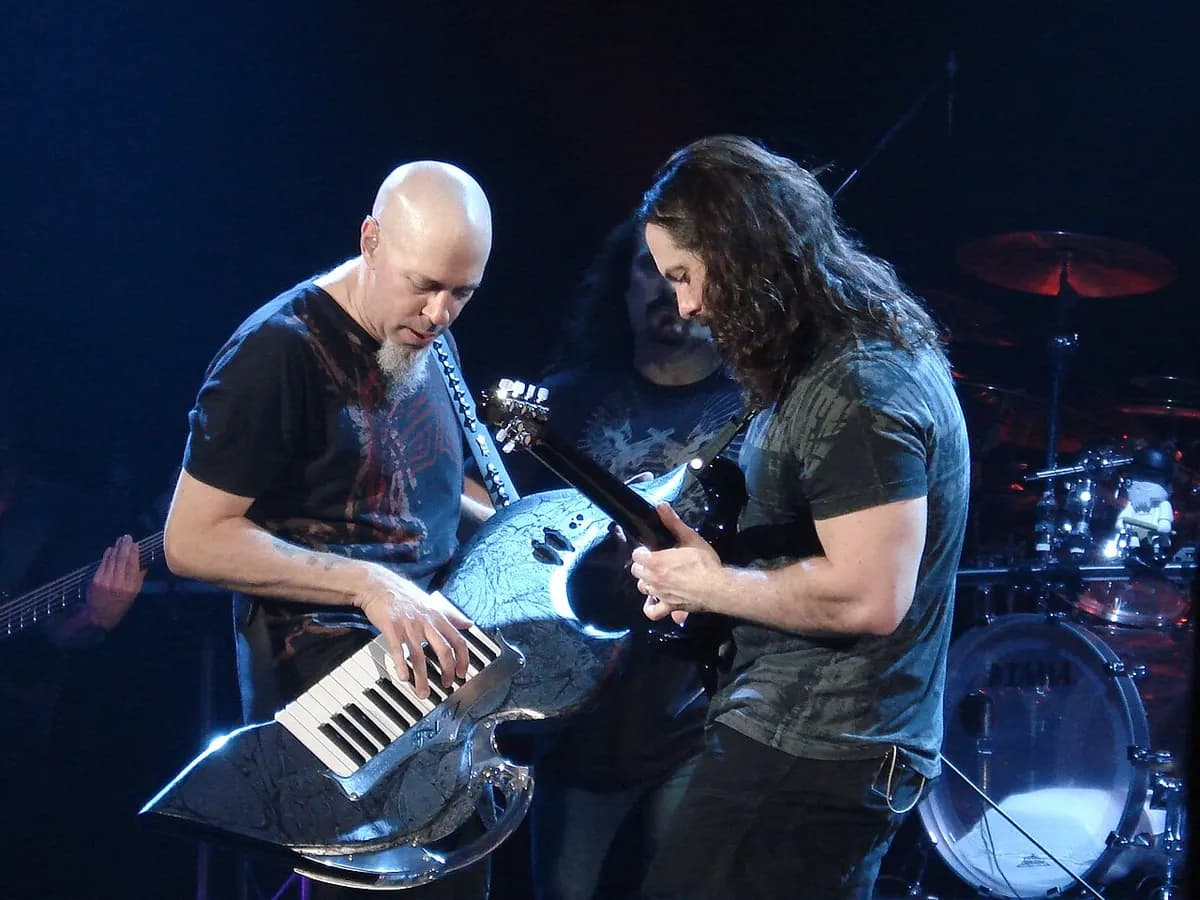
- Multi-keyboard rigs: Jordan Rudess, who joined Dream Theater in 1999, plays a Haken Continuum fingerboard alongside conventional synths, which lets his lines glide between pitches.
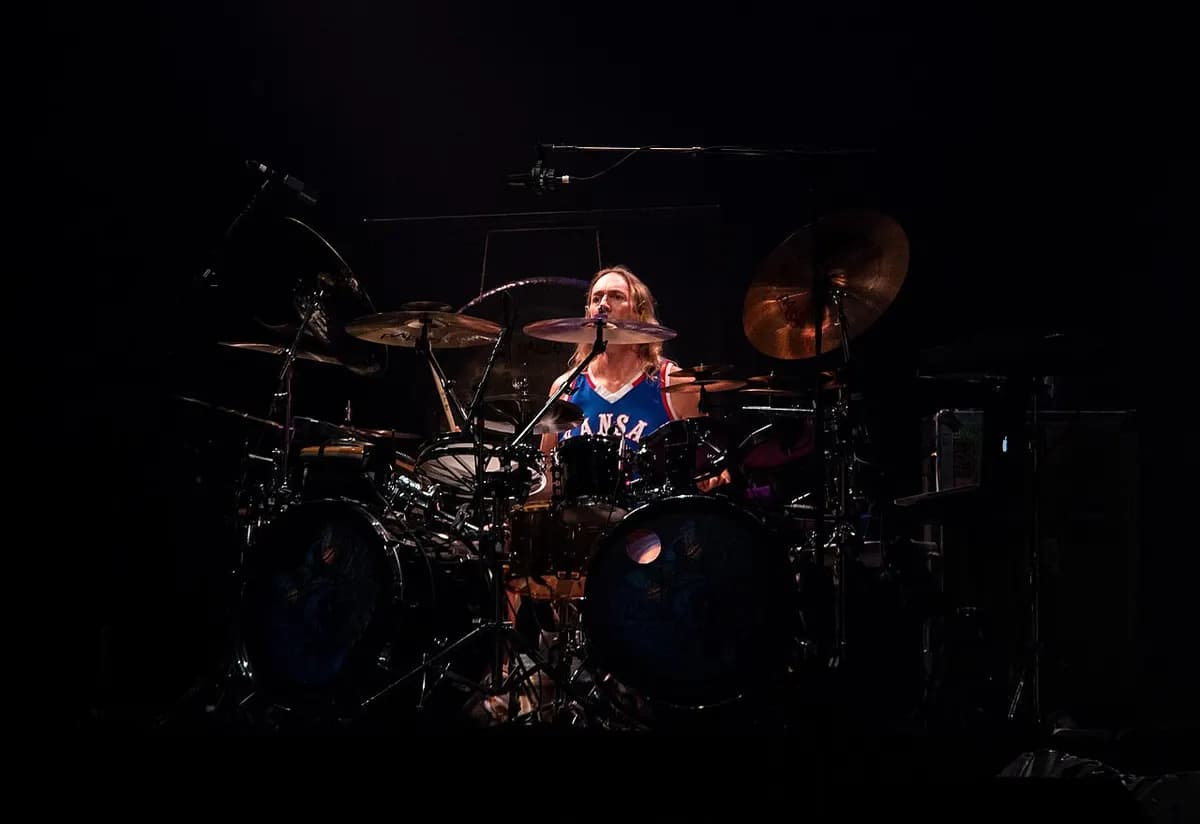
- Drumming with independent limbs: Neil Peart, Mike Portnoy and Danny Carey are the usual reference points, with the kit often playing a counter-rhythm against the riff.
- Bass as a melodic instrument, often five- or six-string, sometimes fretless (Sean Malone on Cynic's Focus), answering the guitar instead of doubling it.
- Acoustic and orchestral colour: nylon-string guitar, piano, strings and choir used to mark sections.
- Producers: Kevin "Caveman" Shirley on Dream Theater's Falling into Infinity (1997), Steven Wilson on Opeth's Blackwater Park and Damnation, and, for many current bands, self-production.
The usual mixing goal is that every part stays audible through the density, so the mid-range is divided carefully between instruments and reverb is kept short.
Subgenres & Related Styles
The family around it:
- Progressive power metal: the melodic, neoclassical wing; Symphony X's The Divine Wings of Tragedy (1997), Pain of Salvation, Ayreon's rock operas.
- Technical death metal: Death's Human, Atheist's Unquestionable Presence (1991), Cynic. Overlaps heavily with death metal proper.
- Djent: the branch named after the onomatopoeic sound of a muted, high-gain chug, descended from Meshuggah and popularised by Periphery, TesseracT and Animals as Leaders. Rhythm-first, with riff cycles over a straight grid.
- Progressive black metal: Enslaved and Ihsahn, applying long-form writing to black metal tremolo and blast beats.
- Progressive metalcore: Between the Buried and Me's Colors (2007) is the reference point, taking metalcore into suite form.
- Sludge-derived prog: Mastodon and Baroness, both from Georgia, arriving at long forms from sludge metal.
- Atmospheric prog metal: Leprous, Riverside and Porcupine Tree's heavier albums, built more on dynamics and texture than on technical display.
- Math Rock: the indie cousin that shares the odd metres and drops the heavy distortion.
Key Bands & Tracks
Where to start:
- Rush: Moving Pictures (1981); "YYZ" and "Tom Sawyer" are the blueprint.
- Queensrÿche: Operation: Mindcrime (1988), the concept album that took the style to a wide audience.
- Fates Warning: No Exit (1988) and Perfect Symmetry (1989).
- Dream Theater: Images and Words (1992) for "Pull Me Under", Scenes from a Memory (1999) for the form at full stretch.
- Death: Human (1991), where Chuck Schuldiner rewrote what death metal could contain.
- Tool: Ænima (1996) and Lateralus (2001); "Schism" won a Grammy for Best Metal Performance in 2002.
- Opeth: Blackwater Park (2001), the clean-versus-growl contrast at its most convincing.
- Meshuggah: Destroy Erase Improve (1995) and obZen (2008), which includes "Bleed".
- Mastodon: Crack the Skye (2009).
- Between the Buried and Me: Colors (2007), about an hour of music sequenced as one continuous piece.
- Haken: The Mountain (2013); Leprous: The Congregation (2015).
A short route: Operation: Mindcrime for the concept album, Images and Words for the Dream Theater template, Blackwater Park for the death metal side.
How AI Detects Progressive Metal
Progressive metal is difficult for a classifier for a structural reason. A model judges a short window of audio, while the features that define the genre (a form that never repeats, a metre that moves, a narrative across an album) exist only at the scale of whole pieces. Ten seconds of an Opeth track may be a nylon-string guitar, a blast beat or a Mellotron pad, and each of those windows sounds like a different genre.
Inside a window the usable evidence is timbral and rhythmic: saturated downtuned guitar with hard note-offs, double-kick patterns that do not track the riff, keyboard lines in unison with the guitar, and bar lengths that break a steady beat-tracking grid. Answers are likely to move between metal labels and progressive rock depending on which minute is sampled; Genre AI has no separate label for thrash metal, while death metal has one. Try it in the Genre AI music genre detector by uploading two different sections of the same piece.
Genre AI's production taxonomy has no progressive metal class, but the phrase "progressive metal" is one of the text prompts of Progressive / Psychedelic Rock, a fine label in the Rock family. So when Rock wins the first round, that label is a likely answer, and it is the only label in the taxonomy built around the word "progressive". When the Metal family wins instead, the choice is among Heavy Metal, Death Metal, Doom Metal, Black Metal, Metalcore and Nu Metal; there is no Thrash label. Clean-sung Dream Theater or Symphony X material is the natural fit for Heavy Metal; growled Opeth passages for Death Metal, whose prompts include "technical death metal" and "melodic death metal"; chugging djent riffs may lean towards Metalcore, which lists "progressive metalcore" among its prompts. Alternatives always come from the same family as the answer, so a Metal result will not show Progressive / Psychedelic Rock underneath it. Clean interludes, such as an Opeth acoustic passage, are the sections most likely to come back under Rock.