
Doom metal is the slowest and heaviest branch of metal: down-tuned riffs played at a funeral pace through thick fuzz, with lyrics about dread and mourning. Where most metal chases speed, doom chases mass.
This guide covers what doom metal is, how it grew directly from Black Sabbath's earliest records, the tone and tempo that define it, its unusually wide range of subgenres (from stoner riffing to 40 BPM funeral doom and beatless drone), and the bands to start with. Not sure whether a track is doom, sludge, or death metal? Play a few seconds into our free AI music genre detector and see which metal label it picks.
What Is Doom Metal?
Doom metal is defined first by tempo. Riffs commonly sit between 50 and 90 BPM, slower than almost any other rock genre, so each chord has time to ring out and decay. Guitars are down-tuned and pushed into thick, saturated fuzz, looser and warmer than the tight gain of modern metal. The bass is loud, and the drums hit hard and sparsely, marking the riff instead of driving it.
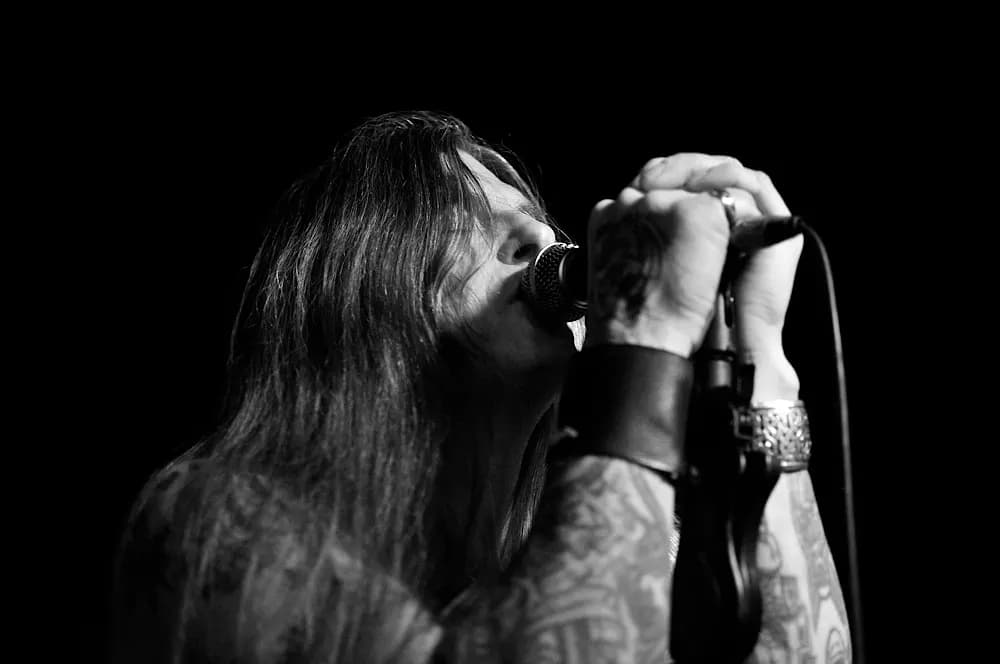
The second definition is emotional. Doom deals in despair, mortality, addiction and occult imagery, and it delivers that mood through repetition: a single riff may run for minutes, and songs of ten or fifteen minutes are common. Vocals can be clean and mournful (the epic doom tradition), harsh and screamed (sludge) or deep and growled (death-doom). Whatever the voice does, the riff carries the song.
History & Origins
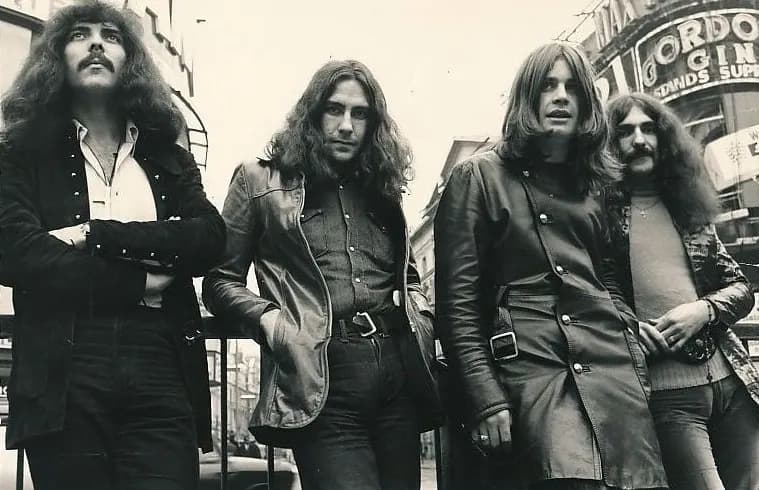
Doom metal begins with a single song. Black Sabbath's "Black Sabbath," the opening track of their 1970 debut, is built on the tritone, the interval later nicknamed diabolus in musica, played slowly and heavily. Sabbath's first four albums supplied most of the vocabulary: doom-laden lyrics, riffs at walking pace and, from Master of Reality (1971), down-tuned guitars. Tony Iommi tuned down partly to ease string tension on fingertips damaged in a sheet-metal factory accident.
The 1980s turned that influence into a genre. In the US, Pentagram, Saint Vitus and Trouble played slow, fuzzy, Sabbath-descended metal in the years when thrash was making American metal faster. In Sweden, Candlemass's Epicus Doomicus Metallicus (1986) gave the genre both a name for its operatic strand — epic doom — and its clean-vocal template.
The 1990s split doom into strands that barely resemble each other. Britain's "Peaceville three" (Paradise Lost, My Dying Bride and Anathema) merged it with death metal into death-doom. Sleep and Electric Wizard pushed the fuzz and cannabis-fuelled riffing into stoner doom. Melvins, Eyehategod, and Crowbar crossed doom with hardcore into sludge. Thergothon and Esoteric slowed it further into funeral doom. Earth's Earth 2 (1993) did away with drums altogether, and Sunn O))) built drone doom on that record from the late 1990s. In the 2010s, Pallbearer's Sorrow and Extinction (2012) led a melodic revival, alongside Windhand and the longer-running YOB.
Key Characteristics & Sound
Doom's markers are unusually easy to hear:
- Tempo: typically 50–90 BPM; funeral doom drops to 30–50 BPM, and drone abandons a pulse entirely.
- Guitar tone: thick, warm, analogue fuzz and vintage overdrive.
- Tuning: down-tuned, often C standard, drop C or lower, for physical weight.
- Riffs: long, repetitive, and built on power chords and the tritone; melody is secondary to mass.
- Bass: loud, fuzzy and central, frequently as prominent as the guitars.
- Drums: heavy, deliberate and spacious, with cymbal accents; double-kick runs are rare.
- Song length: long. Ten-minute tracks are routine; Sleep's Dopesmoker runs over an hour as a single piece.
Tempo alone tells you which corner of the genre you are in:
| Subgenre | Typical BPM | Vocals | Hallmark |
|---|---|---|---|
| Traditional / epic doom | 60–100 | Clean, operatic | Sabbath riffing, soaring melodies |
| Stoner doom | 70–110 | Clean, hazy | Fuzz-heavy, blues-rooted, psychedelic |
| Sludge | 60–120 | Harsh screams | Hardcore aggression, dissonant, filthy |
| Death-doom | 50–90 | Growls | Death metal weight at doom tempo |
| Funeral doom | 30–50 | Deep growls or chants | Glacial, keyboard-laden, mournful |
| Drone doom | No fixed pulse | Rare or absent | Sustained chords, pure texture |
Instruments & Production
Doom is the most gear-obsessed corner of metal, because tone is the genre:
- Vintage amps: Orange, Sunn, and Matamp heads driven loud for natural, saturated breakup.
- Fuzz pedals: Big Muff-style circuits and vintage germanium fuzz in place of high-gain metal distortion.
- Guitars: Gibson SG (Iommi's instrument) and other humbucker-equipped models, tuned down for thickness.
- Bass: often distorted and run through its own full stack; in sludge and drone it can carry the main riff.
- Drums: tuned low and recorded roomy, favouring weight and decay over click and definition.
- Keys and strings: organs, mellotrons, and violins add funereal colour in epic, gothic, and funeral doom.
Production usually favours a live, analogue, room-heavy sound. Heavy editing works against the genre: doom depends on the audible decay of a chord and on a rhythm section that is allowed to drift slightly off the grid.
Subgenres
Few genres span such a wide range from one root:
- Traditional doom: direct Sabbath descendants (Pentagram, Saint Vitus, Trouble).
- Epic doom: operatic clean vocals and grand arrangements (Candlemass, Solitude Aeturnus).
- Stoner doom: psychedelic, blues-rooted fuzz (Sleep, Electric Wizard, Bongzilla).
- Sludge metal: doom crossed with hardcore punk, harsh and abrasive (Eyehategod, Crowbar, Melvins).
- Death-doom: growled vocals and death metal riffing slowed to a crawl (My Dying Bride, Paradise Lost).
- Gothic doom: female clean vocals, keyboards, romantic melancholy (Draconian, early Theatre of Tragedy).
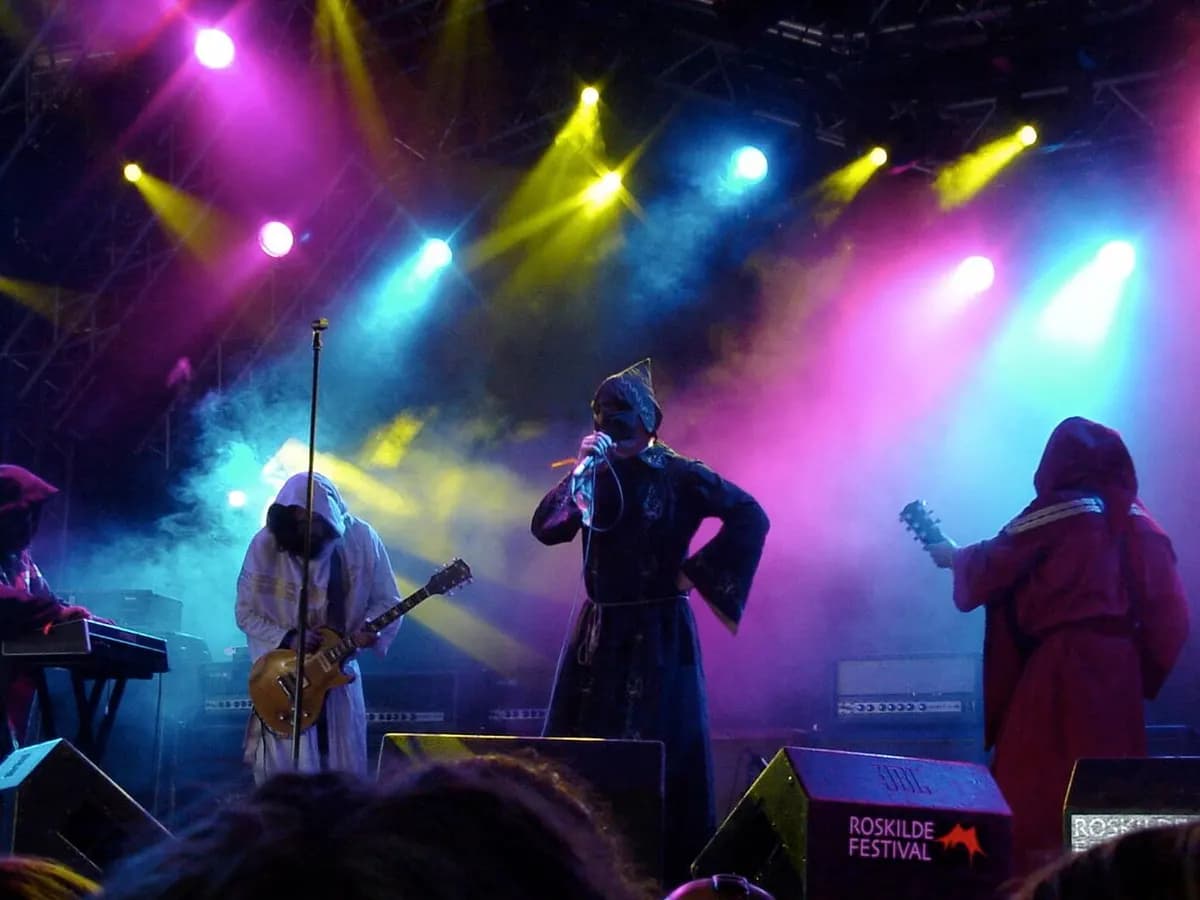
- Funeral doom: the slowest form, 30–50 BPM, keyboard-heavy and glacial (Thergothon, Esoteric, Bell Witch).
- Drone doom: sustained chords with no beat, closer to ambient than to rock (Sunn O))), Boris, Earth).
- Blackened doom: black metal atmosphere at doom tempo (Woods of Ypres, Katatonia's early work).
Notable Artists & Tracks
A route into doom, from the source outward:
- Black Sabbath: "Black Sabbath," "Into the Void," "Electric Funeral."
- Candlemass: "Solitude," "Bewitched."
- Saint Vitus: "Born Too Late."
- Pentagram: "All Your Sins."
- Sleep: "Dragonaut," Dopesmoker.
- Electric Wizard: "Funeralopolis," "Dopethrone."
- My Dying Bride: "The Cry of Mankind."
- Eyehategod: "Sisterfucker" (sludge at its rawest).
- Sunn O))): "Big Church," pure drone.
- Pallbearer: "Foundations," from the 2010s melodic revival.
- YOB: "Marrow."
Start with "Black Sabbath," "Solitude," and "Funeralopolis" to hear the origin, the epic strand, and the stoner strand in sequence.
Doom vs Sludge vs Stoner Metal
These three overlap heavily and bands often sit in more than one. The distinctions are about attitude and origin as much as sound:
| Trait | Doom Metal | Sludge Metal | Stoner Metal |
|---|---|---|---|
| Tempo | 50–90 BPM | 60–120 BPM with bursts | 70–120 BPM |
| Mood | Mournful, ominous | Angry, bleak, abrasive | Hazy, psychedelic, groovy |
| Vocals | Clean or growled | Screamed, harsh | Clean, often melodic |
| Roots | Black Sabbath | Doom + hardcore punk | Doom + 70s blues rock |
| Tone | Thick fuzz, ringing chords | Dissonant, filthy, feedback | Warm fuzz, bluesy leads |
How AI Detects Doom Metal
Doom should be one of the more distinctive genres for a classifier, because its most obvious feature is plain in the audio: very low tempo combined with heavy distortion. Sparse drum hits, long sustained chords with slow decay and a mix dominated by low-mid fuzz all point the same way. In funeral and drone doom there are passages where a steady beat is barely audible at all.
That last case is where mistakes happen: drone doom shares its spectral profile with dark ambient, and a slow, growled death-doom track can score close to death metal. Try your own examples in the Genre AI music genre detector, and see how AI music genre detection works for how competing labels get weighted.
Doom Metal is one of the six fine labels under Metal in Genre AI's production taxonomy (alongside Black Metal, Death Metal, Heavy Metal, Metalcore and Nu Metal), so a classic doom track can get its own name back. The most likely matches are tracks well under 90 BPM built on long, fuzz-saturated, down-tuned chords with plenty of ring-out between hits. Death-doom with growled vocals may put Death Metal close behind, and epic doom with clean vocals and Sabbath-style riffs may drift toward Heavy Metal. Drone doom without drums is the weakest case: it may leave the metal family for the coarse Ambient label. Sludge and stoner doom have no labels of their own, so expect Doom Metal, Hard Rock or the broader Metal family among the answers.