Horrorcore is hip-hop that borrows its imagery from horror film instead of street reportage: detuned minor-key beats, samples lifted from film scores, and lyrics written as first-person narrative fiction. It emerged between 1988 and 1991 in Houston and Detroit, produced the Juggalo subculture around Insane Clown Posse, and leads fairly directly to phonk and modern trap metal.
This guide covers where horrorcore came from, what defines the production, how it differs from gangsta rap, and which records matter. To hear how a track reads to a classifier, run a clip through our free AI music genre detector.
What Is Horrorcore?
Horrorcore is defined by subject and atmosphere, not technique. The rapping is conventional hip-hop; what changes is the frame. Lyrics are written as horror narratives about possession, murder, hauntings and psychosis, delivered in character the way a horror novel is narrated in the first person. The beats match: minor keys, dissonant intervals, detuned or slowed samples, church organs, music-box melodies, film-score strings and horror-movie dialogue.
The line between horrorcore and gangsta rap is worth drawing carefully, because the two get conflated. Gangsta rap presents itself as reportage from a real place. Horrorcore presents itself as fiction and signals that with supernatural content: when violence appears it is usually impossible (demonic, undead, hallucinated), and the exaggeration marks it as theatre.
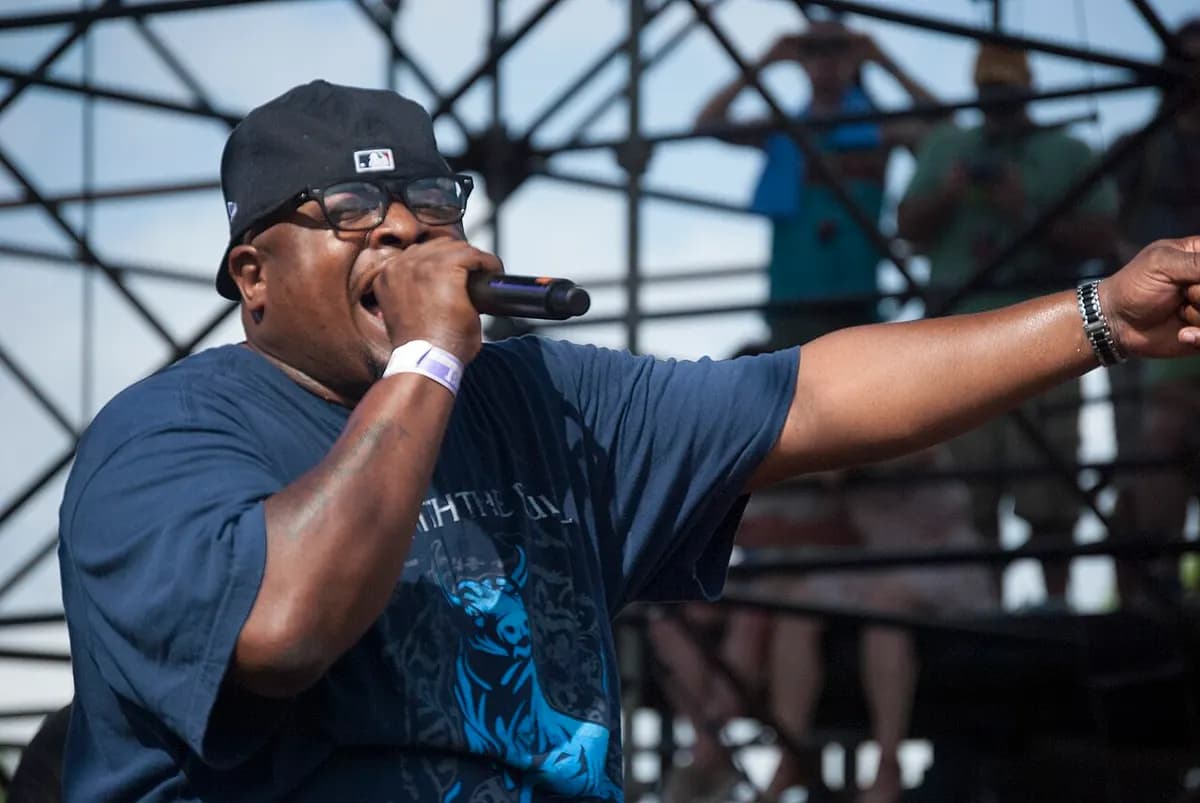
Some of its most respected records are psychological, not gory. The Geto Boys' best-known song, "Mind Playing Tricks on Me" (1991), is about paranoia and dissociation, and its horror is entirely internal.
History & Origins
Two origin points are usually named. In Detroit, Esham released Boomin' Words from Hell in 1989, aged 16, and called his mix of hip-hop, rock samples and satanic imagery "acid rap"; he is often named as the style's originator. In Houston, the Geto Boys (Scarface, Willie D and Bushwick Bill in the classic line-up) had been writing shock lyrics since their 1988 debut Making Trouble, whose track "Assassins" Violent J of Insane Clown Posse has called the first horrorcore song. Their We Can't Be Stopped (1991) included "Mind Playing Tricks on Me", which became a rap standard on the strength of its dread, not its violence.
New York gave it a wider profile. Gravediggaz (RZA, Prince Paul, Frukwan and Poetic, working under horror aliases) released 6 Feet Deep in 1994, titled Niggamortis outside the US, a sample-heavy East Coast version that critics took seriously. The Flatlinerz debuted the same year. The word itself is older: its first known use is on KMC's 1991 album Three Men with the Power of Ten.
Memphis built the branch with the longest reach. Three 6 Mafia's debut Mystic Stylez (1995) combined occult imagery, chanted hooks, slowed and detuned samples and the grit of cassette duplication. The Memphis tape underground around it, including Tommy Wright III and Lord Infamous, is the source material that phonk producers would sample in the 2010s.
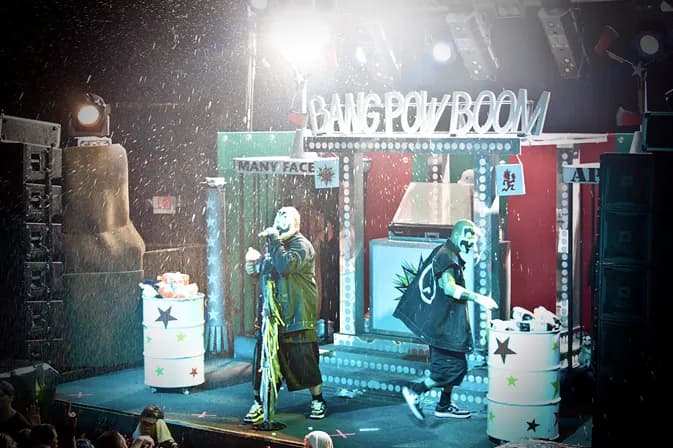
Insane Clown Posse took the style furthest commercially while getting the harshest reviews. Their Detroit-area label Psychopathic Records, the Dark Carnival mythology and the annual Gathering of the Juggalos built a subculture with its own iconography and economy. In 2011 the FBI's National Gang Threat Assessment called Juggalos a "loosely-organized hybrid gang"; ICP and the ACLU of Michigan challenged the label in court, without getting it removed. Brotha Lynch Hung in Sacramento and Necro in New York worked the most graphic end of the style.
Horrorcore's vocabulary then spread. Eminem's Slim Shady persona brought its narrative violence to a mass audience; Tyler, the Creator's early Odd Future records used the shock register on purpose; and the 2010s SoundCloud generation ($uicideboy$, Ghostemane, Scarlxrd) fused it with trap and metal into what is now called trap metal. Meanwhile phonk turned the Memphis tapes into an international streaming genre.
Key Characteristics & Sound
What identifies a horrorcore track:
- Minor-key, dissonant beats: tritones, semitone clusters and unresolved harmony.
- Horror-film sampling: score fragments, dialogue, screams, creaking doors and music-box melodies.
- Detuned and slowed samples, often pitched down until they sound queasy, not just low.
- Tempo: commonly 70–100 BPM, with a half-time feel; Memphis material is often slower still.
- Chanted, repetitive hooks in place of sung choruses.
- Delivery in character: narrative verses written from inside a fictional persona.
- Lo-fi texture: tape hiss, saturation and cheap sampling used as atmosphere.
- Church organs, bells and strings borrowed from film-score conventions.
Where it sits among its neighbours:
| Trait | Horrorcore | Gangsta Rap | Phonk | Trap Metal |
|---|---|---|---|---|
| Framing | Fiction, supernatural | Reportage, realist | Instrumental, retro | Fiction plus catharsis |
| Tempo | 70–100 BPM | 85–100 BPM | 130–160 BPM (half-time feel) | 70–160 BPM |
| Samples | Horror scores, dialogue | Funk, soul | Memphis tapes, cowbell | Metal guitar, 808s |
| Vocals | Narrative, in character | First-person realist | Chopped, chanted | Screamed and rapped |
| Era | 1988 onward | 1986 onward | Early 2010s onward | 2016 onward |
| Reference album | 6 Feet Deep (1994) | The Chronic (1992) | — | I Want to Die in New Orleans |
Production & Technique
Horrorcore's production toolkit is small and specific:
- Sampled film scores: John Carpenter's synth ostinatos, Italian giallo soundtracks, orchestral horror cues.
- Pitch-shifting and varispeed applied to whole loops, so that timbre and tempo distort together.
- Roland TR-808 and other drum machines with heavily saturated kicks, particularly in the Memphis lineage.
- Cassette duplication artefacts (hiss, wow and flutter, generational loss), which became an aesthetic and are now emulated on purpose.
- Dialogue samples as structure, opening tracks and marking sections the way a film uses a cold open.
- Vocal processing: pitched-down verses, doubled whispers, reverb used to make the voice sound distant.
- Minor-key melodic loops on bells, music box, harpsichord or organ, the sound most listeners hear immediately as "horror".
Related Styles & Descendants
The family around it:
- Acid rap: Esham's Detroit term for his own rock-sampling, occult-themed version.
- Memphis rap: the 1990s tape underground and the branch that later scenes drew on most.
- Juggalo rap / wicked shit: the Psychopathic Records scene around Insane Clown Posse.
- Phonk: the 2010s descendant built from Memphis tape samples.
- Trap metal: the 2010s fusion with distorted guitars and screamed vocals; $uicideboy$, Ghostemane.
- Drill: shares the minor-key menace, but presents itself as reportage, not fiction. See drill.
- Gangsta Rap: the neighbouring style horrorcore is most often confused with.
Notable Artists & Albums
Where to start:
- Geto Boys: We Can't Be Stopped (1991), "Mind Playing Tricks on Me".
- Esham: Boomin' Words from Hell (1989).
- Gravediggaz: 6 Feet Deep (1994).
- Three 6 Mafia: Mystic Stylez (1995).
- Brotha Lynch Hung: Season of da Siccness (1995).
- Insane Clown Posse: The Great Milenko (1997).
- Necro: I Need Drugs (2000).
- Tech N9ne: Anghellic (2001).
- $uicideboy$: I Want to Die in New Orleans (2018).
- Ghostemane: N/O/I/S/E (2018).
Three records for the arc: "Mind Playing Tricks on Me" for the psychological version, 6 Feet Deep for the one critics embraced, Mystic Stylez for the branch that eventually fed into phonk.
How AI Detects Horrorcore
Horrorcore is mostly a lyrical and thematic category, and an audio classifier understands neither theme nor lyrics. What it hears is hip-hop production, so hip-hop and its subgenres are the expected answers, which is correct as far as it goes.
Some sonic markers do carry over. Minor-key loops with dissonant intervals, heavily pitched-down samples, tape saturation and non-musical sound effects give the beats more inharmonic content than typical rap production and an often ambiguous tonal centre. Genre AI's live model has no horrorcore or phonk label; inside its Rap Hip-Hop family the closest classes are Trap and Gangsta (our gangsta rap), and which one wins should depend mostly on the era of the beat. Test one in the Genre AI music genre detector, and see our full explainer on horrorcore for more on the scene.
Horrorcore shows how little of a lyric-defined genre an audio model can see. In Genre AI the answer will come from the Rap Hip-Hop family (Hip-Hop, with Gangsta Rap or Trap as the likely fine label depending on the era of the beat), and none of those is wrong. The Memphis lineage is the interesting case: Mystic Stylez-era production, with its detuned samples and cassette saturation, is the raw material of modern Phonk. The live model has no phonk label, so it cannot show that link directly; the family resemblance is something you hear, not something the detector reports.