Funk is a rhythm-first style of African American dance music built on a deep, syncopated groove that lands hard on the downbeat, the famous "on the one." Where most pop leans on the backbeat (beats 2 and 4), funk stacks its weight on the first beat of every bar, then lets a slapped bass, a "chicka" wah guitar, and a tight horn section interlock around it. Pioneered by James Brown in the mid-1960s, funk traded melody-led songwriting for pure rhythmic feel, and in doing so it became the rhythmic backbone of disco, hip-hop, and modern R&B.
This guide explains what funk actually is, where it came from, how to recognise it by ear, the instruments and players that define it, its major subgenres, how it differs from soul and disco, and the artists worth knowing. Curious whether a track is funk? Run it through the free AI music genre detector. It homes in on the slapped bass, the wah guitar, and that hard accent on the one, and tells you in seconds whether the groove is genuine funk.
What Is Funk Music?
Funk is a genre of dance music that puts groove ahead of chord progression. Instead of moving through many harmonies, a funk track typically vamps on a single chord or a tight two-chord cycle for minutes at a time, while the entire band locks into one interlocking rhythmic pattern. Every instrument (bass, drums, guitar, keys, horns) becomes a percussive voice, and the magic is in how those parts mesh into a single "pocket."
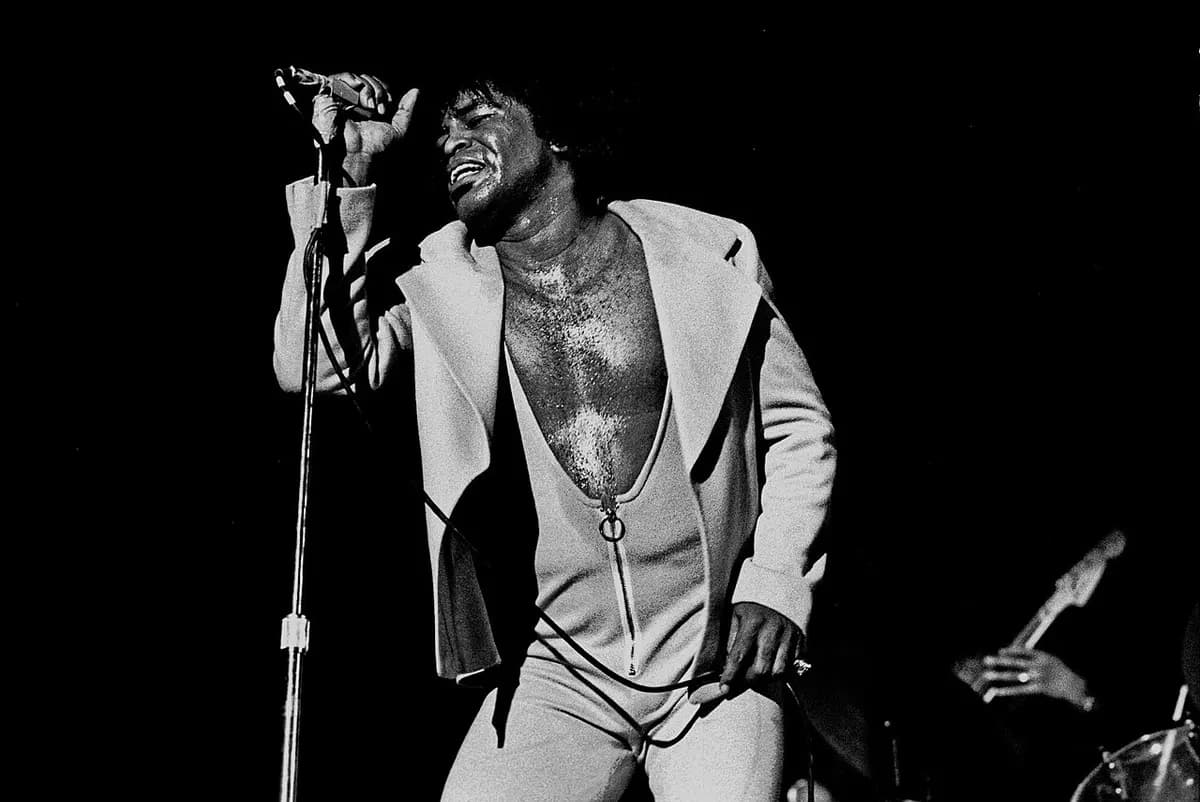
The signature of funk is its emphasis on the first beat of the bar, "the one." James Brown reorganised his band around that downbeat in the mid-1960s, telling players to hit hard on beat one and treat the rest of the bar as syncopated answer. The result feels heavier and more danceable than the backbeat-driven soul and R&B it grew out of. Funk is rhythm you feel in your body before you hear a melody, and most funk tracks care more about the groove than about a verse–chorus story.
History & Origins
Funk emerged in the United States in the mid-1960s, growing out of rhythm and blues, soul, and the African American musical tradition. Its single most important architect is James Brown. Around 1964–1965, with records like "Out of Sight" and the landmark "Papa's Got a Brand New Bag" (1965) and "Cold Sweat" (1967), Brown stripped harmony back and pushed the rhythm forward, instructing his band to play "on the one." His drummers turned the kit into the centre of the music. The best known is Clyde Stubblefield, whose "Funky Drummer" break (1970) became one of the most sampled beats in history.
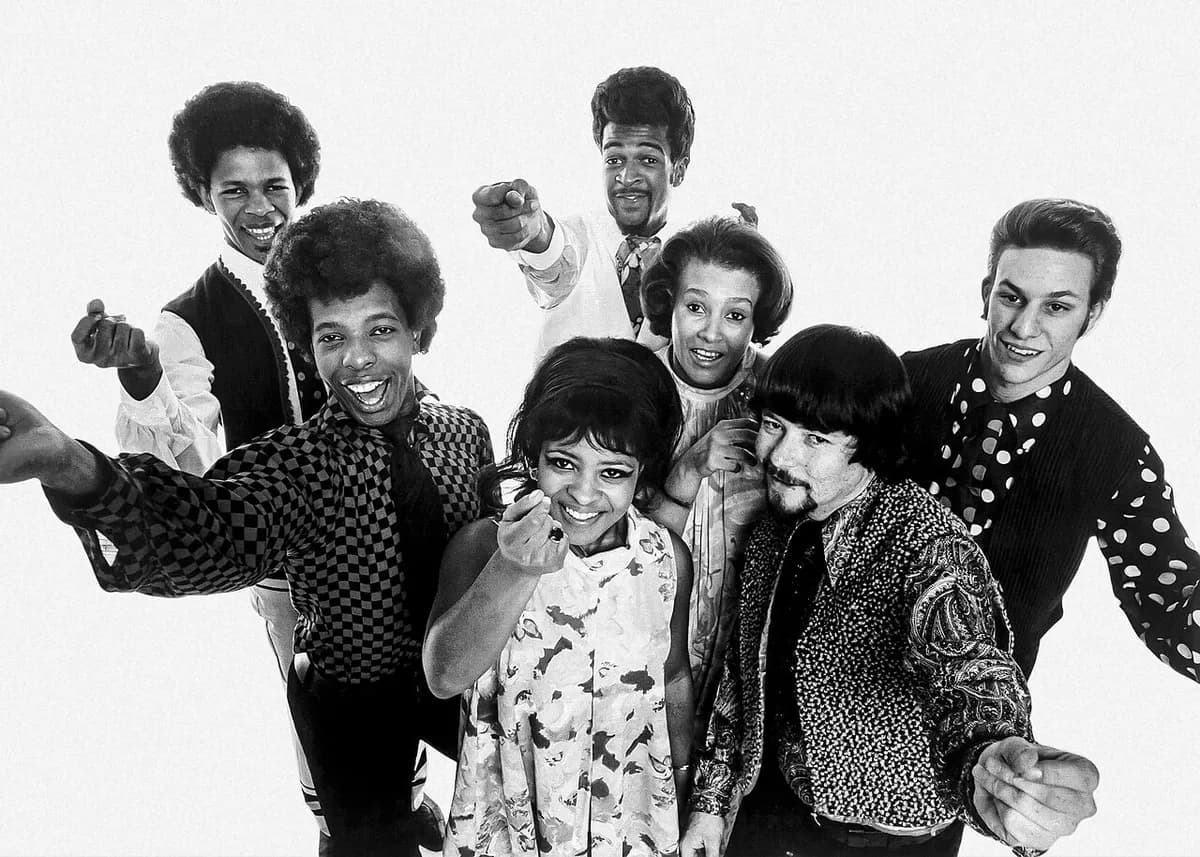
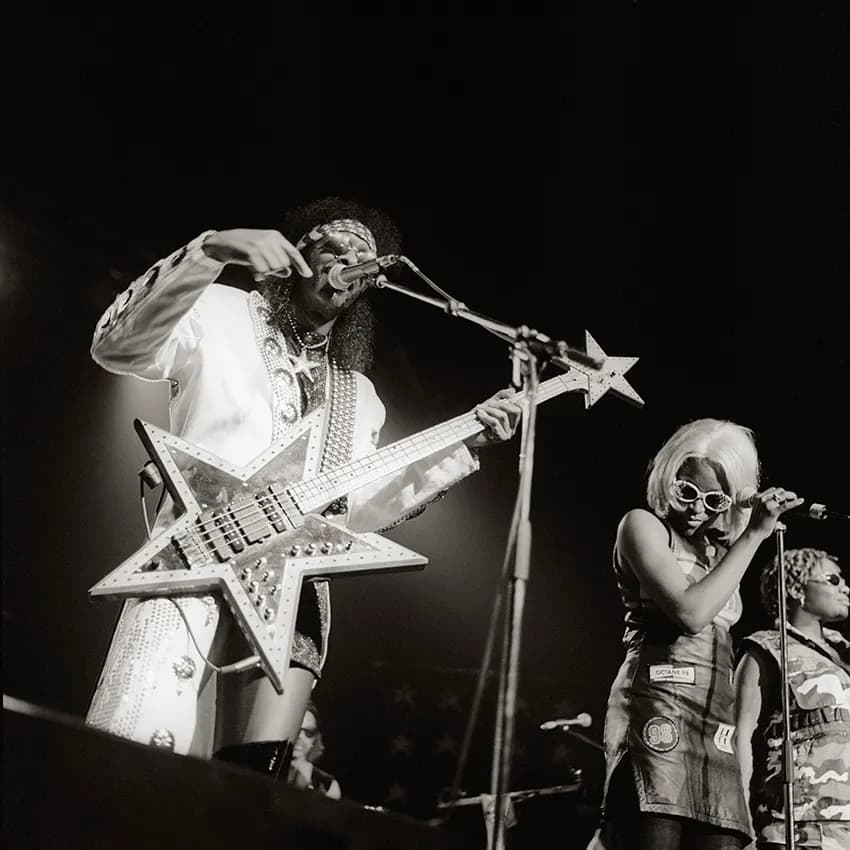
By the late 1960s and early 1970s, Sly & the Family Stone fused funk with psychedelic rock, pop hooks, and a racially and gender integrated lineup, producing classics like "Thank You (Falettinme Be Mice Elf Agin)" and the album There's a Riot Goin' On. At the same time, George Clinton built the sprawling Parliament-Funkadelic collective, blending Funkadelic's acid-rock heaviness with Parliament's horn-driven space-funk. Bassist Bootsy Collins, who first played with James Brown before joining Clinton's "P-Funk" universe, gave the music its rubbery, melodic low end and his "Space Bass."
Through the 1970s the genre fanned out: Kool & the Gang, The Meters, War, Ohio Players, Earth, Wind & Fire, and Stevie Wonder all pushed funk into the mainstream. Its rhythmic vocabulary then seeded entire genres. Disco borrowed funk's basslines and set them over a four-on-the-floor kick, and from the late 1970s onward hip-hop producers built their craft by sampling and looping funk breaks.
Key Characteristics & Sound
You can usually identify funk by these traits:
- Tempo: usually 90–120 BPM, with the classic mid-tempo pocket around 95–110: slow enough to swagger, fast enough to dance.
- The one: a heavy accent on the first beat of every bar; the rest of the bar is highly syncopated.
- Bassline: the lead voice. It is percussive and syncopated, often slapped and popped, and locked tight with the kick drum.
- Guitar: short, scratchy 16th-note "chicka" strums, frequently through a wah pedal.
- Harmony: static, often a single vamping chord for the whole groove.
- Horns: tight, punchy stabs that answer the rhythm section; they rarely carry the tune.
- Feel: deep, greasy, in-the-pocket, and repetitive by design so the groove can ride.
If a track plants its weight on beat one, rides a slapped, syncopated bassline, and answers it with scratchy wah guitar and stabbing horns over a single chord, you're hearing funk. Tempo and feel shift noticeably by era and offshoot:
| Style | Typical BPM | Feel |
|---|---|---|
| Classic / JB Funk | 95–115 | Hard on the one, horn-driven |
| P-Funk | 95–115 | Heavy, psychedelic, cosmic |
| Jazz-Funk | 100–120 | Smooth, harmonically rich, soloed |
| Funk Rock | 100–125 | Guitar-heavy, aggressive |
| Boogie / Post-Disco | 108–122 | Synth bass, polished, danceable |
| G-Funk | 90–100 | Laid-back, synth whine, deep low end |
Instruments & Production
Funk is a band genre, and each instrument is treated percussively. The classic toolkit:
- Slap bass: the heart of funk. Played on electric bass with a thumb-slap and finger-pop technique that turns the instrument into a melodic drum. Larry Graham of Sly & the Family Stone is widely credited with bringing it to electric bass in the late 1960s; he called it "thumpin' and pluckin'."
- Clavinet: the Hohner Clavinet's bright, biting, percussive keyboard tone is a funk signature, heard most famously on Stevie Wonder's "Superstition."
- Horns: a tight section of trumpet, sax, and trombone delivering short, punchy stabs that lock with the rhythm section.
- Wah guitar: rhythm guitar muted into short 16th-note "chicka" scratches, often shaped by a wah pedal for that vocal-like sweep.
- Drums: a tight kit that leans on the one, with ghost notes and crisp hi-hats. The break was built to be danced to, and hip-hop producers later sampled it.
Production-wise, classic funk was tracked live by a band playing as a single locked unit, with the engineer capturing a dry, punchy, mid-forward sound. The drum break, slap bass, and clav are mixed loud and up front. Later styles such as boogie and g-funk swapped some of that live instrumentation for synthesisers, drum machines, and sampled funk breaks, but the rhythmic and harmonic blueprint stayed the same.
Subgenres of Funk
Funk has branched into several distinct styles and seeded others:
- P-Funk: the heavy, psychedelic, cosmic funk of George Clinton's Parliament-Funkadelic, with sci-fi concepts, thick horn arrangements, and Bootsy Collins' rubbery bass.
- Funk Rock: funk's groove fused with rock's distorted guitars and energy; pioneered by Sly & the Family Stone and later carried by acts like the Red Hot Chili Peppers and Fishbone.
- Jazz-Funk: funk rhythm with jazz harmony, extended solos, and electric keyboards (Herbie Hancock's "Chameleon," Roy Ayers, The Crusaders).
- Boogie: early-1980s post-disco funk built on synth bass and drum machines, polished and dancefloor-ready; a bridge to electro and modern funk.
- G-Funk: early-1990s West Coast hip-hop that sampled and replayed P-Funk, with laid-back tempos, whining synth leads, and deep basslines (Dr. Dre's The Chronic, Snoop Dogg, Warren G).
- Go-Go: a Washington, D.C. offshoot built on continuous, call-and-response live percussion grooves (Chuck Brown).
Many of these sit close to neighbouring genres: jazz-funk borders jazz, boogie borders disco, and g-funk lives inside hip-hop. That cross-pollination is exactly how funk's DNA spread across modern music.
Funk vs Soul vs Disco
Funk is easy to confuse with its closest relatives. All three share African American roots and a strong groove, but the emphasis, tempo, and structure differ:
| Trait | Funk | Soul | Disco |
|---|---|---|---|
| Origin | US, mid 1960s | US, late 1950s–60s | US, early–mid 1970s |
| Tempo | 90–120 BPM | 60–120 BPM | 110–130 BPM |
| Rhythmic focus | Hard on 'the one' | Backbeat (2 & 4) | Four-on-the-floor |
| Priority | Groove & rhythm | Vocal & emotion | Dancefloor pulse |
| Harmony | Static, one-chord vamps | Rich, moving chords | Lush strings & chords |
| Lead voice | Bass & drums | The singer | Beat, strings, vocals |
Notable Artists & Tracks
Foundational and influential funk acts include:
- James Brown: "Papa's Got a Brand New Bag," "Cold Sweat," "Funky Drummer"; the bandleader who built the "on the one" groove.
- Sly & the Family Stone: "Thank You (Falettinme Be Mice Elf Agin)," "Family Affair"; funk-rock fusion.
- Parliament-Funkadelic / George Clinton: "Give Up the Funk (Tear the Roof off the Sucker)," "Flash Light"; the P-Funk universe.
- Bootsy Collins: "I'd Rather Be with You"; the Space Bass and the bridge from James Brown to P-Funk.
- Stevie Wonder: "Superstition," the best-known clavinet funk record.
- The Meters, Kool & the Gang, Ohio Players, Earth, Wind & Fire: tight, horn-rich 1970s funk staples.
Start with "Cold Sweat," "Thank You," "Give Up the Funk," and "Superstition" to hear the genre's arc from 1967 to its 1970s peak.
Funk Around the World & Today
Funk never really went away. It dissolved into the styles that followed: early hip-hop DJs and producers built their beats from looped funk breaks, and g-funk made that lineage explicit on the West Coast in the 1990s. Funk also went global, most notably in Brazil, where funk carioca (Brazilian funk) grew into a separate electronic style rooted in Miami bass.
In the 2010s and 2020s the live, horn-driven sound came roaring back into the mainstream through artists like Bruno Mars and Anderson .Paak. Silk Sonic's 2021 album, with Bootsy Collins billed as its "special guest host," and Mark Ronson and Bruno Mars's "Uptown Funk" introduced the groove to a new generation. The pocket James Brown built in 1965 still shapes how pop, hip-hop and R&B records groove.
How AI Detects Funk
Detecting funk by AI is less about tempo than about where the weight falls. A genre model listens for the handful of traits that mark funk: a hard accent on "the one," a syncopated slapped bassline glued to the kick, scratchy 16th-note wah guitar, and tight horn stabs riding a static, one-chord vamp. It rates how strongly each trait shows up, so no single template decides the result. Because funk shares roots with soul and disco and bleeds into hip-hop and R&B, the model keeps those related styles on the table and scores them side by side.
The fun part is watching it react in real time. Open the Genre AI music genre detector, let it grab a few seconds of any track, and it will tell you whether the groove reads as funk and which cousin (soul, disco or hip-hop) it edges toward. If you would rather know what the model is doing while it listens, our guide to how AI music genre detection works spells the whole process out.
Across our test clips the surest path to a strong Funk reading is a heavy accent on "the one," a slapped, syncopated bassline glued to the kick, and scratchy wah-guitar 16ths over a one-chord vamp in the 90–115 BPM band. Soften those horns and let the vocal step forward and the reading slides toward Soul; bring in a four-on-the-floor kick and sweeping strings and Disco takes the lead. Funk seeded so much of what surrounds it that the detector answers with a spread of related-genre scores marking exactly where a groove lands.