
Dance music, in the modern mainstream sense, is the commercial umbrella over four-on-the-floor electronic music made for clubs, radio and festival main stages. It runs at roughly 118–132 BPM, leans on hook-driven melodies and big drops, and is written to work on a dancefloor and in the charts at the same time. Think Eurodance, dance-pop, and the festival-EDM "big room" sound: Calvin Harris, David Guetta, Avicii, and Swedish House Mafia.
"Dance" is the populist layer that sits on top of house, techno and trance. It borrows their four-on-the-floor pulse and adds pop hooks, lead vocals and arena-sized production. This guide covers what dance music is, how it grew from disco into the EDM boom of the 2010s, how to recognise it by ear, its main subgenres, how it differs from house and pop, and the artists who shaped it. Got a track you can't place? Run a few bars through our free AI music genre detector and it will tell you whether you're hearing dance or one of its electronic relatives.
What Is Dance Music?
As a chart and marketing category, "dance" is the mainstream face of electronic dance music (EDM): the commercial umbrella over Eurodance, dance-pop and festival big room. It keeps the four-on-the-floor kick of club music and puts radio features in front: a topline vocal, a singalong hook, a build and a drop. Underground house and techno tracks often take minutes to develop; a dance record usually reaches its hook inside the first minute.
The difference is intent, not tempo. House, techno and trance are dance music too, but the "Dance" label describes records aimed at the widest audience: songs played on pop radio, at weddings and at festivals as well as in late-night club sets. A dance track is usually built from verses and a chorus, where club tracks are built from loops, and the drop does the job a guitar solo does in a rock song. Put simply, dance is club music arranged as pop songs.
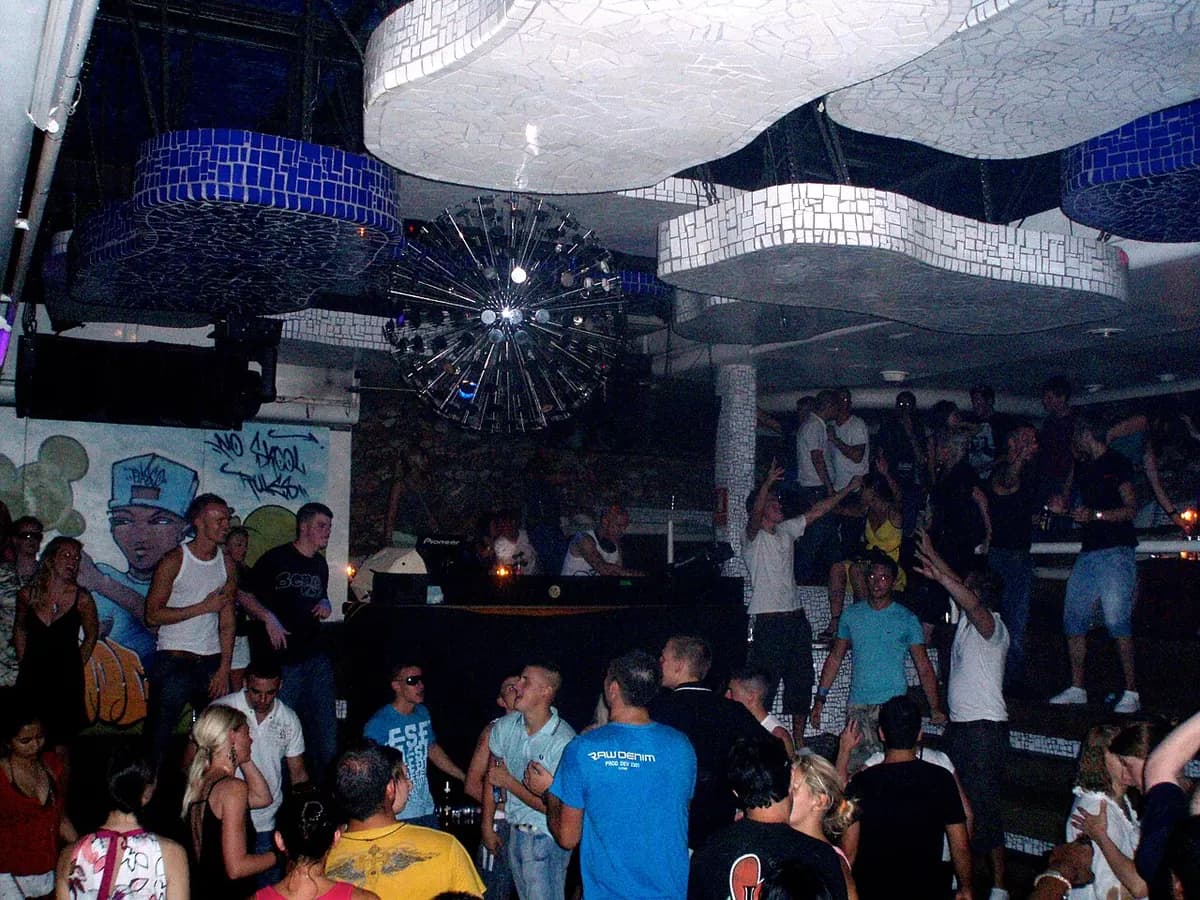
History & Origins
The line starts with disco in 1970s New York and Philadelphia, where producers built records around a steady four-on-the-floor kick so DJs could keep people dancing without a break. After the 1979 backlash against disco in the US, its rhythm moved into the drum machines and synthesisers of 1980s Chicago house and Detroit techno, while in Europe producers mixed it with synth-pop and Italo disco.
That European thread became Eurodance in the early 1990s: a polished, vocal-led sound that drew on techno, hi-NRG, house and hip-hop, and usually paired a sung female chorus with a rapped verse. Snap!, Haddaway ("What Is Love"), 2 Unlimited, Corona and La Bouche, and later Aqua and Vengaboys, had hits across Europe and beyond, and their records became the template for "dance" as a commercial format.
The modern era arrived with the EDM boom of the late 2000s and early 2010s. David Guetta's 2009 album One Love, with guests such as Kelly Rowland, Akon and Kid Cudi, put dance production at the top of the pop charts. Calvin Harris's 18 Months (2012) collected "We Found Love," "Feel So Close" and "Sweet Nothing." Avicii's "Levels" (2011) and "Wake Me Up" (2013) mixed dance production with folk and country songwriting, and Swedish House Mafia's "One" and "Don't You Worry Child" became festival staples. By the mid-2010s big-room and progressive-house drops were all over pop radio and the main stages of Tomorrowland, Ultra and EDC.
Key Characteristics & Sound
You can usually identify mainstream dance by these traits:
- Tempo: typically 118–132 BPM, clustering around 126–128 for festival big room; 1990s Eurodance ranges wider, roughly 120–145.
- Rhythm: a four-on-the-floor kick on every beat with off-beat open hi-hats and a sharp clap or snare on the backbeat.
- Structure: verse → pre-chorus build → drop (the instrumental climax that takes the place of a chorus), with a white-noise riser and a beat-free moment before the kick comes back.
- Melody: simple synth leads or a supersaw chord progression that a crowd can sing back.
- Vocals: prominent topline singing or rapped hooks; far more vocal-forward than underground house or techno.
- Mood: euphoric and immediate; the track is built toward one big release at the drop.
A steady kick on every beat, a rising riser, then a melodic drop: that sequence is mainstream dance. Tempo and feel shift across the umbrella's styles:
| Subgenre | Typical BPM | Feel |
|---|---|---|
| Eurodance | 120–145 | Hook-heavy, vocal + rap, retro |
| Dance-pop | 118–128 | Radio-ready, song-led, polished |
| Big Room / Festival EDM | 126–132 | Huge drops, anthemic, hands-up |
| Progressive House (festival) | 124–130 | Euphoric, long melodic builds |
| Future House / Future Bounce | 124–128 | Bouncy, metallic, playful |
| Electro House | 126–130 | Aggressive, distorted synth leads |
Instruments & Production
Dance is a producer's medium. Its instruments are mostly electronic, and the song is assembled in the studio, not played by a band. The usual toolkit:
- Drum machines & sampled kits: the four-on-the-floor kick (often layered and punchy), crisp claps, and sizzling off-beat open hi-hats descended from the Roland TR-909.
- Supersaw synths: the detuned "festival lead." The supersaw waveform first appeared on the Roland JP-8000 (1996); soft synths such as Sylenth1 and Spire produce the same stacked chords today.
- Plucks & bells: short, bright melodic plucks that carry the topline melody in the drop.
- Risers & impacts: white-noise sweeps, uplifters, and crash hits that signal the build and the drop.
- Vocals: a real topline singer (or a chopped vocal sample), heavily produced with tuning, doubling, and reverb.
In production, dance leans on side-chain compression (the "pumping" feel where everything ducks under the kick), filtered and pitched builds, gated reverb and a loud master. Today nearly all of it is made in a DAW with software synths, and the build-drop-hook plan stays the same across the genre.
Subgenres of Dance
The dance umbrella covers several recognisable styles:
- Eurodance: the 1990s template of sung female choruses and rapped verses (Snap!, Haddaway, 2 Unlimited, Aqua).
- Dance-pop: pop songwriting over a dance beat, aimed first at radio (Madonna, Kylie Minogue, Lady Gaga, Dua Lipa).
- Big Room / Festival EDM: the mid-2010s main-stage sound, with sparse, loud drops built for large crowds (Martin Garrix, Hardwell, Dimitri Vegas & Like Mike).
- Progressive House (festival): longer melodic builds and bright leads, as on Avicii and Swedish House Mafia records.
- Future House & Future Bounce: bouncy drops built on metallic, pitch-bent bass (Oliver Heldens, Mike Williams).
- Electro House: distorted synth leads and harder drops (Knife Party, early Skrillex).
- Hardstyle & Hardcore: the faster fringe of festival dance, with distorted kicks at 150 BPM and up.
Each of these borders a neighbouring genre. Festival progressive house leans toward trance; big room and future house sit right next to house; and the harder, drop-focused styles share DNA with dubstep and the broader bass scene.
Dance vs House vs Pop
Dance is easy to confuse with its underground parent (house) and its commercial cousin (pop). All three can share a beat and a chart, but intent and structure differ:
| Trait | Dance (umbrella) | House | Pop |
|---|---|---|---|
| Primary goal | Festival + radio anthem | Dancefloor groove for DJs | Broad radio hit |
| Tempo | 118–132 BPM | 118–130 BPM | 90–120 BPM |
| Structure | Verse → build → drop | Loop-led, extended mix | Verse → chorus |
| Beat | Four-on-the-floor | Four-on-the-floor | Varies (often backbeat) |
| Focus | Hook + euphoric drop | Groove + subtlety | Vocal + lyric |
| Example | Avicii, Calvin Harris | Frankie Knuckles, Disclosure | Taylor Swift, The Weeknd |
Notable Artists & Tracks
Acts to know:
- David Guetta: "When Love Takes Over," "Titanium"; paired club production with US pop and hip-hop singers.
- Calvin Harris: "We Found Love," "Feel So Close," "Summer"; topped Forbes's list of highest-paid DJs six years running, 2013–2018.
- Avicii: "Levels," "Wake Me Up," "Hey Brother"; brought folk and country songwriting into festival dance.
- Swedish House Mafia: "One," "Don't You Worry Child"; the trio of Axwell, Steve Angello and Sebastian Ingrosso.
- Eurodance acts: Haddaway ("What Is Love"), Snap! ("Rhythm Is a Dancer"), 2 Unlimited, Aqua ("Barbie Girl").
- Martin Garrix & Hardwell: "Animals," "Spaceman"; the big-room main-stage sound.
- Dance-pop singers: Lady Gaga, Dua Lipa and Kylie Minogue, who took the sound onto pop radio.
Start with "Rhythm Is a Dancer," "We Found Love," and "Wake Me Up" to hear the arc from 1990s Eurodance to the 2010s EDM boom.
Dance Around the World & Today
Dance is a global format. Producers from Sweden, the Netherlands, Germany and the UK led the 2010s EDM boom, and Europe still anchors the festival circuit (Tomorrowland in Belgium, Ultra editions in other countries). In the United States, EDC and Coachella's dance stages drew large crowds, and the hook-first Eurodance formula can be heard in Latin pop and K-pop.
After the big-room peak around 2014–2016, the sound split up: it folded back into house and tech house on festival main stages, into pop with tropical and future-bass touches, and into dance-pop albums of the 2020s such as Dua Lipa's Future Nostalgia (2020), Beyoncé's Renaissance (2022) and Drake's Honestly, Nevermind (2022). The build-and-drop structure that the EDM boom standardised is still common in pop production.
How AI Detects Dance Music
Mainstream dance is defined largely by structure, and an AI model picks up on that: the steady four-on-the-floor kick in the 118–132 BPM band, the white-noise riser before a build, the melodic drop where a chorus would sit, and a topline vocal at the front of the mix. The classifier compares that shape with the acoustic patterns it has learned for every style it knows. Because "dance" spans house, big room and pop, the answer comes back as a spread of probabilities across related genres.
To try it, open the Genre AI music genre detector, give it a snippet of whatever is playing, and see how it splits the score between dance and its neighbours. For a look under the hood at how the model reaches that decision, see our breakdown of how AI music genre detection works.
When we ran tracks through Genre AI ourselves, the Dance reading climbed highest on a four-on-the-floor kick near 126 BPM with a white-noise build and a large melodic drop. Because commercial dance is built on club rhythms, a tighter groove shifts the weighting toward House, and a loud festival lead shifts it toward Big Room. The model shows those neighbours together, so you can see where a borderline track sits.