
Blues is a music form born in the African-American communities of the Deep South around the turn of the 20th century. It is built on a few recognisable ingredients: the 12-bar progression, flattened "blue" notes, call-and-response between voice and instrument, and three-line AAB lyric stanzas. Jazz, rhythm and blues, and rock and roll all grew partly out of it.
This guide explains what the blues is, where it came from, how to recognise it by ear, the instruments that define its sound, the subgenres from acoustic Delta to amplified Chicago, how it differs from jazz and rock, and the artists worth knowing. Want to test a track yourself? Run a short clip through the free AI music genre detector and it will listen for the shuffle, the bent blue notes, and the call-and-response that mark a recording as blues.
What Is Blues Music?
The blues is a vocal and instrumental form rooted in African-American folk music, defined less by tempo or instrumentation than by a specific harmonic and expressive vocabulary. At its centre sits the blue note, a pitch bent or sung slightly below the major-scale tone (typically the flattened third, fifth, or seventh), which gives the music its "in-between" sound. You hear it most clearly when a guitarist bends a string up toward a note but stops just short of it.
The other pillar is form. Most blues follows a repeating 12-bar harmonic cycle built on three chords (the I, IV, and V of a key), paired with a three-line lyric that states a line, repeats it, then answers it: the AAB stanza. Over this frame, a singer and an instrument trade phrases in call-and-response, a habit that historians trace to West African music and to field hollers and work songs. The template is simple enough that a singer can fit almost any story into it, and musicians have been using it for more than a hundred years.
History & Origins
The blues emerged in the Deep South, especially the Mississippi Delta, in the decades around 1900, among African-American sharecroppers and laborers. It grew out of spirituals, field hollers, work songs, and the call-and-response traditions carried from West Africa. There is no single inventor and no founding record; the form took shape gradually in rural communities before it was ever written down or pressed to disc.
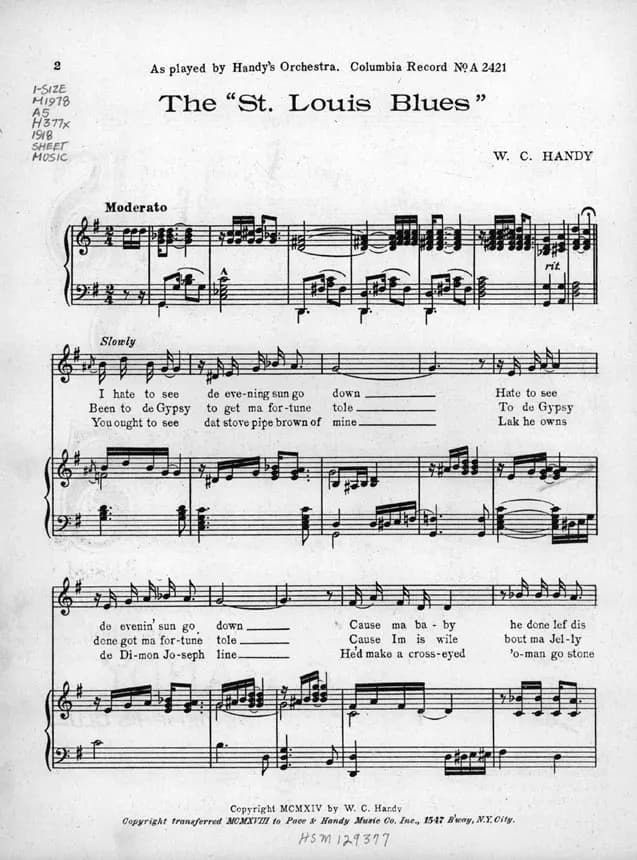
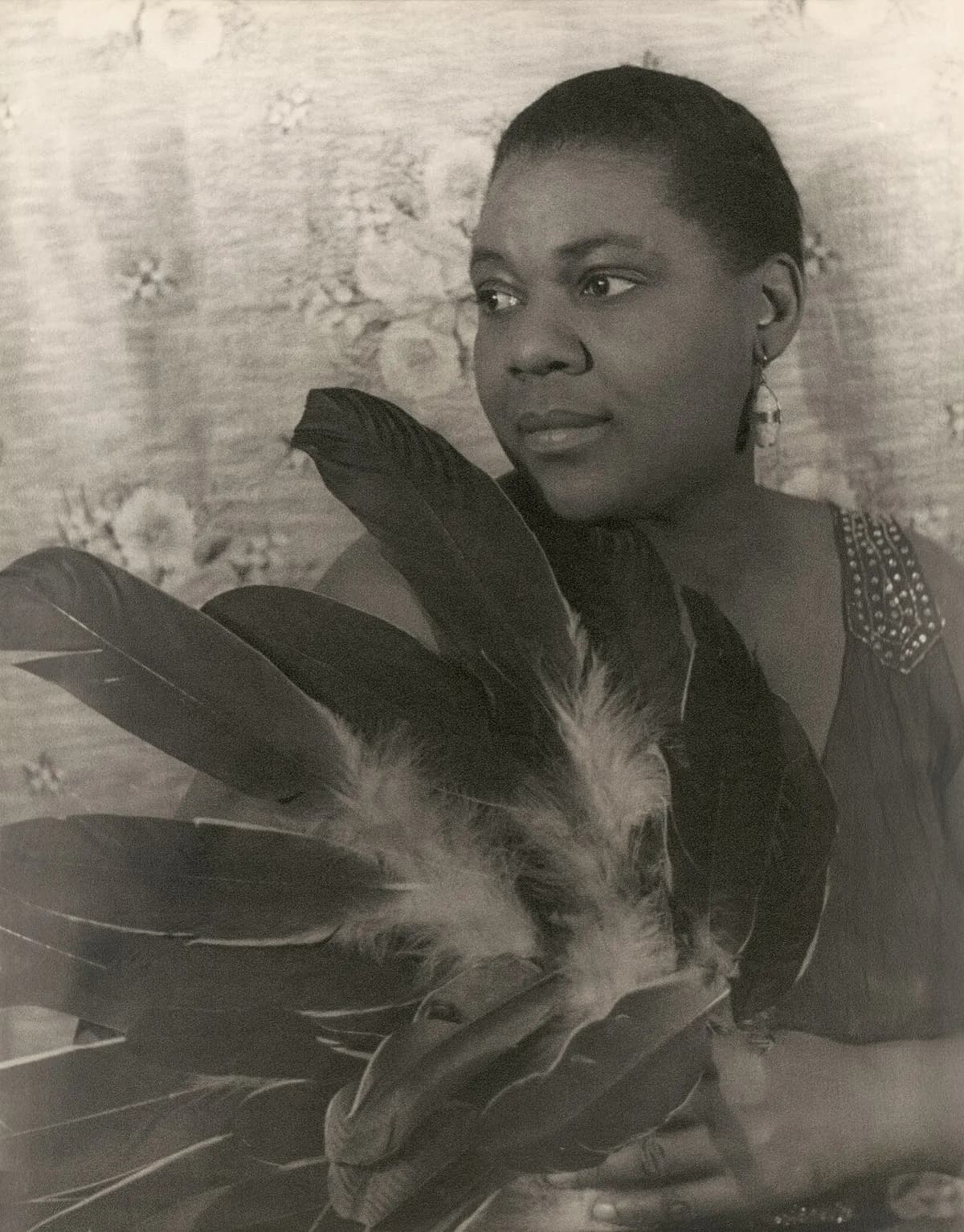
The blues reached a wider public when W. C. Handy published "The Memphis Blues" (1912) and "St. Louis Blues" (1914). Records followed: Mamie Smith's "Crazy Blues" (1920) sold well enough that labels went looking for more Black women singers, and the 1920s "classic" blues era of Ma Rainey and Bessie Smith followed. In the rural Delta, a parallel tradition of solo singer-guitarists took shape, among them Charley Patton, Son House, and Robert Johnson, whose 1936–37 recordings in San Antonio and Dallas, and the later story of a deal at the crossroads, made him the best-known name of that tradition.
The next big change came with the Great Migration, as Black Southerners moved north to cities like Chicago. There, acoustic Delta blues was rebuilt for loud, crowded clubs: Muddy Waters, Howlin' Wolf, and their bands plugged in electric guitars and amplified harmonicas, adding bass and drums to create the ensemble-driven Chicago electric blues of the late 1940s and 1950s. That amplified sound fed into rock and roll, and in the 1960s British bands such as the Rolling Stones (named after a Muddy Waters song) and later Led Zeppelin sold it back to American audiences.
Key Characteristics & Sound
You can usually identify blues by these traits:
- Form: the 12-bar blues, a repeating cycle over three chords (I–IV–V) and the most common harmonic frame in the genre.
- Notes: blue notes (flattened thirds, fifths, and sevenths), often bent or "smeared" between pitches, drawn from the minor pentatonic / blues scale.
- Lyrics: the AAB stanza, with a first line, its repeat, and a contrasting third line that resolves it.
- Interaction: call-and-response between the voice and an answering instrument (guitar fills, harmonica phrases).
- Feel: a loose shuffle or swung triplet groove, frequently with a heavy backbeat.
- Expression: string bends, slides, vibrato, and vocal melisma carrying the emotional weight.
If you hear a three-chord cycle, a singer answered by guitar or harmonica, and notes that seem to slide between the cracks of the piano keys, you are probably hearing the blues. The feel and instrumentation shift noticeably from one style to the next:
| Style | Era / Region | Feel |
|---|---|---|
| Delta Blues | 1920s–30s, Mississippi | Raw, acoustic, solo slide guitar |
| Piedmont Blues | 1920s–30s, Southeast | Fingerpicked, ragtime-flavoured |
| Chicago Blues | 1940s–50s, urban North | Amplified, full-band, gritty |
| Jump Blues | 1940s, nationwide | Upbeat, horn-driven, danceable |
| Texas Blues | 1950s–60s, Texas | Single-string guitar leads, swing |
| Blues Rock | 1960s onward | Loud, electric, riff-heavy |
Instruments & Production
The blues is played on acoustic and electric instruments, and much of its sound comes from how players bend, slide, and breathe through them:
- Guitar: the signature blues voice, played with string bends, vibrato, and bottleneck slide. Acoustic in the Delta, electric (often a hollow-body or Stratocaster) in Chicago and beyond.
- Harmonica ("blues harp"): played "cross harp" for expressive bends; in Chicago blues it was cupped against a microphone and amplified into a thick, distorted growl (Little Walter, Big Walter Horton).
- Piano: central to barrelhouse and boogie-woogie, with rolling left-hand bass figures (Albert Ammons, Meade Lux Lewis), and a fixture of Chicago bands (Otis Spann with Muddy Waters).
- Rhythm section: upright or electric bass and drums laying down the shuffle and backbeat that powered the electric era.
- Horns: saxophone and trumpet sections drove jump blues and the jazz-adjacent end of the genre.
Recording was about capturing a performance. Early blues was cut live to disc, and classic Chicago records kept the slightly overdriven tone of amplified guitar and harp instead of cleaning it up. Rock guitarists of the 1960s took that distorted tone straight from those records.
Subgenres of Blues
The blues has branched into many regional and stylistic schools. The main ones:
- Delta Blues: the raw, acoustic Mississippi root style of solo singer-guitarists, defined by slide guitar and intense vocals (Robert Johnson, Son House).
- Chicago Blues: Delta blues electrified and rebuilt as a loud ensemble with amplified harmonica, bass, and drums (Muddy Waters, Howlin' Wolf).
- Electric Blues: the broader post-war amplified tradition, with the electric guitar and its bent notes out front (B.B. King, Buddy Guy).
- Jump Blues: an up-tempo, horn-driven, swing-influenced style that bridged into rhythm and blues and early rock and roll (Louis Jordan, Big Joe Turner).
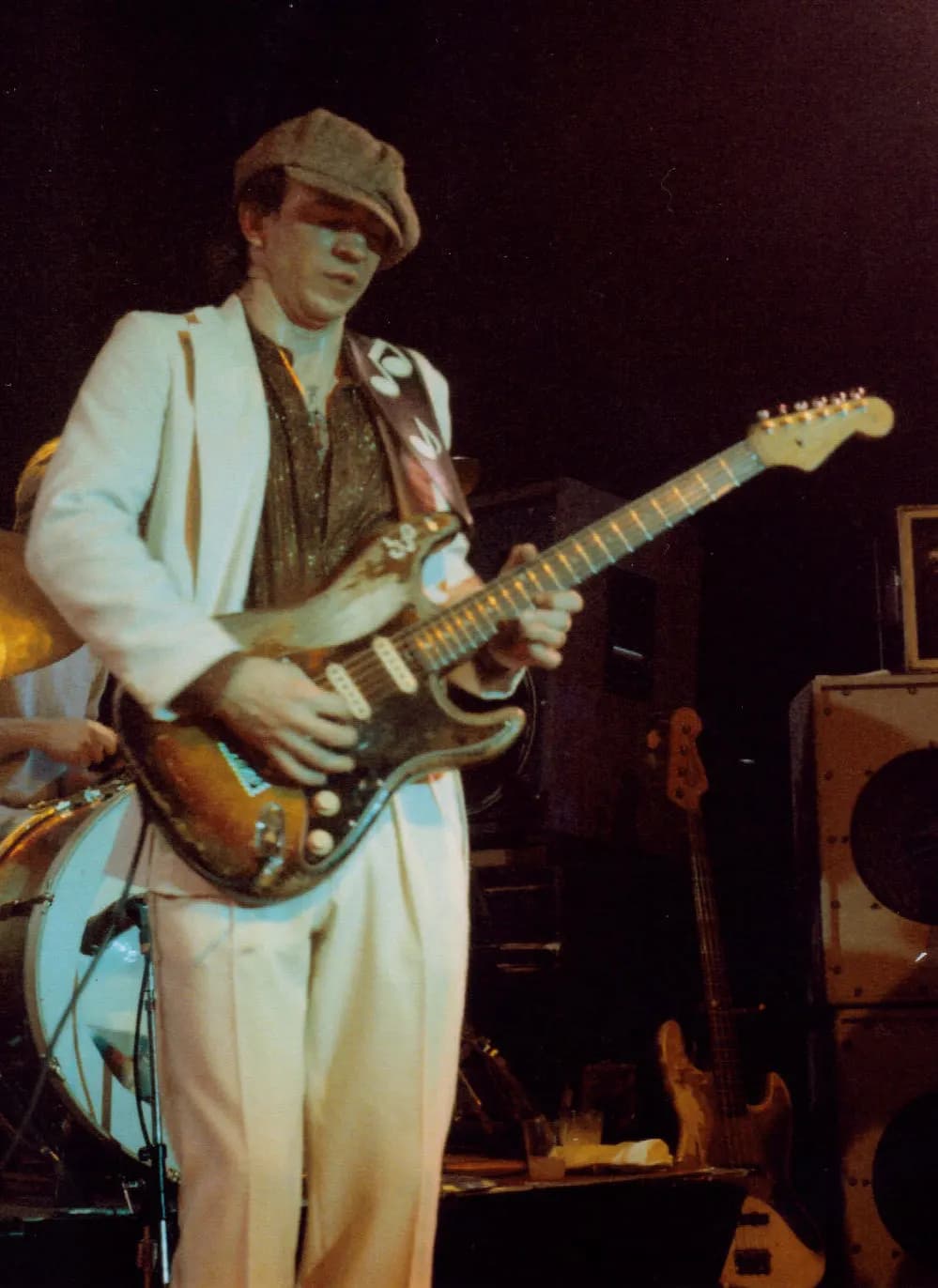
- Texas Blues: a swinging, single-string guitar approach (T-Bone Walker, later Stevie Ray Vaughan).
- Piedmont Blues: an East Coast fingerpicked style with a ragtime lilt (Blind Blake, Blind Willie McTell).
- Blues Rock: the loud, amplified 1960s fusion that powered British and American rock, blurring into rock (Cream, Led Zeppelin, the Rolling Stones).
Many of these sit close to neighbouring genres: jump blues borders jazz and swing, while electric blues and blues rock run into rock.
Blues vs Jazz vs Rock
The blues, jazz, and rock are close relatives, and all three use the blue note and the 12-bar form, but they differ in emphasis and harmony:
| Trait | Blues | Jazz | Rock |
|---|---|---|---|
| Origin | Deep South, ~1900 | New Orleans, ~1910s | USA/UK, 1950s |
| Core feel | Shuffle, raw emotion | Swing, sophistication | Backbeat, energy |
| Harmony | Three chords (I–IV–V) | Extended, complex chords | Power chords, riffs |
| Improvisation | Expressive, within form | Central and elaborate | Limited, riff-based |
| Focus | Vocal lament & guitar | Instrumental virtuosity | Song & hooks |
Notable Artists & Tracks
Blues artists to start with:
- Robert Johnson: "Cross Road Blues" and "Sweet Home Chicago" (both 1936), from the 29 songs he recorded.
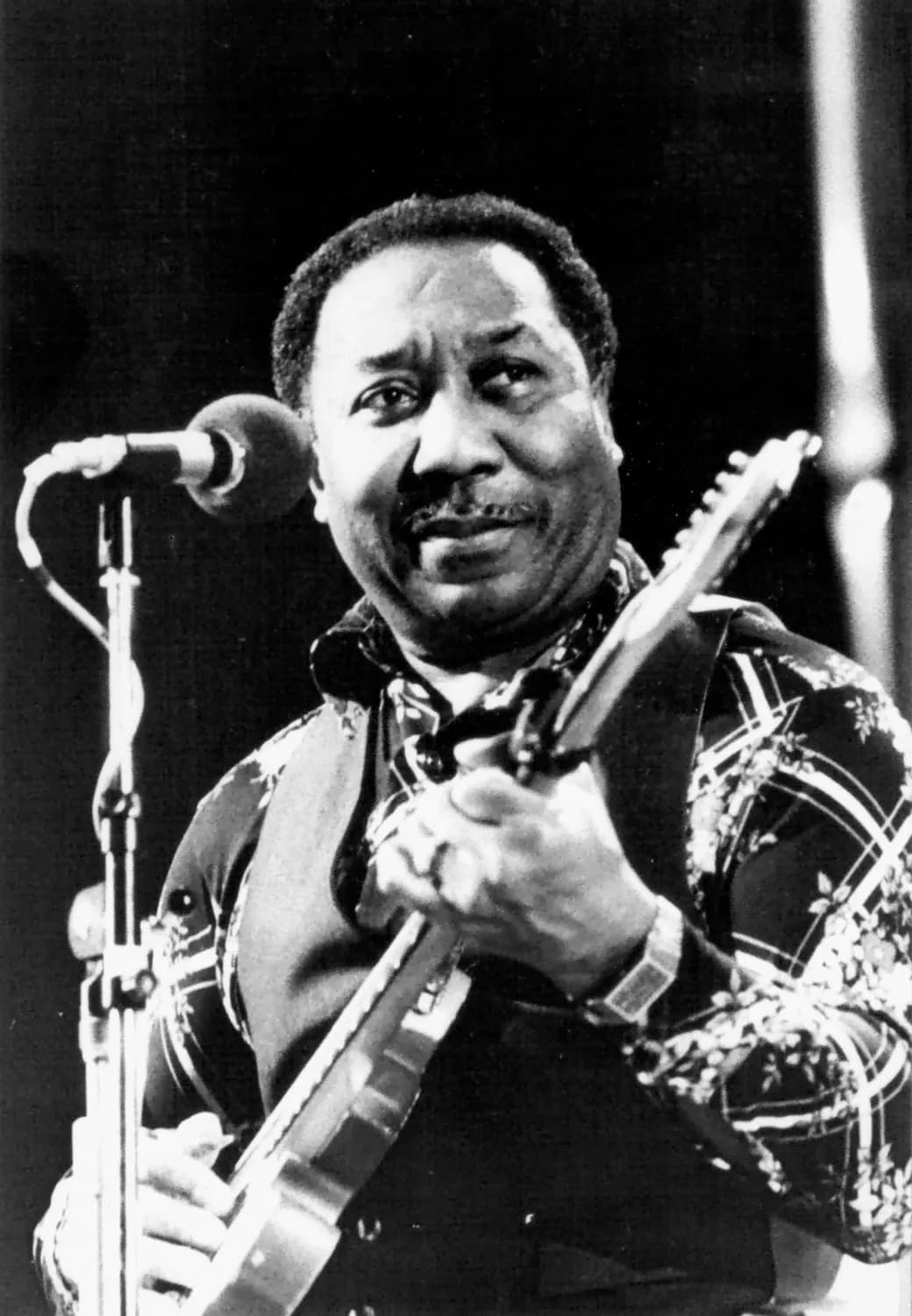
- Muddy Waters: "Hoochie Coochie Man" (1954, written by Willie Dixon) and "Mannish Boy" (1955); his Chess records set the template for electric Chicago blues.
- Howlin' Wolf: "Smokestack Lightnin'" (1956) and "Spoonful" (1960), sung in a huge, rasping voice.
- B.B. King: "The Thrill Is Gone" (1969); his guitars, all named "Lucille", and his fast left-hand vibrato were copied by generations of players.
- Bessie Smith: "Downhearted Blues" (1923), her first record, reported to have sold about 780,000 copies in six months and the start of her reign as the "Empress of the Blues".
- John Lee Hooker, Buddy Guy, Etta James, Stevie Ray Vaughan: the boogie, Chicago, soul-blues, and Texas traditions.
Start with "Cross Road Blues," "Hoochie Coochie Man," and "The Thrill Is Gone" to hear the genre's arc from the Delta to the electric era.
Blues Around the World & Today
Music that began among Mississippi sharecroppers is now played everywhere. The 1960s British blues boom (John Mayall, the Rolling Stones, Eric Clapton, then Led Zeppelin) brought it back to mass audiences and led into hard rock and heavy metal. In the United States the blues lives on through festivals, the Chicago and Memphis club circuits, and the Mississippi Blues Trail, a network of roadside historical markers that began with a marker for Charley Patton at Holly Ridge in December 2006.
Today the blues is both a preserved tradition and an influence on newer music. Gary Clark Jr., Joe Bonamassa, and Christone "Kingfish" Ingram, whose 662 won the 2022 Grammy for best contemporary blues album, still play electric blues to large audiences, and the blue note, the 12-bar turnaround, and the bent string show up in rock, soul, R&B, country, and hip-hop.
How AI Detects Blues
An AI genre model recognises blues less by tempo than by structure and articulation. It listens for the repeating 12-bar I–IV–V turnaround, the prevalence of blue notes and string bends (pitch contours that slide between scale tones before they settle), the shuffle triplet feel, and the back-and-forth call-and-response between a voice and an answering guitar or harmonica. Taken together, those signals give a recognisable shape even though blues shares most of its instruments with rock and jazz. Because they overlap, the model weighs them as a set instead of trusting any one cue on its own.
To hear it for yourself, open the Genre AI music genre detector, let it sample a few bars of any recording, and it will report whether the track reads as blues and which sub-style it favours. To follow the reasoning that turns sound into a label, read how AI music genre detection works.
In our own listening tests, Genre AI's model is surest of Blues when bent, vocal-like guitar phrasing answers a singer over a three-chord shuffle, which is how a 12-bar turnaround with blue notes sounds to it. Crank the guitar into loud, riff-driven territory and the weighting slides toward Blues Rock; let amplified harmonica and a full rhythm section take over and Chicago Blues rises instead. Each of those pulls earns its own score, so the result shows where a track sits within the blues family instead of a single label.