Old-school hip-hop is the earliest era of recorded and live hip-hop, running from DJ Kool Herc's Bronx block parties in 1973 to roughly 1983–1984, when Run-DMC's stripped-down drum-machine sound ushered in the "new school". Its music is party rap: MCs trading rhymes, routines and crowd chants over extended funk and disco breaks played on turntables or recreated by studio bands, and, from 1982, over the electronic beats of electro. Kool Herc, Afrika Bambaataa, Grandmaster Flash and the Furious Five, the Sugarhill Gang, Kurtis Blow, the Funky 4 + 1 and the Cold Crush Brothers are its central names.
This guide explains what "old school" means (the term is used in two different ways), how the culture grew from parties to records, what the music sounds like, and how it differs from the golden age and from boom bap. To hear whether a vintage rap track still reads as hip-hop to a machine, or as disco, drop a clip into our free AI music genre detector.
What Is Old-School Hip-Hop?
In the strict, historical sense, old-school hip-hop means the music of the culture's first decade, roughly 1973 to 1983. It began as a live DJ practice in the Bronx, became a recorded genre in 1979, and is defined by its party function: the MC's job was to move the crowd, praise the DJ and show off rhyming skill. Long stories and political statements came later. Rhymes are simple, mostly couplets on the beat, delivered in a bouncy, sing-song cadence that sounds very different from the denser flows of the late 1980s.
In everyday speech "old school" is also used much more loosely, for anything from the 1980s and 1990s or for any rap that sounds "classic" next to current trap. That looser use usually means the golden age (roughly 1986–1994) of Public Enemy, Rakim, A Tribe Called Quest and Nas. This article uses the strict historical meaning and explains the difference below.
The same parties and neighbourhoods produced breaking (breakdancing) and graffiti writing, and Afrika Bambaataa's Universal Zulu Nation framed DJing, MCing, breaking and graffiti as the "elements" of one culture. The feature film Wild Style and the documentary Style Wars, both released in 1983, filmed that whole world while it was still young.
History & Origins
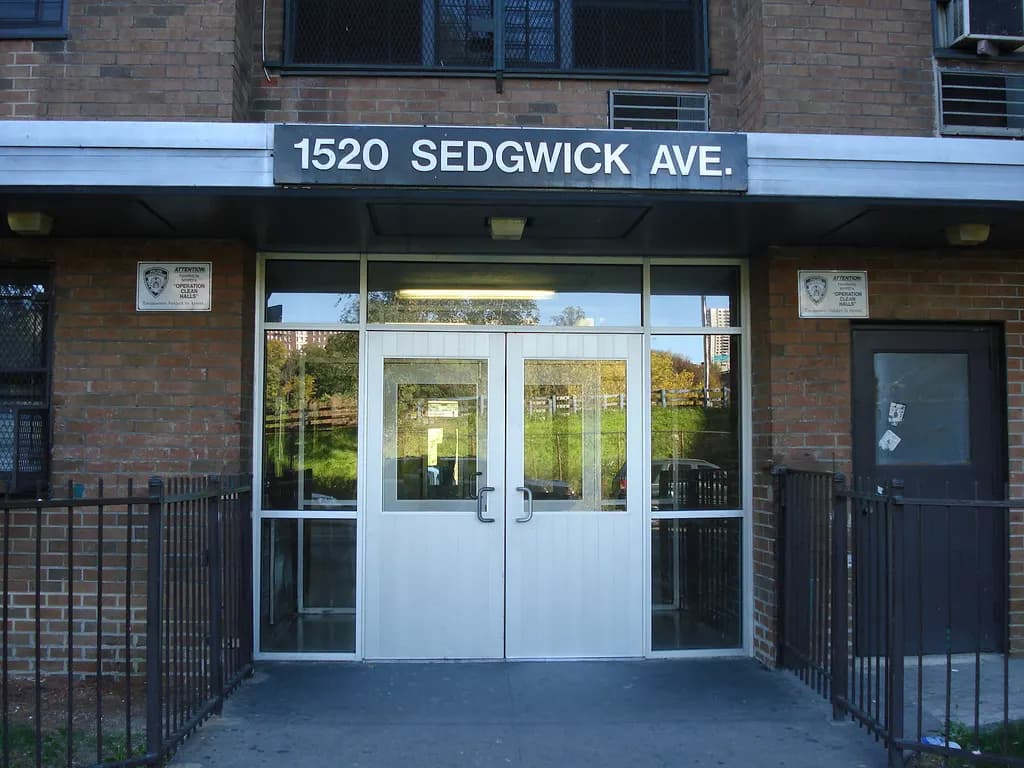
The founding story is set at 1520 Sedgwick Avenue in the West Bronx. On 11 August 1973 Clive Campbell, known as DJ Kool Herc, born in Jamaica and influenced by its sound-system culture, DJed a back-to-school party organised by his sister Cindy in the building's recreation room. Herc noticed dancers went wildest during the short percussion breaks of funk records, so he began playing two copies of the same record and switching between them to extend the break. He called it the "merry-go-round"; the dancers became b-boys and b-girls.
Others built on the idea. Afrika Bambaataa, a former Black Spades gang member from the Bronx River Houses, turned his parties and his Universal Zulu Nation into a movement and was famous for playing anything with a beat, from funk and soul to Kraftwerk and rock. Grandmaster Flash (Joseph Saddler) refined the mixing technique so that breaks could be cut together precisely. Scratching is generally credited to Grand Wizzard Theodore, who is usually dated to 1975. As DJs concentrated on the turntables, the job of talking to the crowd passed to MCs, and crews such as the Furious Five, the Cold Crush Brothers, the Treacherous Three and the Funky 4 + 1 developed elaborate group routines. The Funky 4 + 1's Sha-Rock is often named as one of the first female MCs.
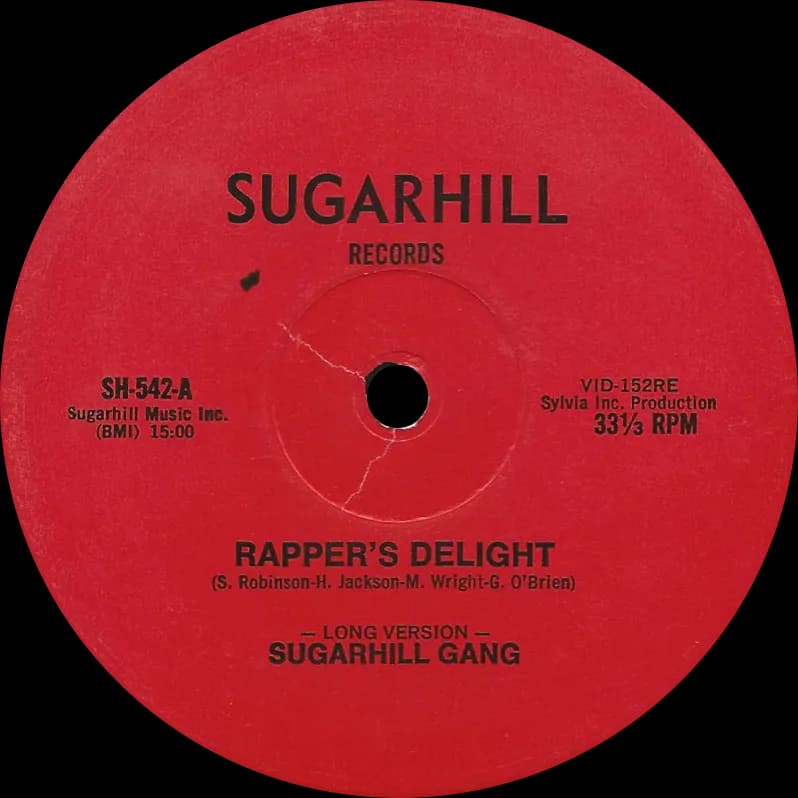
For six years the music existed only live and on bootleg party tapes. Then, in 1979, two records arrived almost at once. The Fatback Band's "King Tim III (Personality Jock)" is usually cited as the first commercially released rap record; accounts of how far it beat its rival range from a week to a few months. The Sugarhill Gang's "Rapper's Delight", assembled by Sylvia Robinson for her Sugar Hill Records and built on the bass line of Chic's "Good Times", followed that autumn, became an international hit and introduced rap to the world. Kurtis Blow, the first rapper signed to a major label (Mercury), followed with "Christmas Rappin'" (1979) and "The Breaks" (1980), generally cited as the first rap single certified gold.
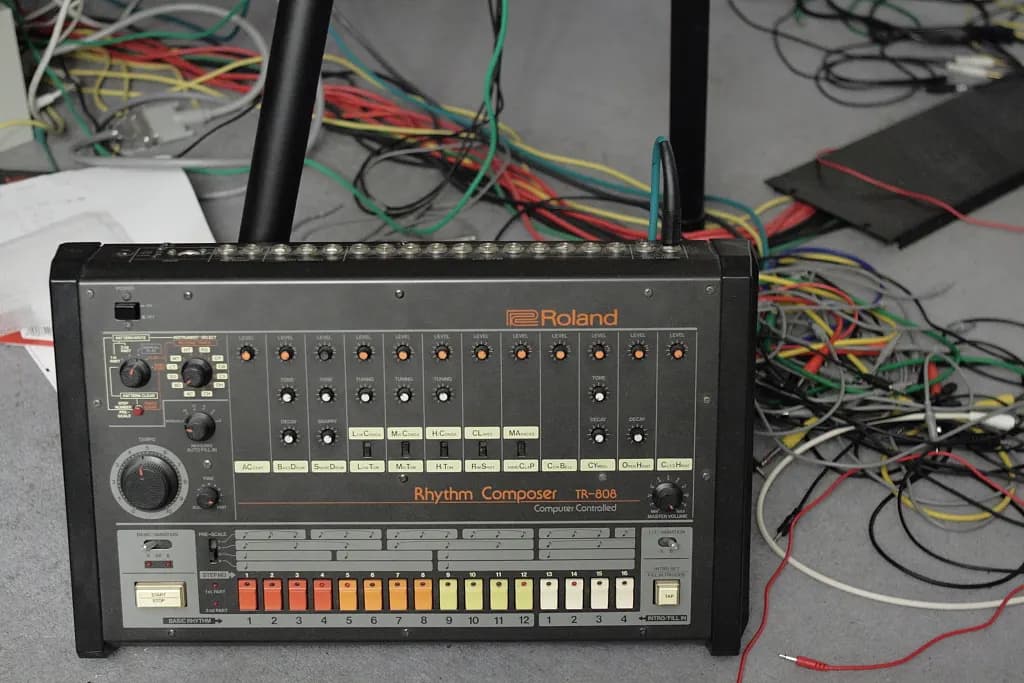
The early 1980s brought the era's most important records. Grandmaster Flash's "The Adventures of Grandmaster Flash on the Wheels of Steel" (1981) put live turntable cutting on vinyl. Afrika Bambaataa & the Soulsonic Force's "Planet Rock" (Tommy Boy, 1982), produced by Arthur Baker and John Robie, combined a Roland TR-808 beat with melodies adapted from Kraftwerk and launched electro. Grandmaster Flash and the Furious Five's "The Message" (1982), written by Melle Mel and Ed "Duke Bootee" Fletcher over a slow groove, showed that rap could describe hardship as well as celebrate the party, pointing toward conscious hip-hop.
The era ended quickly. In 1983 Run-DMC released "It's Like That" with "Sucker M.C.'s" on the B-side; producer Larry Smith later said the B-side was "just them and a drum machine", an Oberheim DMX with a few scratches. Their 1984 debut album and the founding of Def Jam the same year defined the "new school". Within a couple of years the sound of the first decade was already being called old school.
| Year | Event |
|---|---|
| 1973 | DJ Kool Herc's back-to-school party at 1520 Sedgwick Avenue, the Bronx |
| Mid-1970s | Afrika Bambaataa founds the Universal Zulu Nation; Grandmaster Flash refines mixing; Grand Wizzard Theodore credited with the scratch |
| 1979 | Fatback Band's "King Tim III" and the Sugarhill Gang's "Rapper's Delight" |
| 1980 | Kurtis Blow's "The Breaks"; Funky 4 + 1's "That's the Joint" |
| 1981 | "The Adventures of Grandmaster Flash on the Wheels of Steel" |
| 1982 | "Planet Rock" launches electro; "The Message" brings social commentary |
| 1983 | Wild Style and Style Wars released; Run-DMC's "Sucker M.C.'s" signals the new school |
Key Characteristics & Sound
What an old-school rap record usually sounds like:
- Tempo: that of the disco and funk records it was built on, commonly put at about 100–120 BPM and faster than the 85–95 BPM usual in later boom bap. Tempo analyses place "Rapper's Delight" around 110–115 BPM; "The Message" deliberately slows down.
- Backing: before samplers were affordable, records used a live studio band replaying a disco or funk groove (Sugar Hill's house band of Doug Wimbish, Keith LeBlanc and Skip McDonald played on many of the label's hits), or a drum machine and synthesisers in the electro style.
- Rhyme style: end-rhymed couplets landing squarely on the beat, sing-song cadences, call-and-response with the crowd ("Throw your hands in the air"), and bragging about the DJ and the crew.
- Group routines: several MCs passing lines, finishing each other's rhymes and rapping in unison, a rehearsed style taken from the live shows.
- DJ techniques: breaks extended by back-to-back copies, quick cutting between records, scratching and "punch phrasing", all placed up front in the mix.
- Song length: long. "Rapper's Delight" runs about fifteen minutes in its full twelve-inch version, because records imitated a party, not a radio song.
Instruments, Records & Technology
The core instrument of the live era was a pair of turntables, a mixer and a powerful sound system, with the records themselves as raw material. Certain breakbeats became standards because the dancers loved them: the Incredible Bongo Band's "Apache", James Brown's "Give It Up or Turnit a Loose", the Jimmy Castor Bunch's "It's Just Begun" and the Winstons' "Amen, Brother", whose drum break later underpinned jungle and drum and bass.
In the studio the first rap records were made the same way as disco records: a band played the groove and the MCs recorded over it. That changed with the drum machine. The Roland TR-808, introduced in 1980, gave "Planet Rock" its booming kick and snappy handclaps, and electro producers added Roland and Moog synthesisers and vocoders. An Oberheim DMX then powered the hard minimalism of Run-DMC's "Sucker M.C.'s". Affordable samplers capable of looping a whole break, the tools that define boom bap, only arrived in the mid-1980s, which is one of the clearest technical lines between old school and what followed.
Old School vs Golden Age vs New School
The labels for early hip-hop eras overlap, and writers draw the boundaries differently. A common way to separate them:
| Trait | Old school (1973–1983) | New school (1983–1986) | Golden age (c. 1986–1994) |
|---|---|---|---|
| Beats | Live bands replaying disco/funk; turntable breaks; early electro | Hard drum machines, sparse, rock guitar touches | Sampled breaks and loops on SP-1200 / MPC |
| Typical tempo | ≈100–120 BPM | ≈95–110 BPM | ≈85–100 BPM |
| Rhyme style | Simple on-beat couplets, crowd chants | Shouted, punchy, call-and-response between two MCs | Dense internal rhymes, complex flows |
| Subjects | Party, boasts, DJ praise | Boasts, attitude, street style | Storytelling, politics, Afrocentrism, street life |
| Key artists | Sugarhill Gang, Grandmaster Flash, Kurtis Blow | Run-DMC, LL Cool J, Whodini | Public Enemy, Rakim, KRS-One, A Tribe Called Quest |
Key Artists & Classic Records
- DJ Kool Herc: the founding DJ, known from live accounts and party tapes. He made no records in the era.
- Sugarhill Gang, "Rapper's Delight" (1979): the record that took rap worldwide.
- Kurtis Blow, "The Breaks" (1980): major-label rap with a live funk band.
- Funky 4 + 1, "That's the Joint" (1980): group routines on record, with Sha-Rock on the mic.
- Grandmaster Flash, "The Adventures of Grandmaster Flash on the Wheels of Steel" (1981): a turntable performance on record.
- Afrika Bambaataa & the Soulsonic Force, "Planet Rock" (1982): the 808, Kraftwerk and the birth of electro.
- Grandmaster Flash and the Furious Five, "The Message" (1982): Melle Mel's portrait of the South Bronx.
- Treacherous Three, Spoonie Gee, the Cold Crush Brothers: key figures of the live circuit whose records capture the routine-based style.
Old-school records stayed influential long after the era ended. "Rapper's Delight" and "The Message" have been sampled and quoted many times, and the party energy of the first decade lives on in electro, Miami bass, Brazilian funk and the breakbeat-driven dance styles that grew from it. For the bigger picture, our brief history of hip-hop follows the story from the Bronx to the present.
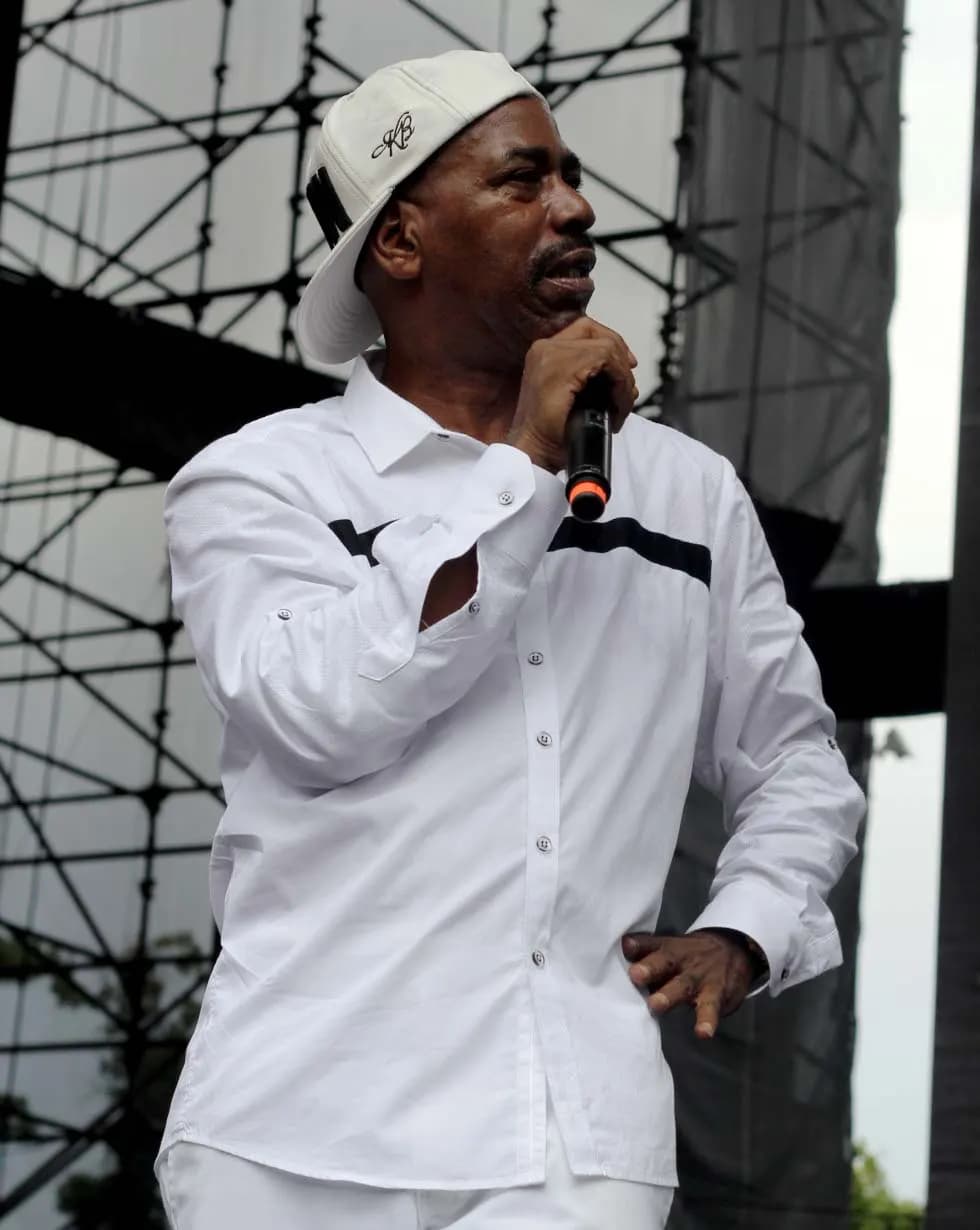
Old-school hip-hop is one of the trickier rap styles for an audio classifier such as Genre AI, because much of what made a record "hip-hop" in 1979 is the voice, not the beat. The production taxonomy has no old-school label. Rapping over a clear drum loop should push a track toward the coarse Rap Hip-Hop label, and there the likely fine answer is Pop Rap, whose text prompts include the bare word "rap"; Gangsta or Jazzy HipHop may show up as alternatives. Band-backed records such as "Rapper's Delight" or "The Breaks" carry a full disco-funk arrangement (bass guitar, rhythm guitar, four-on-the-floor or funk drums), so the model may pick Funk / Soul instead and answer Disco or Funk, especially on instrumental stretches. Drum-machine tracks like "Planet Rock" may land on Electronic Dance and its fine label Electro. Old recordings also have a narrower frequency range than modern rap, without the deep sub-bass of current hip-hop. Use the vocal sections for the clearest result.