Mandopop, short for Mandarin popular music, is pop sung in Mandarin Chinese and the branch of C-pop with the largest audience. It began in the dance halls and film studios of Shanghai between the 1920s and 1940s, moved to Hong Kong, and from the 1970s had its centre in Taipei; by the mid-1980s Taiwan's industry supplied around 90% of the Mandopop sold in Southeast Asia. Today it is made in Taiwan, mainland China, Singapore, Malaysia and Hong Kong. Its signature form is the slow ballad, and it also takes in dance-pop, R&B, rock bands, folk and the "Chinese style" pop that sets traditional instruments and classical imagery inside modern production.
This guide covers the history from shidaiqu to the streaming era, the sound and production of Mandopop, its main styles, the artists and songs to start with, and how it differs from its sibling Cantopop and from K-pop and J-pop. To see how a Mandarin ballad reads to a classifier, try a clip in our free AI music genre detector.
What Is Mandopop?
Mandopop is defined by its language and its market. A Mandopop record can be a piano ballad, a hip-hop-inflected dance track or a guitar-band anthem; what makes it Mandopop is that it is sung in Mandarin and made for the Mandarin-speaking pop industry. In English-language writing it often appears under the wider label C-pop, which also covers Cantonese-language Cantopop and, less often, songs in Hokkien and other Chinese languages.
A few traits recur all the same. The ballad, slow and melodic and built up to a big final chorus, is the backbone of the catalogue and of karaoke culture. Lyrics carry a lot of weight, and lyricists such as Vincent Fang are known by name to the public. Melodies often lean on the pentatonic scale, common in Chinese folk music, and since the 2000s many artists have made a feature of it in zhongguo feng ("China wind", or Chinese-style) songs.
The industry has also always been multi-centred. Singers from Hong Kong, Singapore and Malaysia routinely record in Mandarin to reach the larger market, and a hit may be written in Taipei, produced in Beijing and promoted through mainland streaming platforms and talent shows.
History & Origins
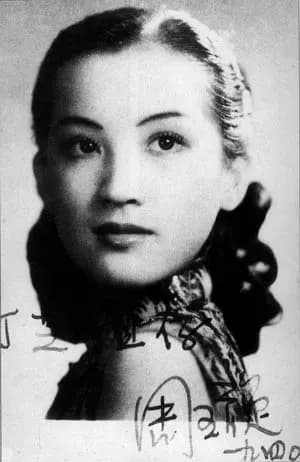
Shanghai shidaiqu (1920s–1940s). Modern Chinese pop began in Shanghai, where Western jazz bands, the gramophone industry and the new sound cinema met Chinese folk melody. The songs were called shidaiqu, "songs of the era". Li Jinhui's "Maomao Yu" ("Drizzle"), written around 1927 and sung by his daughter Li Minghui, is often regarded as the first Chinese pop song. The era's great star was Zhou Xuan, known as the "Golden Voice". In 1937 she sang "The Wandering Songstress" in the film Street Angel and first recorded "When Will You Return?" for Three Stars by the Moon; both became standards. Bai Guang, Gong Qiuxia and Li Xianglan, whose "Ye Lai Xiang" (1944) is still widely sung, were the other big names.
Hong Kong and Taiwan (1950s–1970s). The People's Republic was founded in 1949, and in 1952 the government denounced popular music as "yellow music", closing nightclubs and stopping pop production. The Shanghai industry moved to Hong Kong, where Mandarin songs led local film and record production from the 1950s to the late 1960s. From the 1970s Taipei took over as the centre. Its biggest star, Teresa Teng (1953–1995), sang soft, intimate ballads such as "The Moon Represents My Heart" (her recording is from 1977) that spread across Asia. After China's 1978 opening her cassettes circulated widely on the mainland, although her songs stayed officially banned there until 1986.
Campus folk and the singer-songwriters (1970s–1980s). Taiwanese students began writing their own songs for acoustic guitar in the "campus folk song" movement, which pushed back against both imported Western pop and commercial ballads; later commercial Mandopop grew out of it. Chyi Yu's "Olive Tree" (1979) is a classic of the period. Lo Ta-yu followed with sharp, socially aware rock-folk on his 1982 debut Zhi Hu Zhe Ye, released by Rock Records, which with other Taipei independents built a modern industry. On the mainland, Cui Jian's "Nothing to My Name" (1986) is counted as the birth of Chinese rock.
The 1990s boom. Taiwanese and Hong Kong labels made the 1990s the decade of the big ballad. Hong Kong's Cantopop stars recorded in Mandarin for the wider market: Jacky Cheung's "Goodbye Kiss" (1993) was one of the era's defining Mandarin hits, and Faye Wong, Emil Chau and Wakin Chau became household names. A-mei, from Taiwan's Puyuma Indigenous community, broke through in 1996 with a powerful voice, and the rock band Mayday released its first album at the end of the decade.
Jay Chou and the 2000s. Jay Chou's debut album Jay (2000) changed the sound of Mandopop, mixing R&B and hip-hop rhythms, mumbled phrasing and classical piano. With lyricist Vincent Fang he made zhongguo feng a mainstream style through songs such as "East Wind Breaks" (2003) and "Blue and White Porcelain" (2007). The decade also brought Jolin Tsai's dance-pop, the girl group S.H.E, Singapore's Stefanie Sun and JJ Lin, and Wang Leehom's mix of hip-hop with Chinese opera and samples of minority music.
The mainland era. From the mid-2000s, mainland China's market became decisive. The talent show Super Girl (2005) made Li Yuchun a star, the Chopstick Brothers' "Little Apple" (2014) became a national dance craze, and streaming platforms and singing competitions such as The Voice of China and Singer produced a new generation of stars. Today the industry covers idol pop, singer-songwriter ballads, Chinese hip-hop and the ancient-style guofeng music popular online.
Sound & Production
- Tempo: ballads at roughly 60–85 BPM dominate the catalogue; dance-pop sits around 100–128 BPM, and R&B-influenced tracks around 85–100 BPM.
- Harmony: diatonic pop progressions, often with the familiar I–V–vi–iii–IV turnaround and a key change before the final chorus in classic ballads.
- Melody: long, legato lines with a wide range in the chorus; pentatonic shapes are common and are pushed to the front in Chinese-style songs.
- Vocals: clear, closely miked and fully intelligible; the lyric sits on top of the mix.
- Instrumentation: piano and strings in ballads; synths, programmed drums and electric guitar in dance and rock tracks; erhu, pipa, guzheng and dizi flute layered into zhongguo feng.
- Structure: verse, pre-chorus and chorus, often with a long build to a last chorus pitched for karaoke.
| Style | Typical tempo | Sound | Representative artists |
|---|---|---|---|
| Shidaiqu | Foxtrot and waltz tempos | Jazz band, film-song crooning | Zhou Xuan, Bai Guang, Li Xianglan |
| Classic ballad | 60–85 BPM | Piano, strings, big chorus | Teresa Teng, Jacky Cheung, Faye Wong |
| Campus folk | Varied, mid-tempo | Acoustic guitar, simple harmony | Chyi Yu, Lo Ta-yu |
| Zhongguo feng (Chinese style) | 70–100 BPM | Pentatonic hooks, erhu, guzheng, poetic lyrics | Jay Chou, Wang Leehom |
| Dance-pop / idol pop | 100–128 BPM | Synths, programmed beats, choreography | Jolin Tsai, S.H.E |
| Band rock | Varied | Guitar band, anthemic choruses | Mayday, Sodagreen |
| Mandarin R&B / hip-hop | 85–100 BPM | R&B grooves, rap verses | Jay Chou, Khalil Fong |
Key Artists & Songs
A starting playlist across the decades:
| Artist | Song | Year | Why it matters |
|---|---|---|---|
| Li Jinhui (writer) | Maomao Yu (Drizzle) | 1927 | Often called the first Chinese pop song |
| Zhou Xuan | When Will You Return? | 1937 | Shanghai-era standard, later covered by Teresa Teng |
| Teresa Teng | The Moon Represents My Heart | 1977 | Probably the best-known Mandarin song worldwide |
| Cui Jian | Nothing to My Name | 1986 | The founding song of Chinese rock |
| Jacky Cheung | Goodbye Kiss | 1993 | Peak of the 1990s Mandarin ballad |
| Jay Chou | East Wind Breaks | 2003 | Defined zhongguo feng |
| Jay Chou | Blue and White Porcelain | 2007 | Chinese-style pop at its most classical |
| Chopstick Brothers | Little Apple | 2014 | Mainland internet-era dance craze |
Mandopop vs Cantopop, K-Pop and J-Pop
Mandopop vs Cantopop. The two are siblings that share stars, producers and studios. The difference is the language and the centre: Cantopop is sung in Cantonese and grew up in Hong Kong, while Mandopop is sung in Mandarin and has been centred in Taiwan and, increasingly, mainland China. Many singers, among them Jacky Cheung, Faye Wong, Eason Chan and G.E.M., release in both languages, sometimes recording the same melody with two different lyrics.
Mandopop vs K-pop. K-pop is built around an idol-training system, group choreography and genre-switching productions that cut between EDM, hip-hop and pop within one song. Mandopop has idol groups too, but its core remains the solo singer, the ballad and the lyricist.
Mandopop vs J-pop. J-pop shares the love of melody and the importance of TV and anime tie-ins, and Japanese songs were frequently covered in Mandarin and Cantonese in the 1980s and 1990s. J-pop arrangements are typically busier and more harmonically dense; Mandopop ballads are sparser and more vocal-centred. For more on the Korean–Japanese contrast, see K-pop vs J-pop.
Mandopop vs city pop. Taiwanese and Hong Kong records of the 1980s sometimes echo Japanese city pop with smooth chords, funky bass and glossy synths, but city pop names a specific Japanese style of the late 1970s and 1980s, and a Mandarin record in that manner is still Mandopop.
How AI Detects Mandopop
For an audio model, most Mandopop is first of all pop: a polished vocal, diatonic chords, piano or synths and a clear verse-to-chorus build. What makes it Mandopop, the Mandarin lyric and the industry behind it, is not something a genre classifier listens for. The audible clues are in the arrangement: pentatonic hooks and traditional instruments such as erhu, pipa or guzheng in Chinese-style songs.
Genre AI's production taxonomy has no Mandopop label. Its coarse Pop and Asian labels have no subgenres, and the model prefers any coarse label that does have them once it is among its top five candidates, so Pop or Asian will rarely be the answer. The result is more likely a subgenre of a neighbouring family, chosen by the arrangement.
Try a ballad and a zhongguo feng track side by side in the Genre AI music genre detector, and read why songs have multiple genres to interpret mixed results.
Genre AI has no Mandopop label, and the broad Pop and Asian labels, which have no subgenres, rarely come up at all. A piano or band ballad is more likely to land on Rock › Soft / Pop Rock, and band rock in the Mayday mould on another Rock subgenre. Synth-driven dance-pop may go to Electronic Dance › Synth Pop; here there is a quirk, because the word "mandopop" sits among the text prompts of Breakbeat / Drum & Bass, so that subgenre may also show up for a Mandarin dance track. Jay Chou-style R&B and rap is likely to read as Rap Hip-Hop › Contemporary RnB. A zhongguo feng song with guzheng or erhu up front may be pulled towards Classical or towards Jazz › Fusion, whose prompts include "chinese fusion" and "asian fusion". The model cannot tell Mandopop from Cantopop at all: the two share producers, arrangements and vocal style, and the language of the lyric is not something it decodes.