Christian music is music written to express Christian faith, and in the modern music industry the term usually means a specific family of styles: contemporary Christian music (CCM), which uses the sound of pop, rock and later hip-hop; contemporary worship music, written for congregations to sing in church; and faith-based branches of rock, metal and rap. It is defined by its lyrics and its audience, not by one sound: a CCM single and a mainstream pop single can be musically identical.
It is also distinct from gospel, though the two are often filed together: gospel comes from the African American church, with choirs, call-and-response and a Hammond organ, while CCM and modern worship grew mostly out of white evangelical churches from the late 1960s. This guide covers that history, the main styles, how the music is made, and the artists to know. To see what a classifier makes of a worship anthem, try a few seconds in our free AI music genre detector.
What Is Christian Music?
In the broadest sense, Christian music covers two thousand years of sacred music: Gregorian chant, Lutheran chorales, Bach's cantatas, Protestant hymns, spirituals and gospel. In everyday use, though, on streaming platforms, in record stores and on radio, "Christian music" means the commercial category that formed in the United States from the 1970s onward, with its own labels, radio format, charts and awards.
That category is defined by three things. The lyrics are explicitly or implicitly about faith: praise, prayer, grace, doubt, redemption. The audience is primarily churchgoing, and the music is marketed through Christian radio, church networks, festivals and conferences. And the musical style is borrowed: from soft rock and pop in the 1970s and 80s, alternative rock in the 1990s, and electronic pop and hip-hop since. So Christian music works more as a market and a purpose than as a genre with fixed musical rules.
The main sub-categories are CCM (songs for listening, aimed at radio), worship (songs written for congregational singing), Christian rock and metal, Christian hip-hop, and southern gospel, the white quartet tradition of the American South.
History & Origins
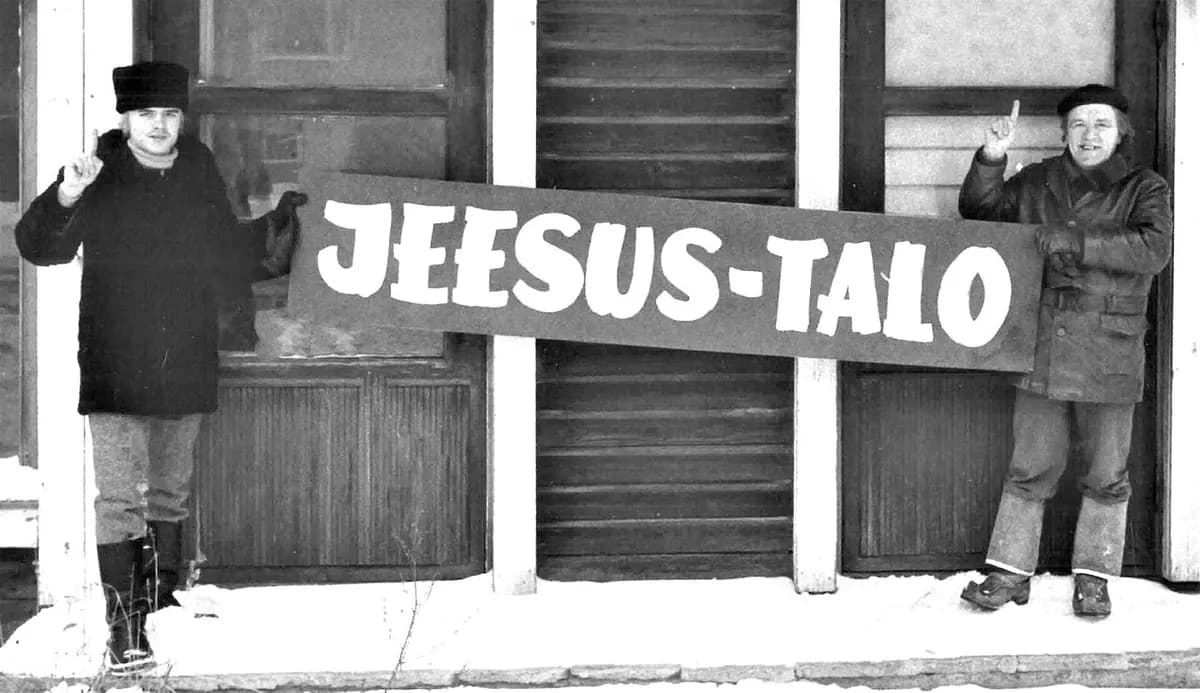
Modern Christian music begins with the Jesus Movement of the late 1960s and early 1970s, when young people from the hippie counterculture, many of them in Southern California, converted to evangelical Christianity and brought their music with them. Larry Norman's Upon This Rock, released by Capitol in December 1969, is often cited as the first Christian rock album, and on Only Visiting This Planet (1972) Norman asked, in the title of a song, "Why Should the Devil Have All the Good Music?" Pastor Chuck Smith's Calvary Chapel in Costa Mesa welcomed the new converts and their bands, and Maranatha! Music, which Smith founded in 1971 as an outreach of the church, recorded groups such as Love Song and published simple praise choruses that spread far beyond the church.
Through the 1970s these "Jesus music" artists found a business home in labels such as Word Records (founded in Waco, Texas, in 1951) and Sparrow Records, which Billy Ray Hearn started in 1976. Singer-songwriter Keith Green became one of the era's best-known voices. The Gospel Music Association, whose first Dove Awards were held in Memphis in 1969, gave the new style more and more recognition, and Nashville became the industry's centre.
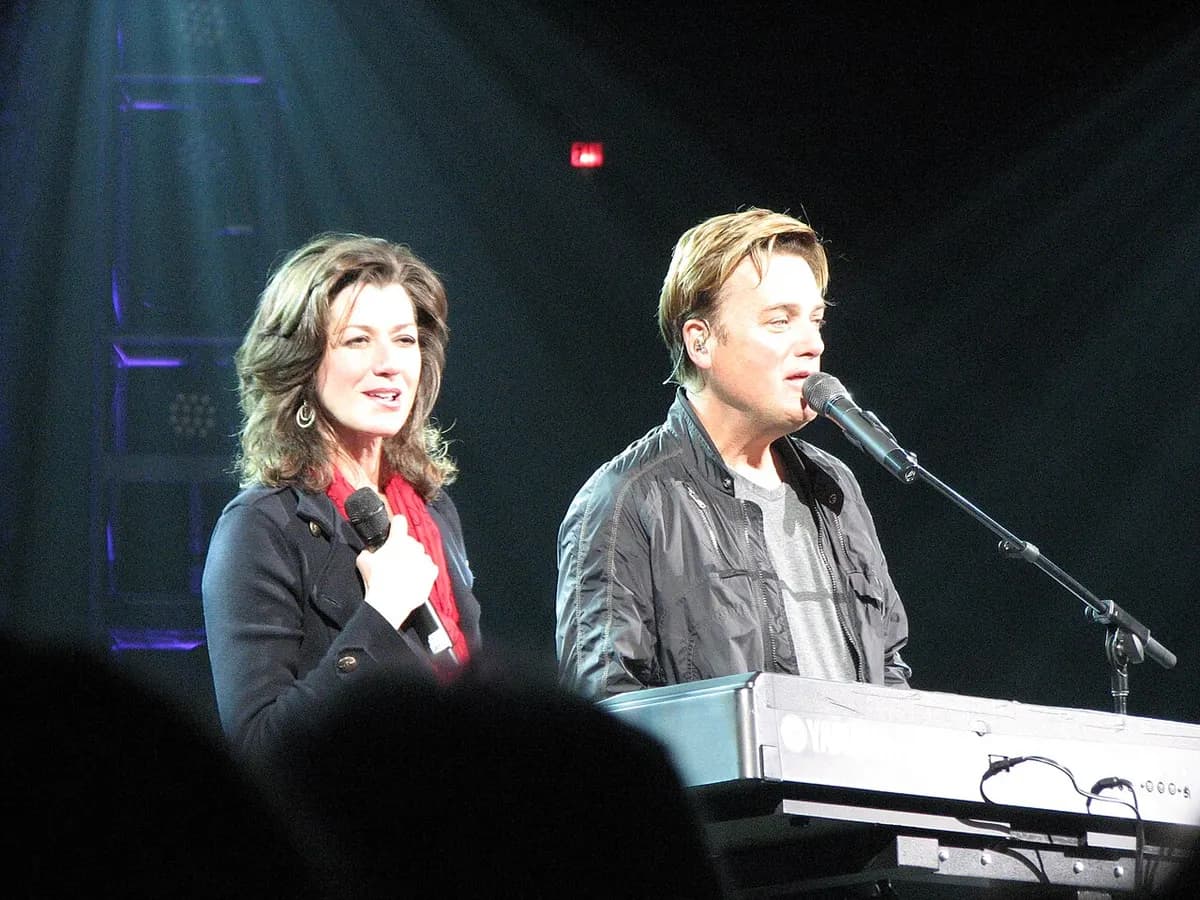
The 1980s made CCM a commercial format. Amy Grant became its first major star, with Age to Age (1982); in 1991 her "Baby Baby" reached No. 1 on the Billboard Hot 100, the first chart-topper there by a Christian pop singer. Michael W. Smith, Sandi Patty and the rock band Petra built large audiences, and the glam-metal band Stryper showed that heavy music could carry a Christian message.
The 1990s brought an alternative wave. DC Talk's Jesus Freak (1995) fused rap and grunge-era rock; Jars of Clay's "Flood" crossed from Christian radio to modern-rock and pop stations and reached No. 37 on the Hot 100 in 1996; Third Day, Newsboys and later Switchfoot and Skillet followed. In the same years churches began producing their own worship music, through the Vineyard movement, the Passion conferences and Hillsong Church in Sydney. Hillsong's "Shout to the Lord", written by Darlene Zschech in 1993 and first recorded in 1994, was quickly taken up by other worship leaders, including Don Moen on Rivers of Joy (1995).
In the 2000s worship became the commercial centre of Christian music. Songs by Chris Tomlin ("How Great Is Our God"), Matt Redman ("10,000 Reasons"), Hillsong United ("Oceans") and later Bethel Music and Elevation Worship were sung weekly in thousands of churches and recorded live as albums. MercyMe's "I Can Only Imagine" became one of the best-known CCM songs and in 2018 gave its title to a film about the band's singer, Bart Millard. Christian hip-hop grew around artists such as Lecrae, and in the late 2010s Lauren Daigle crossed over to mainstream pop audiences with "You Say." The boundary with gospel has also blurred: collectives such as Maverick City Music combine modern worship with gospel choirs and soloists.
Sound, Tempo & Production
Because Christian music borrows its styles, there is no single tempo or instrumentation. What recurs:
- Lyrics: praise, prayer and testimony, often addressed directly to God in the second person ("you"). This is the clearest marker, and the one an audio-only listener is most likely to miss.
- Worship-song form: verse, chorus and a repeated bridge that grows louder and fuller each time it comes round. This "build" is the arrangement device most associated with modern worship.
- Dynamics: long crescendos from a quiet piano or pad intro to a full-band climax with big drums and layered guitars.
- Singability: worship melodies stay within a modest range and use simple, predictable rhythms so a congregation can join in.
- Tempo: worship ballads are slow, often in 6/8 or with a half-time feel; upbeat praise songs and CCM pop move at ordinary pop tempos; Christian rock and metal follow their mainstream counterparts.
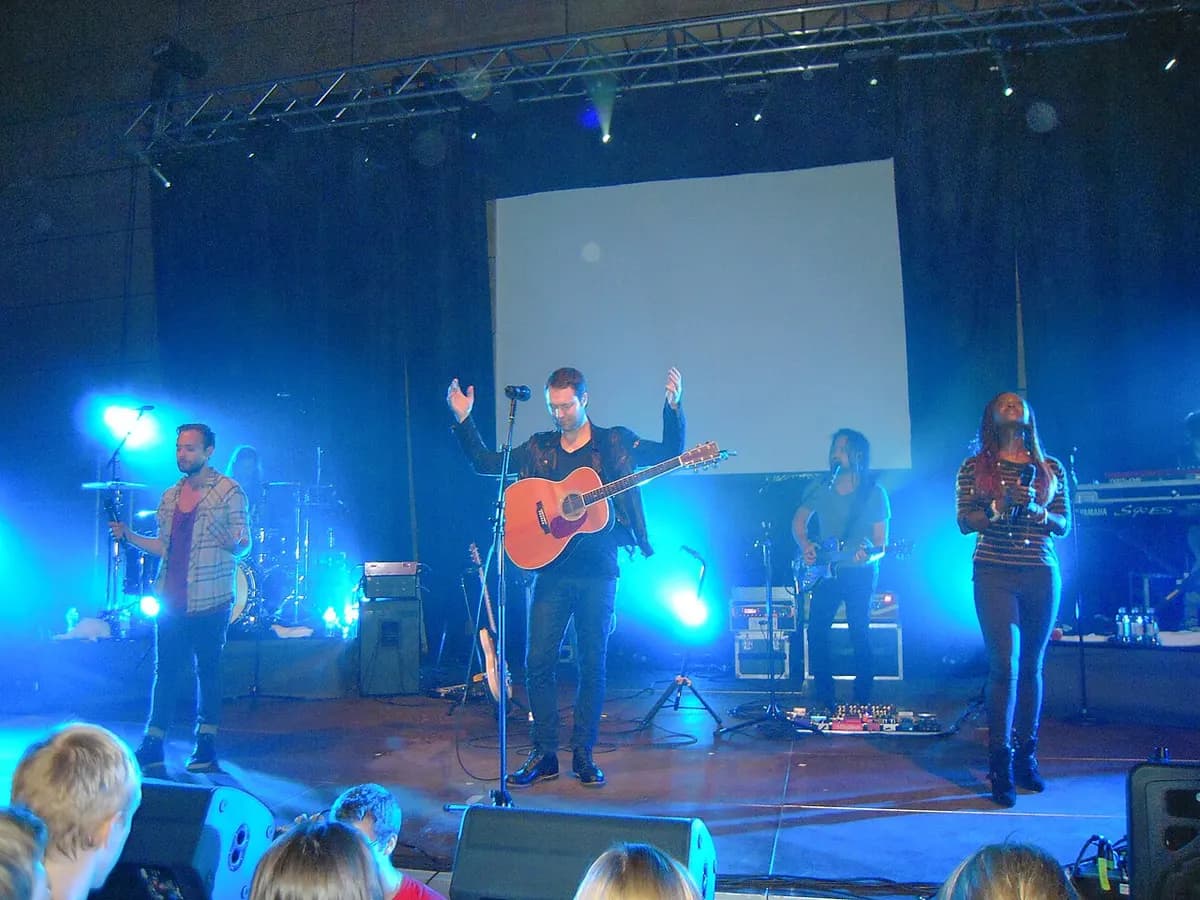
- Production: polished pop-rock, with delayed electric guitars, ambient synth pads, piano and acoustic guitar, and a large live-room sound on worship recordings, often captured at concerts.
The main styles side by side:
| Branch | From | Sound | Built for | Key names |
|---|---|---|---|---|
| Jesus music / early CCM | Late 1960s–1970s | Folk-rock, soft rock | Concerts, records | Larry Norman, Love Song, Keith Green |
| CCM pop | 1980s onward | Mainstream pop production | Christian radio | Amy Grant, Michael W. Smith, Lauren Daigle |
| Contemporary worship | 1990s onward | Pop-rock with long dynamic builds | Congregational singing | Hillsong, Chris Tomlin, Bethel Music |
| Christian rock and metal | 1970s onward | Rock, metal, metalcore | Concerts, festivals | Petra, Stryper, Skillet, Switchfoot |
| Christian hip-hop | 1990s onward | Rap and trap production | Streaming, concerts | DC Talk (crossover), Lecrae |
| Southern gospel | Early 20th century | Male quartet harmony, piano | Churches, concerts | Quartet tradition of the US South |
Christian Music vs Gospel
Both are Christian music, and the industry often groups them together, but they come from different churches and sound different:
- Roots: gospel grew from spirituals and the Black church, shaped by Thomas A. Dorsey in 1930s Chicago; CCM and worship grew from the Jesus Movement and white evangelical churches from the late 1960s.
- Voice: gospel centres on a powerful lead singer with melisma and improvisation, answered by a choir; CCM and worship centre on a pop or rock vocalist and a band, with band harmonies and no massed choir.
- Instruments: gospel's signature is the Hammond organ and piano with a tight rhythm section; worship's is the electric guitar with delay, synth pads and big drums.
- Musical lineage: gospel is the parent of soul and close to R&B; CCM is adjacent to pop and rock.
- Overlap: artists such as Kirk Franklin and collectives such as Maverick City Music work across both, and the Grammys and Dove Awards have categories for each.
| Trait | CCM / Worship | Gospel |
|---|---|---|
| Church roots | White evangelical, Jesus Movement | African American church |
| Starting point | Late 1960s | Spirituals; modern form from the 1930s |
| Lead vocal | Pop or rock singer | Soloist with melisma and improvisation |
| Backing voices | Band harmonies, congregation | Choir with call-and-response |
| Signature instruments | Electric guitar, synth pads, drums | Hammond organ, piano |
| Closest secular neighbours | Pop, rock, alternative | Soul, R&B, blues |
Key Artists & Songs
A route through modern Christian music:
- Larry Norman: Upon This Rock (1969), usually named as the first Christian rock album.
- Keith Green: the 1970s singer-songwriter voice of the Jesus Movement.
- Amy Grant: Age to Age (1982), "Baby Baby" (1991).
- Michael W. Smith: CCM pop and, later, worship albums.
- Petra and Stryper: Christian rock and metal in the 1980s.
- DC Talk: Jesus Freak (1995).
- Jars of Clay: "Flood."
- MercyMe: "I Can Only Imagine."
- Chris Tomlin: "How Great Is Our God."
- Matt Redman: "10,000 Reasons (Bless the Lord)."
- Hillsong United: "Oceans (Where Feet May Fail)."
- Lecrae: Christian hip-hop's best-known name; Anomaly (2014) topped the Billboard 200.
- Lauren Daigle: "You Say."
- Maverick City Music: a collective that mixes modern worship with gospel singers.
To hear the arc in three songs: a Larry Norman track for the Jesus Movement, "Baby Baby" or "Flood" for the crossover years, and "Oceans" for the sound of modern worship.

How AI Detects Christian Music
Christian music is a hard case for any audio classifier, for a simple reason: what makes a song Christian is mostly in its words and its purpose, and a genre model listens to sound. A CCM pop single has the same drums, synths and vocal production as a mainstream pop single; a Christian metalcore band uses the same breakdowns as any other metalcore band. A model working from the audio alone cannot reliably tell them apart.
What a model can pick up is the stylistic family. Modern worship, with its slow builds, delay-heavy guitars and anthemic choruses, sits between pop and rock; Christian hip-hop reads as hip-hop. Genre AI's production taxonomy has a Gospel label (a subgenre under Funk / Soul), but its text prompts are aimed at gospel traditions, not at worship bands. Try a worship anthem and a gospel choir in the Genre AI music genre detector to hear the difference, and read how AI music genre detection works for why lyrics are not part of the signal.
Genre AI does not have a Christian Music label, and an audio model should not be expected to: the defining feature of the category is lyrical and devotional, not sonic. What the model can do is place a track's sound. Because it prefers broad labels that have subgenres, a CCM or worship recording is most likely to come back as Rock, probably with Soft / Pop Rock underneath, while Pop and Singer / Songwriter, which have no subgenres, rarely come up at all. A heavier worship band may read as Rock with Indie / Alternative. Christian rap belongs with Rap Hip-Hop, Christian metal and metalcore with Metal; "christian metalcore" is in fact one of the text prompts of the Metalcore label. The one faith-associated label in the taxonomy is Gospel, a subgenre under Funk / Soul whose prompts include "christian gospel" and "contemporary gospel", so a worship song backed by a gospel choir, in the Maverick City Music mould, is the kind of track where the two readings are likely to meet.