Baltimore club (also B'more club, B'more house or simply B'more) is a fast, raw style of dance music made by Black DJs and producers in Baltimore, Maryland. Wikipedia dates it to the early 1990s; other histories trace its roots to the city's late-1980s club nights. It puts the four-on-the-floor kick of house under chopped breakbeats and the sampling habits of hip-hop, runs at around 130 BPM, and leans on two breaks above all: Lyn Collins's "Think (About It)" and Gaz's "Sing Sing". Short vocal chants repeat on top.
Baltimore club is the parent of Jersey club and Philly club, and producers in Newark and Philadelphia still build on its breaks. This guide covers its history, how a B'more track is put together, the DJs and labels behind it, and how it differs from Jersey club, footwork and Miami bass. To hear how a breakbeat-heavy club track reads to a machine, run a clip through our free AI music genre detector.
What Is Baltimore Club?
Baltimore club is dance music for a specific kind of party: crowded, competitive, built around dance crews and call-and-response. Its tracks are short and functional. A typical record runs a pounding kick and a chopped funk or disco break at about 130 BPM, adds a sampled vocal phrase that repeats (sometimes a single word, sometimes a chant aimed at the dancers) and then rearranges those few elements for three or four minutes, with drops, stops and stutters that tell dancers when to move.
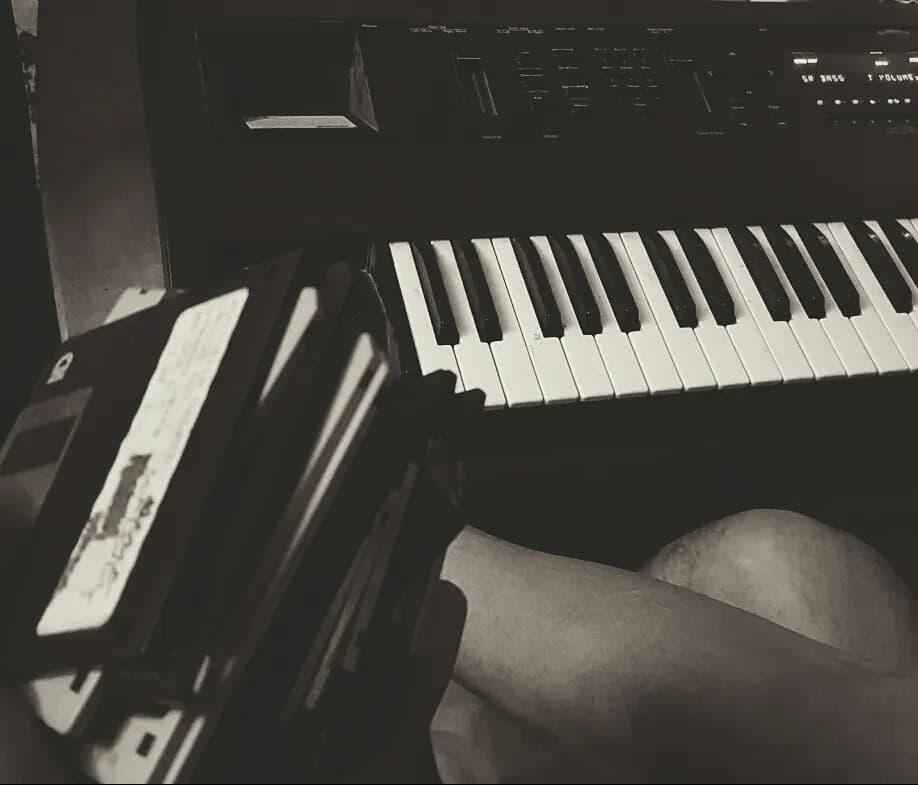
The sound is deliberately rough. Producers used affordable samplers such as the Ensoniq ASR-10, released in 1992, and drum machines, and they valued punch and repetition over polish. Instead of melodic development there is rhythmic tension: the break plays against the straight kick, the vocal sample plays against the break, and the arrangement keeps cutting things out so the return hits harder.
It borrows from four neighbours. From Chicago and Detroit house and the related ghetto house it takes the four-on-the-floor pulse; from hip-hop it takes breakbeats, sampling and the MC-style vocal hook; from neighbouring Washington, D.C.'s go-go it takes call-and-response; and from Miami bass it takes a taste for raunchy, chant-like vocals.
History & Origins
Baltimore club took shape in the city's Black clubs and on its radio and mixtape circuits at the turn of the 1990s. Frank Ski, then a DJ on Baltimore radio, is often said to have started by playing only the break or peak section of house records. DJs were already mixing house, hip-hop and breakbeat records; the new style came from producers making their own tracks to fit that blend. Among the names credited with creating it are Frank Ski, Scottie B, Shawn Caesar, DJ Technics, DJ Class, DJ Patrick and Kenny B.
Scottie B and Shawn Caesar founded Unruly Records, which pressed much of the scene's vinyl for local DJs; Wikipedia names Scottie B and his Unruly colleagues among the style's early promoters. DJ K-Swift played the clubs Hammerjacks and The Paradox and co-hosted a show on Baltimore's WERQ-FM (92Q) from 1998 until her death in July 2008, which made her the genre's best-known radio voice.
In the 2000s the sound reached a wider audience. Rod Lee's "Dance My Pain Away", built on the "Sing Sing" break, became a local anthem, and in 2005 The Washington Post called him "the original don of Baltimore club". Spin covered the scene that December. Blaqstarr led the next generation of producers, and dance nights at rock venues such as the Talking Head Club brought the music to Baltimore's indie crowd. Outside the city, Diplo's Philadelphia party and mixtape series Hollertronix and the Baltimore-born rapper Spank Rock carried B'more rhythms into the international blog-house circuit of the mid-2000s.
Meanwhile the style spread along the East Coast. Newark DJs such as DJ Tameil and Tim Dolla drove to Baltimore to buy the latest club records and played them at home, and local producers reshaped the sound into Jersey club. Philadelphia developed its own faster variant. In 2023 Mayor Brandon Scott declared June 17 Baltimore Club Music Day, and the documentary Dark City Beneath the Beat, released on streaming platforms in August 2020, put the scene on film.
Key Characteristics & Sound
What a Baltimore club track is made of:
- Tempo: around 130 BPM, usually in the 125–135 range. That is house speed, felt as hard and jumpy because of the breaks.
- Breakbeats: chopped and looped funk and disco breaks, most famously the "Think (About It)" break from Lyn Collins (1972) and the break from Gaz's disco record "Sing Sing" (1978).
- Kick pattern: a heavy kick on every beat plus extra, syncopated kicks that push the groove forward. Wikipedia describes the beat structure as 8/4.
- Vocal chops: short phrases, shouts and chants repeated many times, often addressed to dancers or to the crowd.
- Call-and-response: stanzas that alternate between a vocal call and a rhythmic answer, related to go-go.
- Minimal harmony: often no chords at all, or a single stab or sample repeated; the interest is in rhythm and arrangement.
- Arrangement: stops, drops, stutters and quick edits, with few long builds, so dance crews know when to hit a move.
How it compares with its closest relatives:
| Trait | Baltimore Club | Jersey Club | Footwork | Miami Bass |
|---|---|---|---|---|
| Origin | Baltimore, late 1980s–early 1990s | Newark, early 2000s | Chicago, late 2000s | Miami, mid-1980s |
| Typical tempo | ~130 BPM | 130–145 BPM | ~160 BPM | 120–135 BPM |
| Kick | Four-on-the-floor plus syncopated kicks | Triplet 'bed-squeak' kick bounces | Sparse, off-grid, triplet-heavy | Long, booming 808 kick |
| Drums | Chopped funk and disco breaks | Breaks plus chopped samples | Fast, scattered 808 hits | Electro-style 808 patterns |
| Vocals | Repeated chants and shouts | Chopped pop and R&B samples | Stuttered vocal fragments | Party chants, explicit lyrics |
| Function | Club dancing, crew battles | Dance videos, parties | Footwork dance battles | Car audio, parties |
Offshoots & Related Scenes
- Jersey club: the most successful descendant. Newark producers smoothed the raw edges, added the triplet "bed-squeak" kick and chopped pop and R&B samples, and the style later reached mainstream rap and pop. Our Jersey club explainer covers that story.
- Philly club: a faster Philadelphia variant, with more noise elements such as sirens.
- Bama bounce and Virginia club: regional offshoots that grew as B'more mixtapes travelled south. In Alabama, DJ Seven (formerly DJ Taj) developed Bama bounce.
- Ghetto house and ghettotech: Chicago and Detroit cousins with similar raw, explicit, high-tempo energy; see also footwork.
- Blog house and global club music: in the mid-2000s, DJs and producers outside Baltimore borrowed its breaks and chants for remixes and party sets.
Key DJs, Producers & Where to Start
Baltimore club was largely a singles and mixtape culture, so the list below names people and landmark tracks. Few of them made albums.
| Name | Role | Why they matter |
|---|---|---|
| Frank Ski | DJ, radio host, producer | Among the creators of the style at the turn of the 1990s |
| Scottie B | DJ, producer, Unruly Records | Early producer and promoter; Unruly released much of the foundational vinyl |
| Shawn Caesar | Producer, Unruly Records | Part of the Unruly core that shaped the early sound |
| DJ Technics | Producer, DJ | Credited among the genre's founding producers |
| Miss Tony | Vocalist, personality | Known for chant-driven club tracks such as 'How You Wanna Carry It' |
| DJ K-Swift | DJ, WERQ-FM host | A leading radio voice of the genre until her death in 2008 |
| Rod Lee | Producer, DJ | 'Dance My Pain Away'; called 'the original don of Baltimore club' by The Washington Post |
| Blaq Starr | Producer | Leading figure of the 2000s generation |
Baltimore Club vs Jersey Club, Footwork and Miami Bass
Against Jersey club: Jersey club is the child, and the two are often confused. Baltimore club is rougher, more break-driven and closer to house, with a straight kick and syncopated extra kicks. Jersey club is a little faster, built around the triplet kick pattern and chopped samples from pop and R&B songs, and it became a vehicle for dance videos and crossover rap features.
Against footwork: footwork comes from Chicago's ghetto house and juke and runs much faster, around 160 BPM, with sparse, off-grid 808 hits and a lot of empty space. Baltimore club is denser and more locked to the four-on-the-floor kick.
Against Miami bass: Miami bass is a 1980s Florida style built on electro rhythms and long, booming 808 kicks for car systems; it shares Baltimore club's party chants but not its sampled breakbeats. Against breakbeat in general, Baltimore club is one specific regional use of breaks, recognisable by its chants, tempo and dancefloor function.
How AI Hears Baltimore Club
For an audio model, Baltimore club combines signals from several families at once. The steady kick and 130 BPM tempo point towards house; the chopped breakbeat points towards breakbeat and drum and bass; the repeated vocal chants and sampled hooks point towards hip-hop. Which one wins depends on how prominent the break is in the clip.
A regional style is defined partly by who made the record, where, and for which dance crews. A model hears only the sound. Try a track in the Genre AI music genre detector and compare the top label with the runner-up, and see our note on what a short clip can and cannot reveal.
For an audio classifier such as Genre AI, Baltimore club has no dedicated label, so it will be described through its parts. The most likely home is Electronic Dance: tracks with a prominent chopped "Think" or "Sing Sing" break are likely to read as Breakbeat / Drum & Bass, while tracks where the four-on-the-floor kick dominates are likely to read as House. Chant-heavy tracks with sparse instrumentation may drift towards Rap Hip-Hop, because the repeated vocal hook carries much of the signal. The model also cannot separate Baltimore club from Jersey club, since neither style has its own class. Read the answer as "breakbeat-house club music" and use the tempo, the chants and the Baltimore lineage to call it B'more.