
Jazz fusion is what happened when jazz musicians plugged in. From the late 1960s, players trained in bebop and modal jazz took up electric instruments, rock rhythms and funk grooves, swapping swung time for straight eighths and turning up the volume.
This guide covers what fusion is, how Miles Davis's electric period opened the door, the bands that followed, the odd meters and techniques that define the style, and where it went next, including its softer commercial offshoot, smooth jazz. Curious how a model reads an electric jazz record? Play a few seconds into our free AI music genre detector.
What Is Jazz Fusion?
Jazz fusion keeps jazz's improvisation and harmonic complexity and changes almost everything around it. The Fender Rhodes and synthesizer replace the acoustic piano, the electric bass replaces the double bass, the guitar arrives with distortion and effects, and the drummer plays rock and funk patterns in straight eighth notes instead of a swung ride. Volume goes up, arrangements get denser, and a repeating, locked groove takes over the job the walking bass did in acoustic jazz.
Two things separate fusion from jazz-flavoured rock. First, the harmony stays complex: modal vamps, altered chords and progressions that don't follow standard cadences, where rock would use blues changes. Second, technique is at the centre. Fusion is where jazz musicians went to play fast, in odd time signatures like 7/8 and 9/8, at the volumes rock audiences expected. Vocals are rare, and the playing is the main attraction.
History & Origins
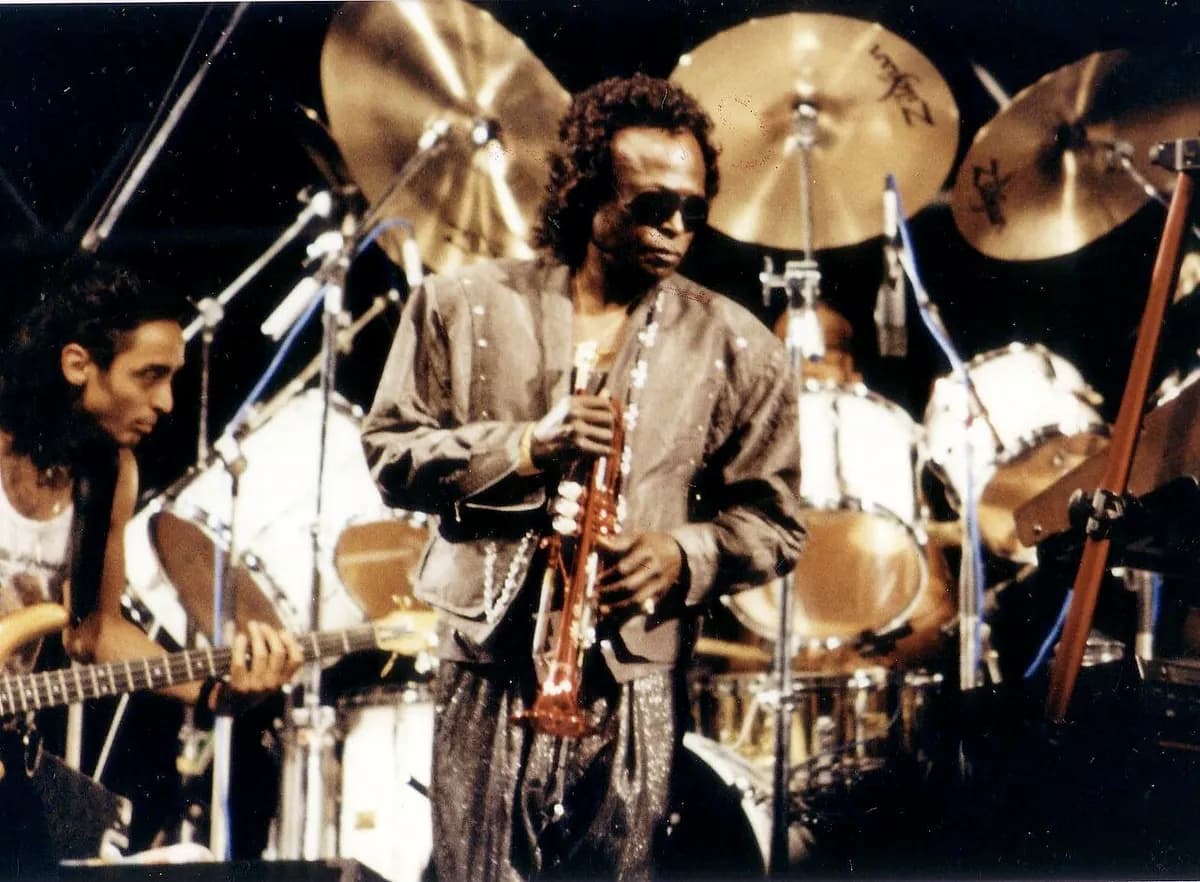
Fusion begins with Miles Davis, who by 1968 was watching rock and soul draw the young audience jazz had lost. Miles in the Sky (1968) brought in electric piano and guitar; In a Silent Way (1969) built whole sides on electric keyboards and a static, hypnotic pulse; Bitches Brew (1970) went further, with several keyboardists, electric bass, layered percussion, and tape editing used to shape the pieces. It became Davis's first gold record, selling more than half a million copies, and it split the jazz establishment.
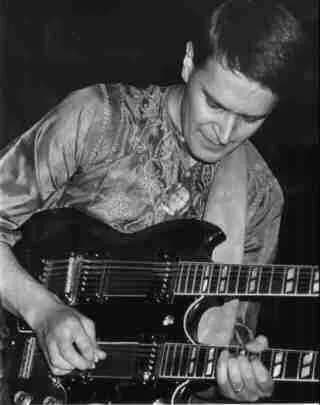
Musicians from those sessions went on to form the genre's main bands within a few years: Tony Williams Lifetime, Weather Report (Joe Zawinul and Wayne Shorter, later with bassist Jaco Pastorius), the Mahavishnu Orchestra (guitarist John McLaughlin) and Return to Forever (Chick Corea). Herbie Hancock's Head Hunters (1973), built on a hard funk groove, became the first jazz album to be certified platinum.
Fusion's commercial peak lasted until the late 1970s. After that it split two ways: an instrumental tradition built on technique that continued through Pat Metheny, Allan Holdsworth, Jean-Luc Ponty and Brand X, and a smoother, radio-friendly branch that turned into smooth jazz during the 1980s. The first branch is still active: Snarky Puppy, Hiromi and Dirty Loops are among its current names, and the genre's harmonic and rhythmic ideas are now common in progressive rock and metal.
Key Characteristics & Sound
What identifies fusion:
- Rhythm: straight eighths from rock and funk, the clearest break from swing.
- Tempo: broad, roughly 80–200 BPM, often with tempo and meter changes inside a piece.
- Meters: frequent odd time signatures (5/4, 7/8, 9/8, 15/16), played as naturally as 4/4.
- Instruments: Fender Rhodes, ARP and Moog synthesizers, electric bass, distorted guitar, full drum kit plus hand percussion.
- Harmony: modal vamps, quartal voicings and altered dominants, so jazz harmony sits over a rock feel.
- Solos: long and technically demanding, often traded between several lead instruments.
- Form: extended pieces with composed heads, open solo sections and abrupt shifts.
The major bands took the same idea in very different directions:
| Band | Years | Signature |
|---|---|---|
| Miles Davis (electric) | 1969–1975 | Hypnotic vamps, studio editing, dense percussion |
| Weather Report | 1971–1986 | Synth textures, Jaco's melodic fretless bass |
| Mahavishnu Orchestra | 1971–1976 | Extreme speed, odd meters, distorted guitar |
| Return to Forever | 1972–1977 | Latin roots turning to prog-rock virtuosity |
| Herbie Hancock: Head Hunters | 1973 | Deep funk groove, clavinet and synth bass |
| Pat Metheny Group | 1977–2010s | Lyrical, spacious, Brazilian-influenced |
Instruments & Production
Fusion is tied closely to the instruments that arrived with it:
- Fender Rhodes: the genre's main harmony instrument, warm and bell-like, usually run through chorus or phaser.
- Synthesizers: Minimoog and ARP leads for melody, later the Prophet-5 and Oberheim for pads.
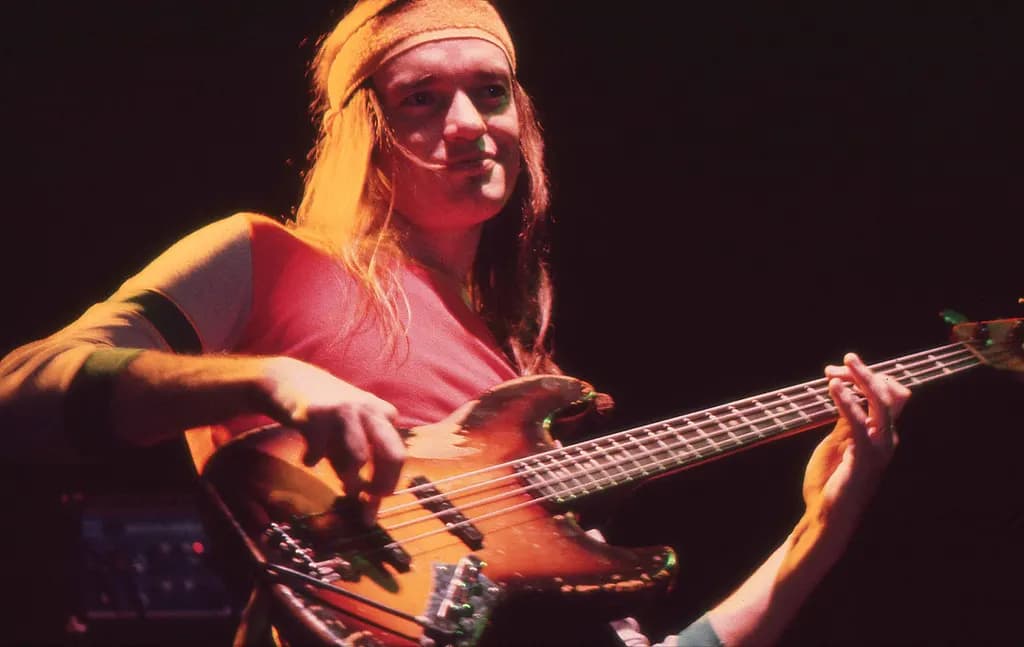
- Electric bass: Jaco Pastorius played a fretless Fender Jazz Bass as a lead voice, with harmonics and chords.
- Electric guitar: high-gain amps and effects; McLaughlin, Holdsworth and Metheny each developed a personal style on it.
- Drums: large kits played with rock power and jazz independence (Billy Cobham, Tony Williams, Lenny White).
- Percussion: congas, tabla and Brazilian instruments layered over the kit (Airto Moreira).
- Studio technique: from Bitches Brew onward, editing and overdubbing were used to build the music, not only to fix mistakes.
Branches & Descendants
Fusion split into branches within a few years:
- Jazz-rock: the guitar-forward, high-energy strand (Mahavishnu Orchestra, Brand X).
- Jazz-funk: groove-first, built on clavinet and synth bass (Head Hunters, The Crusaders).
- Canterbury scene: the English progressive-rock crossover (Soft Machine, National Health).
- Latin fusion: Brazilian and Afro-Cuban rhythm inside electric jazz (Return to Forever's early albums, Airto, Flora Purim).
- Smooth jazz: the commercial offshoot that kept the instruments and dropped the complexity.
- Modern fusion: the current generation (Snarky Puppy, Hiromi, Tigran Hamasyan, Dirty Loops).
- Djent and math rock: outside jazz, but heavily indebted to fusion's odd meters and technique.
Notable Albums & Tracks
The core listening:
- Miles Davis: In a Silent Way (1969), Bitches Brew (1970).
- Mahavishnu Orchestra: The Inner Mounting Flame (1971), "Birds of Fire."
- Weather Report: Heavy Weather (1977), "Birdland."
- Herbie Hancock: Head Hunters (1973), "Chameleon."
- Return to Forever: Romantic Warrior (1976).
- Billy Cobham: Spectrum (1973).
- Jaco Pastorius: Jaco Pastorius (1976), "Portrait of Tracy."
- Pat Metheny Group: Offramp (1982).
- Allan Holdsworth: Metal Fatigue (1985).
- Snarky Puppy: We Like It Here (2014).
Start with "Chameleon," "Birdland" and "Birds of Fire" to hear the funk, the melodic and the fast, loud ends of the genre.
Jazz Fusion vs Jazz vs Smooth Jazz
Fusion sits between the tradition it came from and the radio format it led to:
| Trait | Jazz Fusion | Acoustic Jazz | Smooth Jazz |
|---|---|---|---|
| Rhythm | Straight eighths, rock/funk | Swung eighths | Straight, light R&B |
| Instruments | Electric, amplified, synths | Acoustic | Electric, polished |
| Improvisation | Extensive and virtuosic | Central | Minimal |
| Meters | Frequently odd (7/8, 9/8) | Mostly 4/4 and 3/4 | 4/4 |
| Volume and density | High | Moderate | Low, background-friendly |
| Audience | Musicians and rock crossovers | Jazz listeners | Adult contemporary radio |
How AI Detects Jazz Fusion
For a classifier, fusion is an unusual combination: jazz-level harmonic complexity played on clearly electric instruments (Rhodes, analogue synthesizers, distorted guitar, electric bass) over a straight subdivision, often with irregular bar lengths that confuse simple beat tracking.
That mix puts the label between clusters, and near-misses are common: heavy guitar passages pull toward rock, groove-based sections toward funk, and quiet melodic passages toward smooth jazz. Test your own records with the Genre AI music genre detector and read why songs have multiple genres; fusion is close to a textbook case.
Testing this genre in Genre AI ourselves, Jazz Fusion reads most reliably when Rhodes or synthesizer harmony sits over straight-eighth drumming with an electric bass carrying melodic lines. It is also one of the genres where the percentage breakdown tells you the most: a single track can move from a Funk-dominant groove section into a Rock-leaning guitar solo and back to a Jazz-weighted head, and short clips from different points return different answers. Odd meters also degrade beat tracking, so treat tempo estimates on 7/8 or 15/16 passages with suspicion.