Dream pop is pop songwriting played through atmosphere: reverb-soaked guitars, slow to mid tempos, breathy vocals used as texture, and melodies that stay clear underneath it all. The style took shape in Britain in the 1980s, with Cocteau Twins on the 4AD label as its best-known band, and it is now one of the most imitated sounds on streaming services.
This guide covers where dream pop came from, what separates it from shoegaze, how the guitar sound is built, and which records to start with. To hear how a track reads to a classifier, run a few seconds through our free AI music genre detector.
What Is Dream Pop?
Dream pop works by contrast. Underneath, the songs are conventional pop with verses, choruses and clear melodies, while the surface is all atmosphere. Guitars are run through chorus, delay and long reverb until they behave like keyboards; the rhythm section is soft, unhurried and low in the mix; the voice is intimate, often multi-tracked, and frequently hard to make out, because the words matter less than the sound of them.
The line between dream pop and shoegaze is often blurred. Shoegaze puts a wall of guitar in front and hides the melody inside it; dream pop keeps the melody easy to follow and uses the atmosphere as the space around it. In practice the difference is volume: dream pop is rarely loud.
The mood is distinctive too, closer to suspended than sad. That is why film and television music supervisors and playlist editors reach for it whenever a scene or a mix needs to sound wistful.
History & Origins
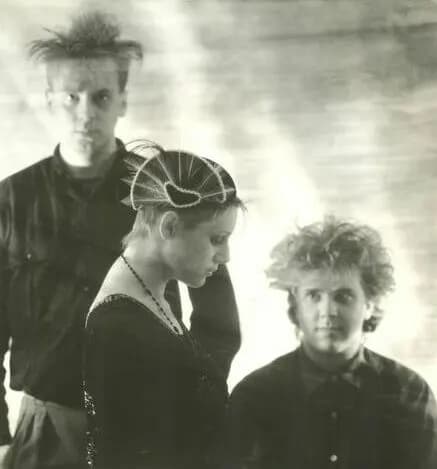
The roots are in the softer side of post-punk. The Cure's Seventeen Seconds (1980) and Faith (1981), along with other atmospheric records from the early 1980s British independent scene, showed that guitar bands could build songs from space and sustain. The name itself is generally credited to Alex Ayuli of A.R. Kane, who used "dreampop" in the late 1980s to describe his band's mix of noise and sweetness.
The genre's centre was the label 4AD. Cocteau Twins, with Elizabeth Fraser's often wordless vocals over Robin Guthrie's heavily processed guitar, made Treasure (1984) and Heaven or Las Vegas (1990), and the second is still the album most often used to define the genre. On the same label, This Mortal Coil and Dead Can Dance worked a darker, more gothic strand later called ethereal wave.
American bands produced a slower version with a country and blues tint. Mazzy Star's So Tonight That I Might See (1993) and its single "Fade Into You" made dream pop sound nocturnal and dusty; Galaxie 500 and Red House Painters came at it from slowcore.
The style faded in the late 1990s and returned in the mid-2000s through Beach House, whose organ-and-slide-guitar arrangements and Victoria Legrand's low voice carried them from a 2006 debut to Teen Dream (2010) and Depression Cherry (2015). Grimes, Chromatics, Cigarettes After Sex, Alvvays, Hatchie and Japanese Breakfast took it in different directions.
Streaming did the rest. Dream pop is quiet and even, with no aggressive transients, which suits background listening, and the style turns up constantly on editorial playlists and in television scoring. Cigarettes After Sex are the clearest example: "Apocalypse," from their 2017 debut album, has passed 2 billion plays on Spotify.
Key Characteristics & Sound
What identifies a dream pop track:
- Reverb and delay as the main colour, applied to guitar and voice alike.
- Clean or lightly overdriven guitars, shaped with chorus, tremolo and slide instead of distortion.
- Tempo: generally 70–110 BPM; the pulse is there but never urgent.
- Soft, simple drums: brushed, programmed or lightly played, often with the kick barely audible.
- Breathy, high or androgynous vocals, multi-tracked and mixed inside the arrangement.
- Clear melodies, the trait that separates it from shoegaze.
- Harmony: major sevenths, suspended chords and slow changes that avoid resolving.
- Wide, deep mixes with a lot of empty space at the edges of the stereo field.
Where it sits among its neighbours:
| Trait | Dream Pop | Shoegaze | Ambient | Chillwave |
|---|---|---|---|---|
| Melody | Clear, foregrounded | Buried in guitar | Often absent | Present, hazy |
| Distortion | Light or none | Heavy, layered | None | Light, saturated |
| Tempo | 70–110 BPM | 90–140 BPM | None or very slow | 90–115 BPM |
| Instruments | Guitar, keys, voice | Guitar wall | Synths, texture | Synths, samples |
| Volume | Quiet to moderate | Loud | Quiet | Moderate |
| Reference album | Heaven or Las Vegas | Loveless | Music for Airports | Within and Without |
Instruments & Production
Most of dream pop's sound is made in the effects chain:
- Long-decay reverb: plate and hall settings pushed far past what pop production normally uses.
- Chorus and delay on clean guitar, as in Robin Guthrie's playing: layers of shimmering, pitch-modulated arpeggios with no obvious root.
- Slide guitar and tremolo in the American branch; organ and Mellotron-style pads in the Beach House line.
- Drum machines used gently, a soft pattern that keeps time without pushing.
- Vocals treated as an instrument: doubled, harmonised, drenched in effects, sometimes with no intelligible words at all.
- Bass playing simple root movement, warm and low, holding the harmony still while everything above it drifts.
- Mixing for depth: parts are placed near and far as much as left and right, which is why these records sound good on headphones.
Subgenres & Related Styles
The family around it:
- Ethereal wave: the darker 4AD strand with wordless vocals and gothic undertones; Cocteau Twins, This Mortal Coil.
- Slowcore: the quieter, sparser cousin; Low, Red House Painters.
- Shoegaze: the loud sibling; many bands, including Slowdive, belong to both.
- Chillwave: the synth-based descendant from around 2009 with the same hazy nostalgia.
- Bedroom pop: the home-recorded 2010s strand that took over dream pop's textures and tempos.
- Lo-Fi: the instrumental streaming cousin, used the same way as background atmosphere.
- Synthwave and darkwave: neighbouring nostalgic styles, more rhythmic and more synthetic.
Notable Artists & Albums
Where to start:
- Cocteau Twins: Treasure (1984), Heaven or Las Vegas (1990).
- Mazzy Star: So Tonight That I Might See (1993).
- Beach House: Teen Dream (2010), Depression Cherry (2015).
- Galaxie 500: On Fire (1989).
- A.R. Kane: 69 (1988).
- Slowdive: Souvlaki (1993), shoegaze and dream pop at the same time.
- Cigarettes After Sex: Cigarettes After Sex (2017).
- Alvvays: Antisocialites (2017).
- Japanese Breakfast: Soft Sounds from Another Planet (2017).
- Hatchie: Keepsake (2019).
Three albums for the arc: Heaven or Las Vegas for the classic sound, So Tonight That I Might See for the American version, and Teen Dream for the revival.
How AI Detects Dream Pop
Dream pop has a recognisable spectral profile: lots of reverb with long decay times, soft transients, little percussive energy, and a vocal at about the same level as the instruments, without the wall of distortion that would point to shoegaze. Tempo is slow to moderate and rarely changes within a track.
The usual confusions are with shoegaze when guitars thicken, ambient when the beat drops out, indie rock when the vocal comes forward, and lo-fi or chillwave for the more synthetic modern records. Test it in the Genre AI music genre detector, and see our full explainer on dream pop for more on the scene.
Testing this style in Genre AI ourselves, Dream Pop and Shoegaze sit closer together than almost any other pair of labels we handle, and one measurement separates them fairly reliably: how much of the energy is distorted guitar. With less saturation and a legible vocal, the reading goes to dream pop; with more, shoegaze takes over, and Slowdive-era records sit right on the line and flip between passes. The second consistent pattern is that a track losing its drums for thirty seconds moves straight to Ambient, which shows how little rhythmic evidence this genre gives a model.