
Synth pop is pop music with the synthesizer, not the guitar, as the lead instrument. It came out of British new wave at the end of the 1970s, when cheaper synthesizers and drum machines let small groups, often duos, make full-sounding records. Between roughly 1981 and 1985 it was a fixture of the UK charts, and MTV carried many of the same acts into the American top ten.
This guide covers what synth pop is, how cheap synthesizers changed pop, the gear behind the sound, its offshoots, the bands that defined it, and how it differs from synthwave, a modern revival that people often mix up with the original. Not sure which era a track belongs to? Play a few seconds into our free AI music genre detector.
What Is Synth Pop?
Synth pop is a style of pop in which synthesizers carry the melody, the bass, and often the rhythm, with drum machines replacing or supplementing an acoustic kit. Songs keep conventional pop architecture — verse, chorus, hook, three to four minutes — but the timbre is electronic: bright analogue leads, arpeggiated sequences, and the obviously artificial tone of an early drum machine.
What separates it from other electronic music is that the song comes first. The vocal is central, usually clean, and often restrained or deadpan, which suits lyrics about alienation, romance, and city life. The genre also came with a look: the New Romantic movement, MTV-era styling, and a deliberate futurism in sleeves and videos.
History & Origins
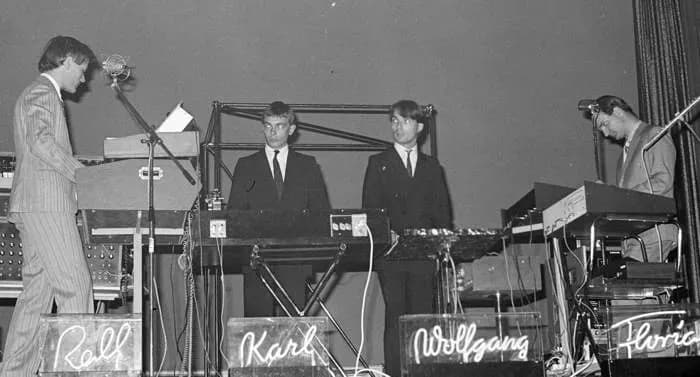
The groundwork was laid in the 1970s by Kraftwerk, whose Autobahn (1974) and The Man-Machine (1978) proved that electronic music could be melodic and popular, alongside Giorgio Moroder's synthesizer disco (Donna Summer's "I Feel Love," 1977) and Japan's Yellow Magic Orchestra. Price mattered too: affordable machines such as the Korg MS-20 (1978), followed by the Roland SH-101 and Juno-60 (both 1982) and the Yamaha DX7 (1983), put synthesis in reach of young musicians without a full band's budget.
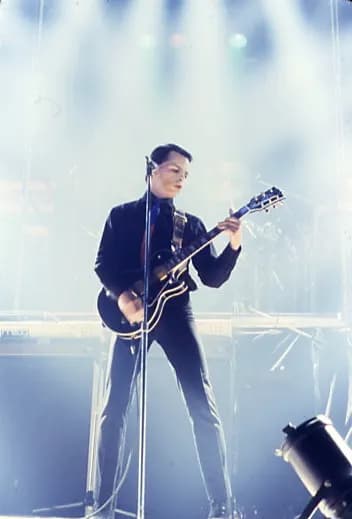
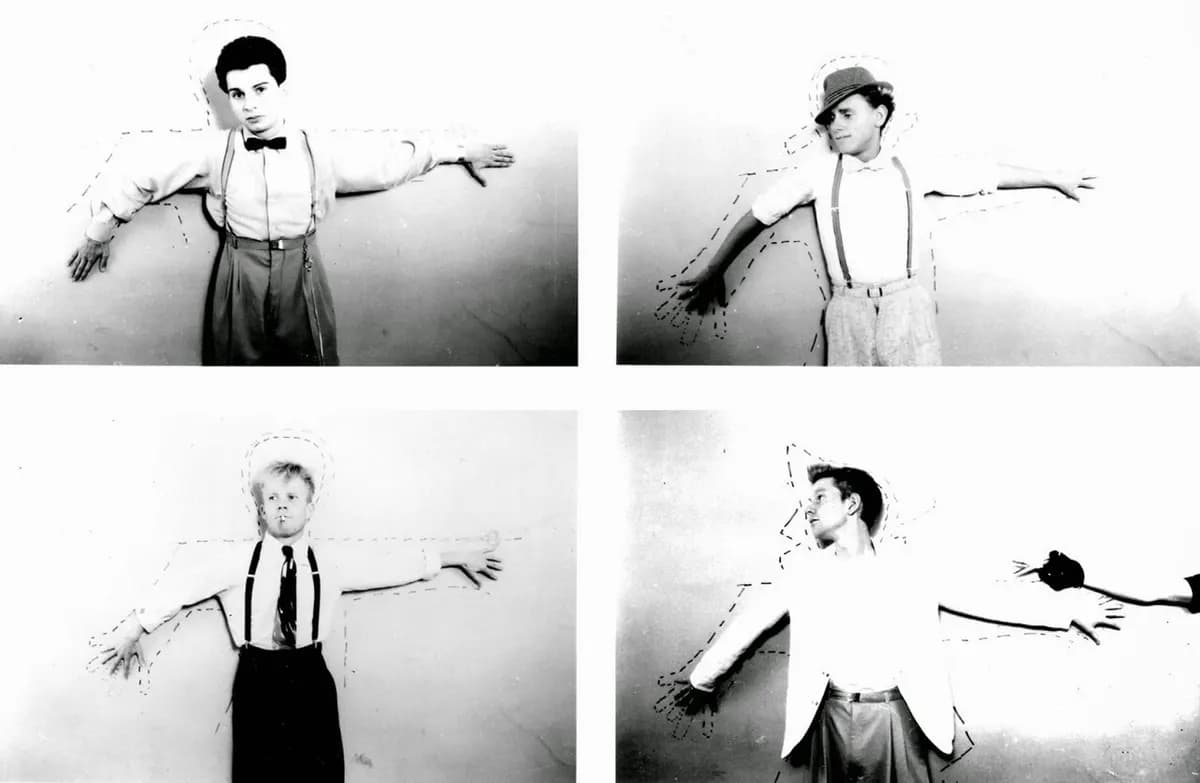
In Britain the genre broke through in 1979–1981. In 1979 Gary Numan took cold, mechanical pop to number one twice, with Tubeway Army's "Are 'Friends' Electric?" and then "Cars." OMD, Ultravox, Depeche Mode and Soft Cell all had hits by 1981, the year The Human League released Dare; its single "Don't You Want Me" was the UK Christmas number one and reached number one in the US in 1982. Heaven 17 and Yazoo followed. The so-called Second British Invasion carried the sound to American radio and MTV, where Eurythmics, Tears for Fears, and later Pet Shop Boys all had US number ones.
By 1986–1987 the charts had moved on toward rock and the first house records, and several synth pop bands either added guitars or grew darker; Depeche Mode, who used industrial-style metal samples on Some Great Reward (1984) and blues-rock guitar on Violator (1990), are the best-known example. The style kept returning: in electropop, in the 2000s electroclash and indie-electro waves (The Killers, Hot Chip, La Roux), in synthwave's 1980s nostalgia, and in 2010s–2020s pop production that uses analogue synth sounds as standard.
Key Characteristics & Sound
Synth pop is recognisable within a bar or two:
- Tempo: typically 100–135 BPM, danceable but rarely fast.
- Lead instrument: a monophonic or polyphonic synthesizer carrying the main hook.
- Bass: a synth bassline, often sequenced and repetitive instead of played by hand.
- Drums: drum machines such as the LinnDrum, Roland TR-808 and Oberheim DMX, with gated reverb on snares by the mid-1980s.
- Arpeggios and sequences: repeating patterns that function as both rhythm and melody.
- Vocals: clean, front and centre, often understated or deliberately flat in delivery.
- Structure: tight, hook-led pop form, with little jamming and few solos.
The genre's eras have distinct sonic signatures:
| Phase | Years | Typical BPM | Sound |
|---|---|---|---|
| Cold / minimal wave | 1978–1980 | 110–130 | Austere, monophonic, Numan-style |
| Chart peak | 1981–1985 | 105–135 | Bright polysynths, big hooks, gated snares |
| Sophisti / darker turn | 1985–1988 | 95–125 | DX7 bells, moodier, more orchestrated |
| Electroclash revival | 1999–2005 | 115–130 | Deliberately cheap, retro analogue |
| Indie-electro / modern | 2008–present | 100–125 | Analogue warmth in modern pop production |
Instruments & Production
Synth pop is one of the few genres where naming specific machines describes the sound accurately:
- Roland Juno-60 / Juno-106: the lush, chorused pads heard across the era.
- Yamaha DX7 (1983): FM synthesis, with glassy bells and metallic electric pianos that place a record in the mid-1980s.
- Roland SH-101 and Korg MS-20: cheap monosynths for basslines and leads.
- LinnDrum and Oberheim DMX: sampled drum machines that replaced the drummer in most of these bands.
- Roland TR-808: the booming kick and cowbell that later became foundational to hip-hop.
- Sequencers: hardware step sequencers, which is why so many basslines are perfectly locked and unvarying.
- Gated reverb: the huge, abruptly cut snare sound that defines mid-1980s production.
Production values shifted quickly across the era: 1979–1981 records are dry, thin, and deliberately cold, while 1983–1986 records are wide, reverberant, and heavily layered: the same kind of songs recorded with far bigger budgets.
Subgenres & Offshoots
Synth pop overlaps with several adjacent styles, and the labels are used loosely:
- New wave: the wider umbrella, including guitar bands; synth pop is its keyboard-led branch.
- Minimal wave / cold wave: austere, DIY, often released on cassette or small labels (The Normal, Fad Gadget, Belgium's Absolute Body Control).
- New Romantic: the fashion-led movement around Visage, Duran Duran, and Spandau Ballet.
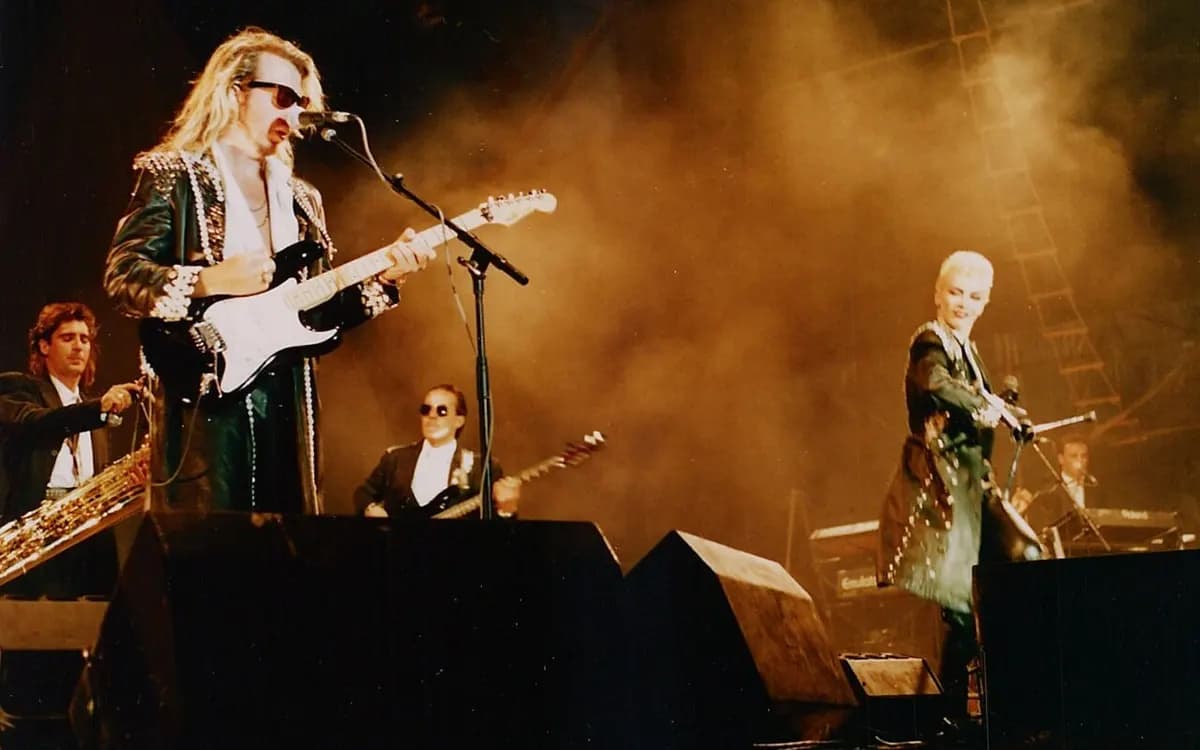
- Electropop: the more dance-oriented form (Pet Shop Boys, Erasure, and 2000s acts like La Roux).
- Electroclash: the early-2000s revival that reused vintage gear and deadpan vocals (Miss Kittin, Fischerspooner).
- Futurepop: the darker European continuation with industrial roots (VNV Nation, Covenant).
Its relatives go further: italo disco ran in parallel in southern Europe, vaporwave later sampled the era's commercial cousins, and synthwave rebuilt the whole palette from scratch decades later.
Notable Artists & Tracks
The canonical run of singles:
- Gary Numan: "Cars," "Are 'Friends' Electric?" (with Tubeway Army)
- The Human League: "Don't You Want Me," "Love Action."
- Depeche Mode: "Just Can't Get Enough," "Enjoy the Silence."
- Soft Cell: "Tainted Love."
- Yazoo: "Don't Go," "Only You."
- OMD: "Enola Gay," "If You Leave."
- Eurythmics: "Sweet Dreams (Are Made of This)."
- New Order: "Blue Monday," "Bizarre Love Triangle."
- Pet Shop Boys: "West End Girls," "It's a Sin."
- Tears for Fears: "Everybody Wants to Rule the World."
- a-ha: "Take On Me."
Start with "Don't You Want Me," "Blue Monday," and "Enola Gay" to hear the chart, club, and art-pop sides of the genre.
Synth Pop vs Synthwave vs New Wave
These three names get swapped constantly, but they describe different things: one is a genre, one is a revival, and one is an umbrella:
| Trait | Synth Pop | Synthwave | New Wave |
|---|---|---|---|
| Era | 1978–1988 (original) | 2005–present (revival) | 1976–1986 |
| Purpose | Chart pop of its time | Nostalgia for that time | Post-punk umbrella |
| Vocals | Central, song-led | Often instrumental | Central |
| Tempo | 100–135 BPM | 80–118 BPM | 110–160 BPM |
| Instruments | Period-correct analogue synths | Analogue emulation and VSTs | Guitars + synths |
| Reference points | Kraftwerk, disco | Film scores, 80s action movies | Punk, art rock, reggae |
How AI Detects Synth Pop
For a classifier, synth pop presents an unusual combination: strongly periodic, quantised drum-machine timing with almost no micro-timing variation; harmonically simple, sustained synth pads; a repetitive sequenced bassline; and a clear, dry, forward-mixed vocal. The near-total absence of acoustic instruments and the presence of period timbres such as DX7 bells and gated snares push the reading toward the 1980s electronic cluster.
The difficult separations are within that cluster: a modern production imitating the same palette scores close to synthwave, and a faster, four-on-the-floor arrangement moves toward dance or italo disco. Test your own tracks in the Genre AI music genre detector and read how AI music genre detection works for the weighting logic.
Testing this genre in Genre AI ourselves, the cleanest Synth Pop readings come from tracks around 105–130 BPM that combine a sequenced synth bass, a drum-machine backbeat, and a clean lead vocal over polysynth chords. Remove the vocal and lean into arpeggiated leads and the model drifts to Synthwave; push past 130 BPM with a four-on-the-floor kick and Dance and Italo Disco climb; strip the drums and hold the pads and it starts scoring Ambient. Those near-neighbour scores ride alongside the top result.