
K-Pop (Korean popular music) is a genre and a whole entertainment system built around South Korean idol groups, mixing Western pop, hip-hop, EDM, and R&B with group choreography, expensive production, and big-budget music videos. There is no single K-pop sound. A single song can move through a rap verse, a sung pre-chorus, an EDM drop, and a "point" dance hook inside three minutes.
This guide covers what K-pop is, how it grew from 1990s Seoul into a global industry, how to recognise its production and structure by ear, its idol generations, the groups worth knowing, and how it sits next to pop, hyperpop, and hip-hop. Not sure whether a track is straight pop or full K-pop? Play a clip into our free AI music genre detector and it will weigh the pop, EDM, and hip-hop signals for you.
What Is K-Pop?
K-pop is South Korean popular music produced primarily by "idol" groups — trainees developed by entertainment companies who sing, rap, and dance in coordinated formations. Musically it is deliberately eclectic: producers combine mainstream Western pop with hip-hop, contemporary R&B, EDM, funk, and sometimes rock, and pack the result with hooks. A common device is the "genre switch", an abrupt change of tempo, key, or style within a single track that would be unusual in a standard Western pop song.
What sets K-pop apart from other pop is the surrounding system as much as the sound: synchronised choreography with a "point dance" move, concept-driven eras and comebacks, lyrics mostly in Korean with English hooks, and a fan culture built around official fandom names and lightsticks. The vocals are heavily produced and layered, and the arrangements favour contrast over a predictable verse and chorus. In practice it works as a production method: take whatever is current in global pop and stack it into one song, at whatever tempo the concept needs.
History & Origins
Modern K-pop is usually dated to 11 April 1992, when Seo Taiji and Boys performed "Nan Arayo (I Know)" on an MBC talent show, setting Korean lyrics to American new jack swing, rap, and dance moves. The judges gave it the lowest score of the night, but the single became a huge hit and changed what Korean pop sounded like. In the mid-1990s entertainment companies, above all SM Entertainment, founded by Lee Soo-man in 1995, formalised the "idol" model of auditions, multi-year training, and assembled groups such as H.O.T. (1996) and S.E.S. (1997).
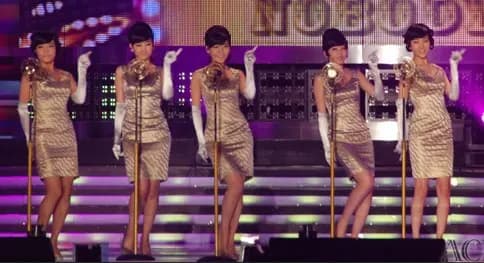
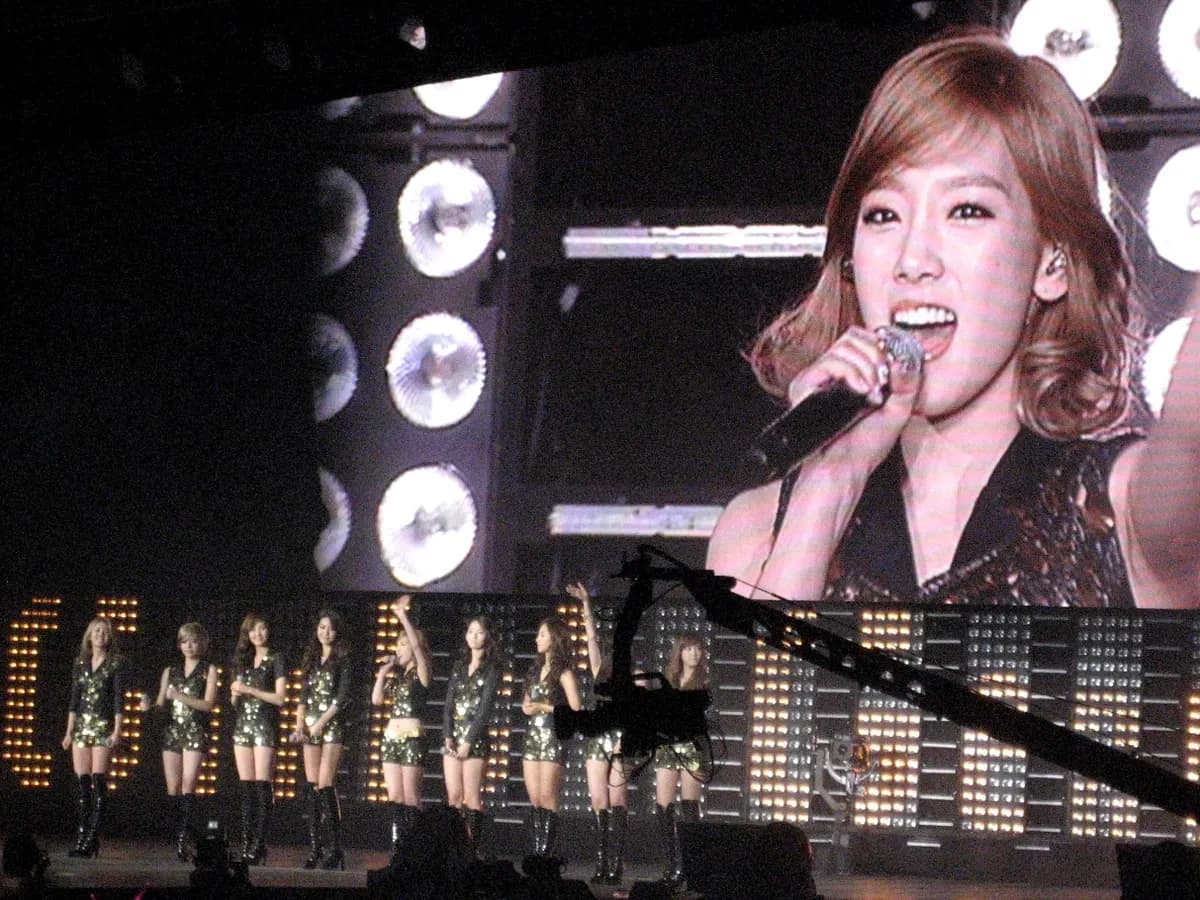
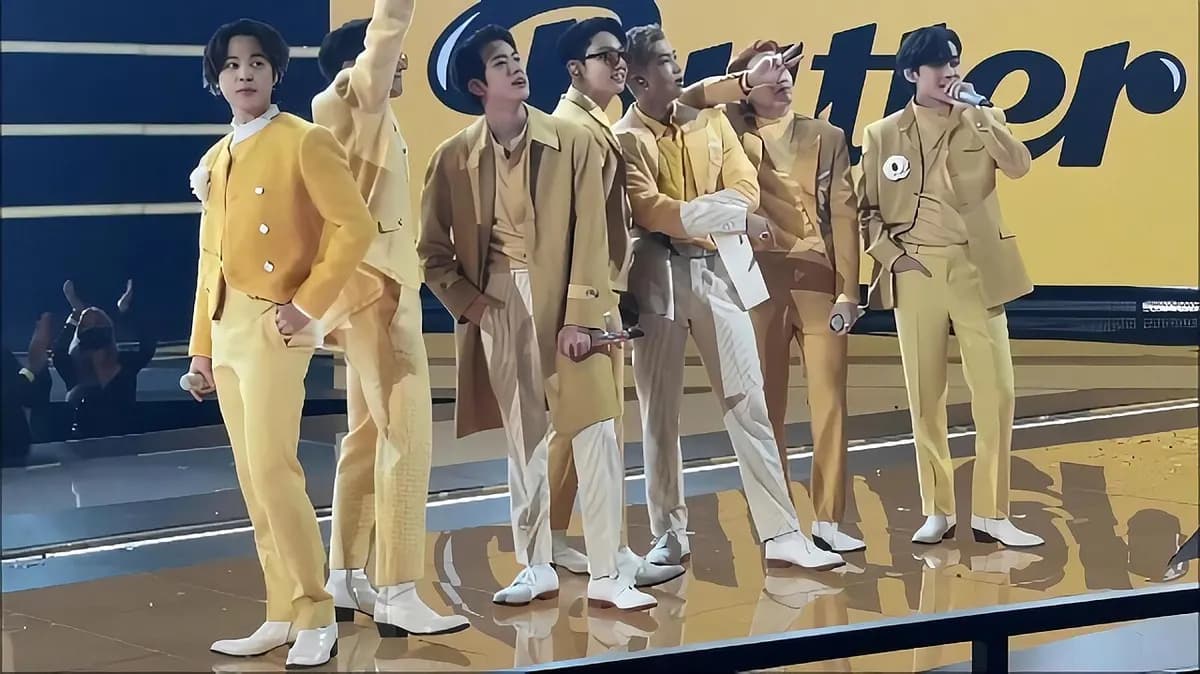
The 2000s "second generation" turned K-pop into an export. Groups like TVXQ, Super Junior, Girls' Generation, Big Bang, and Wonder Girls built fanbases across East Asia, and in 2009 Wonder Girls' "Nobody" became the first song by a Korean act to enter the Billboard Hot 100, at No. 76. On 21 December 2012 Psy's "Gangnam Style" became the first YouTube video to pass a billion views, after spending seven weeks at No. 2 on the Billboard Hot 100. The "third generation" (BTS, BLACKPINK, EXO, TWICE) broke into US and European charts in the late 2010s, and in 2020 BTS's "Dynamite" debuted at No. 1 on the Billboard Hot 100, the first Korean act to top that chart. The "fourth generation" (Stray Kids and ATEEZ from 2018, then aespa, IVE, NewJeans, and LE SSERAFIM between 2020 and 2022) grew up on social media from before debut, and many of its groups lean on retro and Y2K styling.
Key Characteristics & Sound
You can usually spot K-pop by these traits:
- Tempo: broad, typically 100–140 BPM, with dance tracks often around 120–130.
- Genre-blending: rap verses, sung pre-choruses, and EDM or trap drops inside one song.
- Hooks: the "point", a catchy phrase paired with a signature dance move.
- Vocals: heavily layered harmonies, ad-libs, and a rap line distinct from the vocal line.
- Language: Korean lyrics threaded with English hooks and phrases.
- Structure: built on contrast, with sudden beat switches, key changes, and a big final chorus.
If a polished dance track keeps changing gears (a clean rap, a big sung bridge, then a synth or bass drop) and has a chant-like hook you could choreograph, you are probably hearing K-pop. Tempo and style vary a lot by concept, as shown below:
| Concept | Typical BPM | Feel |
|---|---|---|
| Dance / EDM title track | 120–132 | Bright, punchy, drop-driven |
| Hip-hop / trap concept | 70–100 (half-time) | Hard-hitting, rap-forward |
| Ballad / R&B | 60–90 | Emotional, vocal-led |
| Retro / city-pop revival | 100–118 | Warm, groovy, nostalgic |
| Girl-crush / power concept | 125–140 | Aggressive, high-energy |
Instruments & Production
K-pop is a producer- and songwriter-driven genre, often written by international teams (Scandinavian, American, and Korean writers) in "song camps." The toolkit is modern pop:
- Synths & software instruments: the backbone of most title tracks, from supersaws and plucks to EDM leads.
- 808 bass & trap drums: borrowed from hip-hop and trap for the rap sections.
- Vocal production: dense stacking, tuning, chopping, and ad-libs, the part of the mix listeners notice first.
- Live & sampled elements: funk guitar, brass stabs, and orchestral hits for retro or cinematic concepts.
- Sound-design drops: the "beat switch" that pivots a song from pop to EDM or R&B.
Budgets are large and the mixes are loud, bright, and detailed, made to work on phone speakers and in stadiums. Choreography, styling, and the music video are planned together with the track, so the song is only one part of the release.
Styles & Concepts in K-Pop
Because K-pop is a system with many sounds, its "subgenres" are usually described as concepts:
- Bubblegum / bright pop: upbeat, colourful, hook-heavy (TWICE, early Red Velvet).
- Girl-crush / power concept: aggressive, confident, EDM- and trap-driven (BLACKPINK, LE SSERAFIM).
- Hip-hop concept: rap-forward, hard drums, borrowing from trap and drill (Stray Kids, (G)I-DLE).
- R&B / ballad: slow, emotional songs that put the singers' range in front.
- Retro / city-pop revival: funk, disco, and 80s synth nostalgia (NewJeans, aespa's softer cuts).
- Experimental / hyperpop-adjacent: glitchy, maximalist production edging toward hyperpop.
Most groups rotate through several of these concepts across their "comebacks," which is why K-pop resists a single genre label: the style is chosen per era.
Notable Groups & Tracks
K-pop acts and songs worth knowing:
- Seo Taiji and Boys: "Nan Arayo (I Know)" (1992), the usual starting point for modern K-pop.
- BTS: "DNA" (2017), "Boy With Luv" (2019), "Dynamite" (2020), the first song by a Korean act to top the Billboard Hot 100.
- BLACKPINK: "DDU-DU DDU-DU," "How You Like That," "Kill This Love."
- NewJeans: "Hype Boy" (2022), "Ditto" (2022), "Super Shy" (2023), the best-known example of the retro fourth-generation sound.
- Girls' Generation: "Gee" (2009) and "I Got a Boy" (2013), two of the biggest second-generation girl-group hits.
- Big Bang: "Fantastic Baby" (2012), "Bang Bang Bang" (2015).
- Stray Kids: "God's Menu" (2020), "S-Class" (2023), written and produced largely in-house by the members' unit 3RACHA.
- TWICE and EXO from the third generation, aespa and IVE from the fourth.
Start with "Nan Arayo," "Gee," "DNA," and "Ditto" to trace K-pop's arc from 1992 to today.

K-Pop vs Western Pop
K-pop and Western pop share a chart-focused DNA, but the approach differs:
| Trait | K-Pop | Western Pop |
|---|---|---|
| Performer model | Trained idol groups | Mostly solo artists / bands |
| Song structure | Genre switches, beat drops | Verse–chorus, single lane |
| Visuals | Choreography + concept eras | Video optional, style-led |
| Language | Korean + English hooks | Usually one language |
| Release cycle | 'Comebacks' with mini-albums | Singles + albums |
How AI Detects K-Pop
Detecting K-pop is harder than detecting a single-sound genre because a track deliberately borrows from several at once. An AI model listens for a combination: glossy, loud pop production; dense layered vocals with a separate rap line; sudden beat switches or EDM/trap drops; and a bright, contrast-heavy arrangement. It scores that mixture against many genre fingerprints, so a K-pop song often lights up pop, hip-hop, and dance signals together, and that mix is itself a strong hint of K-pop.
Try it yourself: open the Genre AI music genre detector, feed it a few seconds of a title track, and watch how the pop and EDM scores stack against the rap sections. To understand the machinery behind that verdict, read our explainer on how AI music genre detection works.
Across our own trials with Genre AI, K-Pop rarely resolves to one clean label, which matches how the songs are built. A title track in the 120–132 BPM band typically lights up Pop and dance signals at once, then spikes toward Hip-Hop when the rap verse and 808s drop in. Ballad and R&B concepts pull the reading toward R&B at 60–90 BPM. The model surfaces those competing scores side by side, so the genre-hopping structure shows up as a spread of scores.