
Indie rock is guitar-led rock music defined less by a tempo or beat than by where it came from. The name is short for "independent," meaning bands and small labels working outside the major-label system, and the sound that grew from that scene favours jangly or lo-fi guitars, melodic and often introspective vocals, mid-tempo grooves, and a home-made production texture. It runs from R.E.M.'s 1980s college rock to The Strokes' 2001 garage revival and beyond.
This guide covers what indie rock actually is, where it came from (1980s independent labels, college radio, and the C86 jangle scene), how to recognise it by ear, the instruments and DIY production that shape it, its major subgenres, how it differs from "alternative" and plain "rock," and the artists worth knowing. Not sure where a song sits? Feed a short clip to the free AI music genre detector and it will weigh the guitar tone, the production texture, and the loose groove to tell you how indie a track reads.
What Is Indie Rock?
Indie rock is a broad branch of alternative rock built on electric guitars, bass, drums, and vocals, but the label started as a description of the business, not the sound. "Indie" originally meant music released on independent labels or self-released, and that DIY habit carried into the music: cheaper recordings, more room for odd voices, and less pressure to sound like the radio. Mainstream rock usually aims for the biggest, cleanest sound; indie rock often leaves rough edges in.
Sonically you'll most often hear clean, jangly or lightly fuzzed guitars, a melodic and frequently understated vocal, mid-tempo rhythms with room to breathe, and arrangements that sound played by a band in real time. The range is wide, from gentle jangle pop to angular post-punk to bedroom lo-fi, so indie rock works best as a name for a family of guitar styles with a shared history in small labels.
History & Origins
Indie rock grew out of the late-1970s and early-1980s alternative underground in the UK and North America. Its business roots lie in a wave of British independent labels, among them Rough Trade, Factory, Mute, and 4AD, that emerged in punk's wake and put out post-punk and new-wave records outside the major-label system. "Indie" first described that distribution model; only later did it harden into a recognisable sound.
In the United States, the scene was prefigured by college rock: guitar bands that dominated college-radio playlists in the early-to-mid 1980s. R.E.M. in the US and The Smiths in the UK became its best-known bands, playing melodic guitar music while synthpop ruled the charts and reviving the jangle of 1960s acts like The Byrds. That bright, treble-heavy 12-string sound, later called "jangle pop," became one of indie's basic textures.
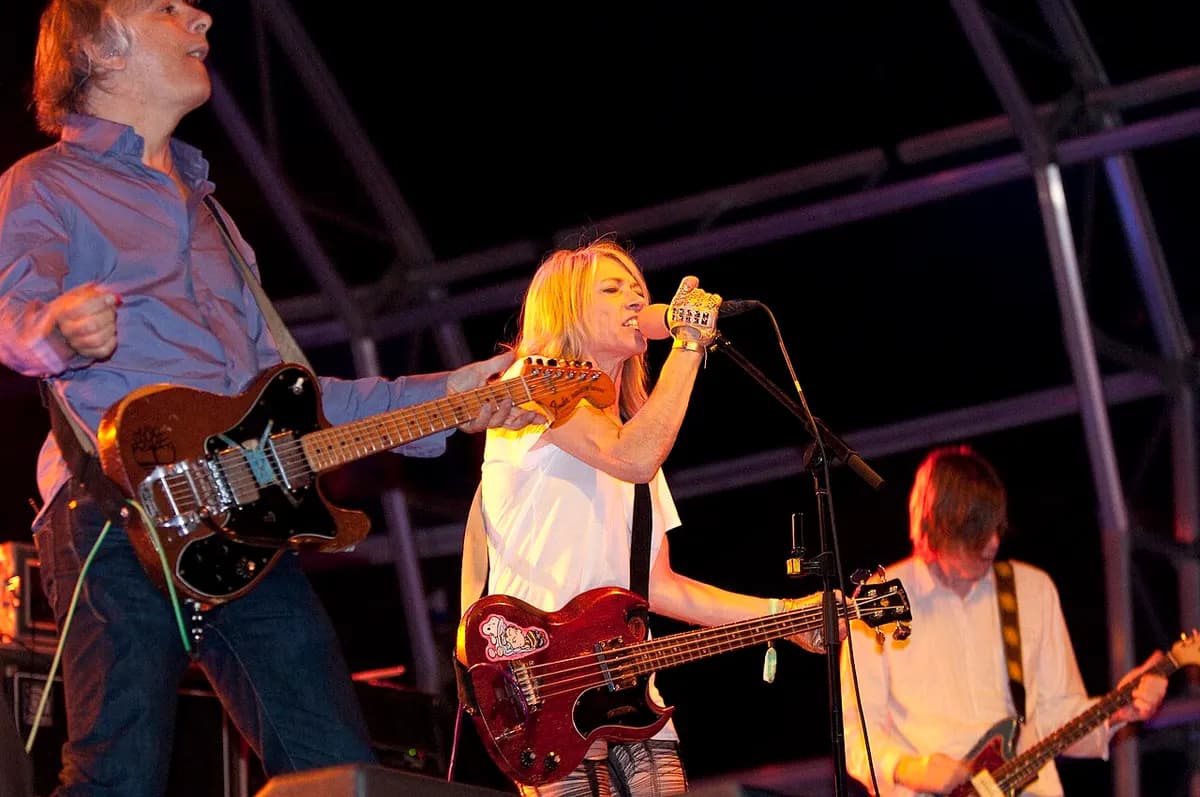
Another key moment came in May 1986, when the British weekly NME issued C86, a mail-order cassette of 22 tracks by new bands, mostly from UK indie labels. The name soon became shorthand for a style: jangling guitars, short melodic songs, fanzine culture, and a deliberately amateur DIY spirit that joined punk's independence to 1960s melody. Through the late 1980s and 1990s, with Pixies, Sonic Youth, Pavement, Built to Spill, and many small-label acts, indie rock grew into an underground that ran its own labels, zines, and venues.
Key Characteristics & Sound
Indie rock covers several related styles, so listen for these recurring traits:
- Guitars: clean, jangly chime (bright, treble-heavy, little distortion, often from single-coil pickups) or warm lo-fi fuzz, used for texture more than for solos.
- Vocals: melodic, conversational, and often introspective; personality and phrasing matter more than power or range.
- Tempo: usually mid-tempo, roughly 100–150 BPM, though slowcore and lo-fi strains slow right down.
- Production: deliberately unpolished, with room sound, tape warmth, and small mistakes left in.
- Songwriting: verse–chorus songs with hooks built from melody, chord changes, and arrangement.
- Ethos: independence, and the sense of music made by a few people in a basement or bedroom.
If a track pairs a chiming or slightly scrappy guitar with an unforced, melodic vocal and a relaxed mid-tempo pulse, and sounds like a band playing together, you're very likely hearing indie rock. The feel shifts noticeably across its sub-styles:
| Sub-style | Typical BPM | Feel |
|---|---|---|
| Indie Pop / Jangle | 120–150 | Bright, melodic, chiming |
| Post-Punk Revival | 120–160 | Angular, taut, danceable |
| Lo-Fi / Bedroom Indie | 80–120 | Hazy, intimate, tape-warm |
| Math Rock | variable / shifting | Intricate, polyrhythmic, technical |
| Indie Folk | 70–120 | Acoustic, gentle, earnest |
| Slowcore | 50–80 | Hushed, sparse, restrained |
Instruments & Production
Indie rock is a band genre, built around a standard electric line-up:
- Electric guitar: the centrepiece, with bright Fender and Rickenbacker tones for jangle (12-strings for extra chime) or warmer, fuzzier amps for lo-fi. Clean, chorus-tinged textures are common.
- Bass & drums: a real rhythm section, often loose and not quantised to a grid.
- Vocals: melodic lead with frequent harmonies; character matters more than technique.
- Keys & extras: organ, synth, glockenspiel, strings, or horns added for colour, especially at the orchestral, chamber-pop end (Arcade Fire, Vampire Weekend).
Production is where the indie background shows most clearly. Many well-known records were made cheaply: Pavement's Slanted and Enchanted (1992) was recorded in a home studio, and lo-fi acts such as Guided by Voices worked on four-track tape machines. Even when budgets grew, many bands kept the sound of a group playing in a room. That texture (audible room sound, uneven levels, little polish) is something an ear, or an AI model, can pick up on.
Subgenres of Indie Rock
Indie rock has branched into many recognisable styles. The most important:
- Indie Pop: the jangly, melody-first wing descended from C86 and twee, with bright guitars, short songs, and obvious hooks.
- Lo-Fi / Bedroom Indie: deliberately rough, tape-tinged production with quiet drums, hazy guitars, and the small flaws of music made at home.
- Math Rock: technical indie built on odd time signatures, polyrhythms, and angular, often tapped guitar lines.
- Indie Folk: acoustic-led, earnest songwriting with the indie aesthetic; gentle dynamics and folk instrumentation (Fleet Foxes, Bon Iver).
- Post-Punk Revival: the early-2000s return to angular, danceable post-punk energy (Interpol, Franz Ferdinand, The Rapture), drawing on Joy Division, Gang of Four, and Wire.
- Slowcore: very slow tempos, hushed dynamics, and sparse arrangements (Low, Red House Painters).
- Dream Pop & Shoegaze-adjacent indie: reverb-washed, atmospheric guitar textures at the more ethereal edge.
- Garage / Indie Punk: rawer, faster, and scrappier (early Strokes, Black Lips).
Many of these sit close to neighbouring genres. Post-punk revival borders punk and the wider alternative world, indie folk borders folk, and lo-fi indie shades into bedroom pop, which is part of why "indie" has no single tidy definition.
Indie Rock vs Alternative vs Rock
Indie rock, alternative, and plain rock overlap constantly, and bands slide between the labels. The clearest way to tell them apart is by what each term emphasises: indie is about distribution and ethos, alternative about sound and attitude, rock about the broad tradition:
| Trait | Indie Rock | Alternative | Rock |
|---|---|---|---|
| Defined by | Independence & DIY ethos | Non-mainstream attitude | Broad guitar-band tradition |
| Roots | 1980s indie labels, college radio, C86 | 1980s–90s alt/college scene, grunge | 1950s–60s rock & roll onward |
| Typical scale | Small labels, underground | Often major-label crossover | Mainstream, arena-scale |
| Production | Lo-fi / hand-made texture | Polished but edgy | Big, clean, radio-ready |
| Feel | Melodic, intimate, unvarnished | Edgy, varied, restless | Anthemic, powerful, direct |
Notable Artists & Tracks
Foundational and defining indie rock acts span four decades:
- R.E.M.: the model college-rock band; "Radio Free Europe," first released in 1981 on the small Hib-Tone label.
- The Smiths: Morrissey's lyrics over Johnny Marr's jangle, all four studio albums released on Rough Trade.
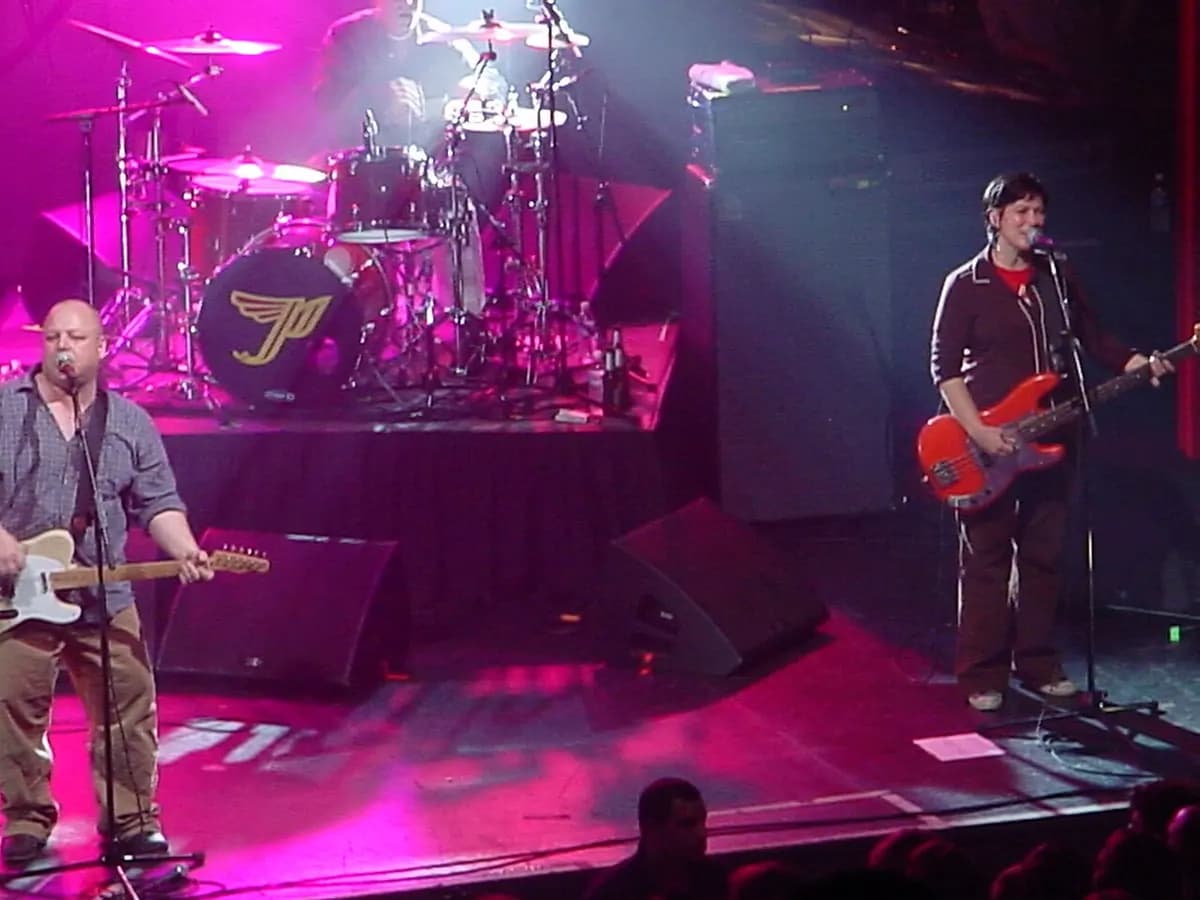
- Pixies & Pavement: Pixies' loud-quiet dynamics and Pavement's loose, slacker melodies, both widely copied in the 1990s.
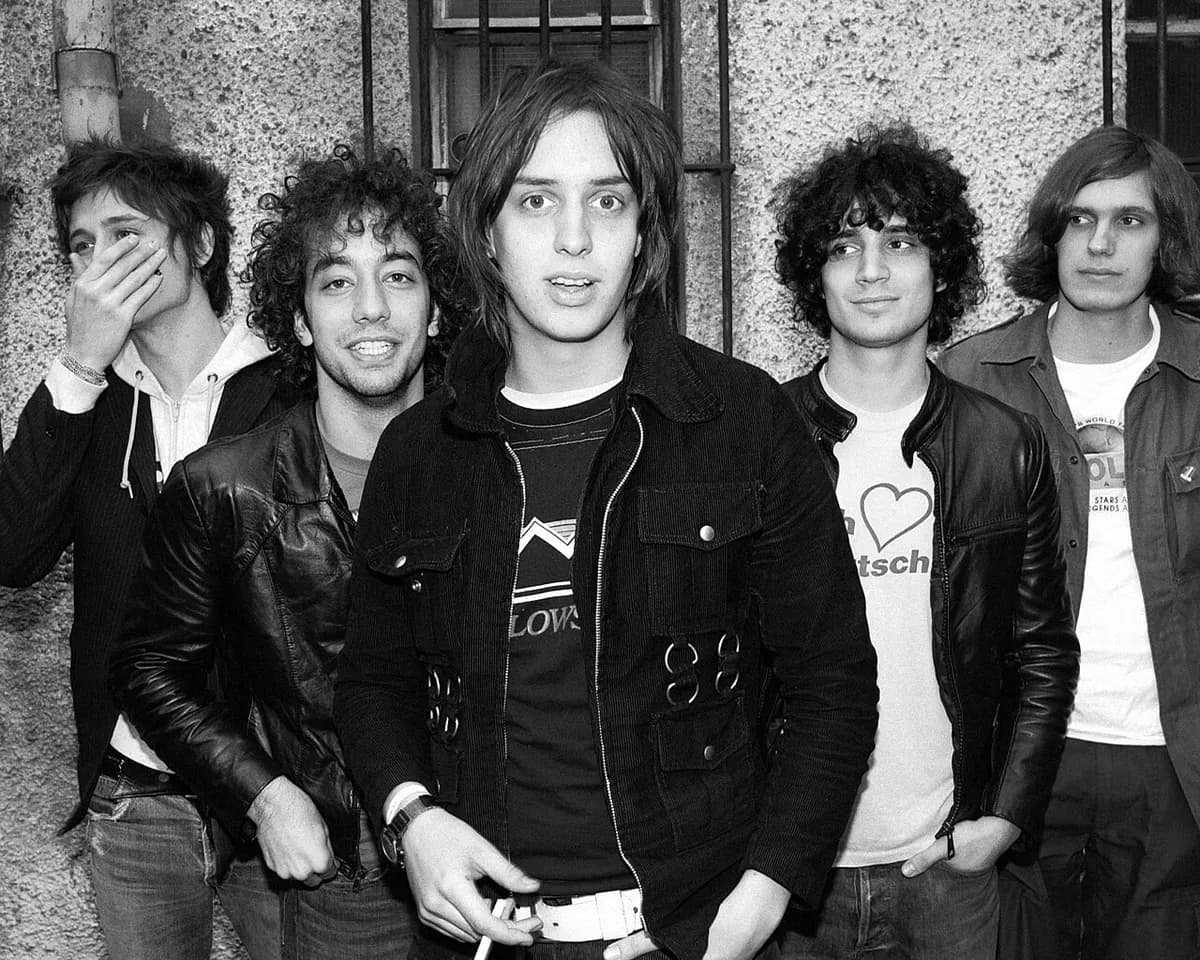
- The Strokes: "Last Nite," from Is This It (2001), the record that started the 2000s garage and post-punk revival.
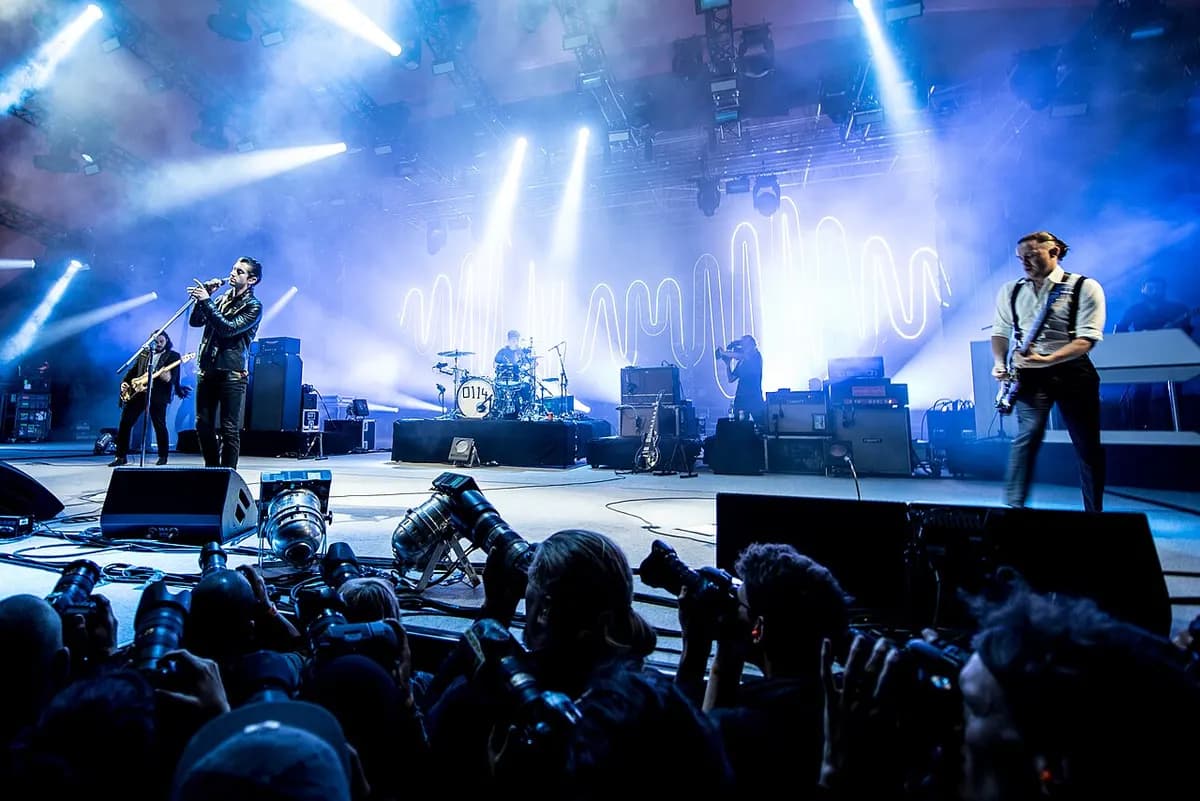
- Arctic Monkeys: "I Bet You Look Good on the Dancefloor" debuted at No. 1 in the UK in 2005, and their 2006 debut album became the fastest-selling debut by a band in British chart history.
- Arcade Fire: "Wake Up," from Funeral (2004); their third album, The Suburbs, won the Grammy for Album of the Year in 2011.
- Vampire Weekend: "A-Punk" (2008); bright, wordy indie with Afro-pop guitar lines.
- Interpol, Franz Ferdinand, Yeah Yeah Yeahs, Bloc Party, The Libertines: the best-known names of the 2000s post-punk and garage revival.
Start with "Radio Free Europe," "Last Nite," and "Wake Up" to hear indie rock's arc from 1980s jangle to 2000s anthem.
Indie Rock Around the World & Today
The 2000s were indie rock's commercial peak. The Strokes and the Yeah Yeah Yeahs revived guitar bands in the US, while British groups such as Arctic Monkeys, The Libertines, Bloc Party, and Kaiser Chiefs had top-ten hits at home. In America, Modest Mouse's "Float On" (2004) became a radio hit, Death Cab for Cutie moved to a major label for Plans (2005), and Arcade Fire and Vampire Weekend later topped the Billboard 200.
Since then "indie" has split into smaller scenes and spread internationally. Lo-fi and bedroom pop do well on streaming and social platforms, where a laptop and a guitar are enough to make a release; indie folk and dream pop built their own audiences; and Australia, South Korea, and Latin America developed their own indie scenes. The label is looser than ever, and plenty of "indie" acts now sign to majors, but it still usually means guitar-led songs made with a lot of artistic control.
How AI Detects Indie Rock
Detecting indie rock by audio alone is tricky, because "indie" is partly a label about labels and scenes. So an AI model leans on the things it can hear: the timbre of clean, jangly or lightly fuzzed guitars, melodic and unforced vocals, a real (often loose) rhythm section at mid-tempo, and the home-made production texture (room ambience, tape warmth, slightly raw levels) that separates indie from polished radio rock. It turns those qualities into a feature profile and checks which of its known styles the audio resembles most.
Since indie rock brushes up against alternative, punk, folk, and dream pop, the answer arrives as a ranked set of likelihoods and a best-guess sub-style instead of one fixed tag. Give it a spin: load the Genre AI music genre detector, capture a short passage of a track, and it'll show how strongly the clip reads as indie rock and which neighbouring style it is closest to, all in a few seconds. If you'd like to see what's happening underneath, read how AI music genre detection works.
In our own listening tests, Genre AI's model settles on Indie Rock most readily when clean, jangly or lightly distorted guitars ride a loose, human-feeling rhythm section at mid-tempo under a melodic, unforced vocal. Let the production turn hazy and the drums sink back, and the weighting drifts toward lo-fi indie; sharpen the guitars into something angular and taut, and post-punk revival climbs the list. Because indie shades so gradually into alternative, the most honest read is the full spread of those likelihoods, which is exactly what the scores lay out.