
Gospel is a genre of Christian music rooted in the worship traditions of the Black American church. It is built on strong lead and choir vocals, call-and-response singing and close harmony, and it is meant to move a congregation. Tempos range from slow ballads around 60 BPM to up-tempo praise numbers near 130 BPM. Singers trained in gospel churches went on to shape soul, R&B and early rock and roll.
This guide covers what gospel is, where it came from, how to recognise it by ear, the instruments behind its sound, its subgenres, and the artists worth knowing. Not sure whether a big vocal is gospel, soul or R&B? Play a clip into our free AI music genre detector and it will read the harmony, rhythm and vocal texture to tell you where it lands.
What Is Gospel Music?
Gospel is a form of Christian music whose lyrics express faith, praise and devotion, sung with the fervour and improvisational freedom of the Black American worship tradition. Its core is a commanding lead vocalist, a choir answering in tight harmony, and a call-and-response exchange that draws the whole room into the performance. Melismatic runs, shouts, hand-claps and a strong backbeat give gospel its lift.
Gospel is a genre in its own right, and it is also a source for much of what came after: its vocal techniques, harmony and delivery passed directly into soul, R&B and rock and roll. Soul took gospel's sound to secular love songs; gospel keeps it for sacred lyrics. The blues grew in the same Southern Black communities and often deals in hardship sung by one voice, while gospel is usually joyful and sung together.
History & Origins
Gospel's roots reach back to the spirituals sung by enslaved African Americans in the 18th and 19th centuries, which combined African musical practice (call-and-response, blue notes, layered rhythm) with Christian hymns. After emancipation, the tradition developed in the Black church. The gospel song as a written form is often traced to Philadelphia minister Charles Albert Tindley, who published his first gospel hymns in the early 1900s, including "Stand by Me." Thomas A. Dorsey, known as the "Father of Gospel Music," took the next step in 1930s Chicago, setting sacred lyrics to blues and jazz phrasing in songs such as "Take My Hand, Precious Lord" (1932) and "Peace in the Valley."
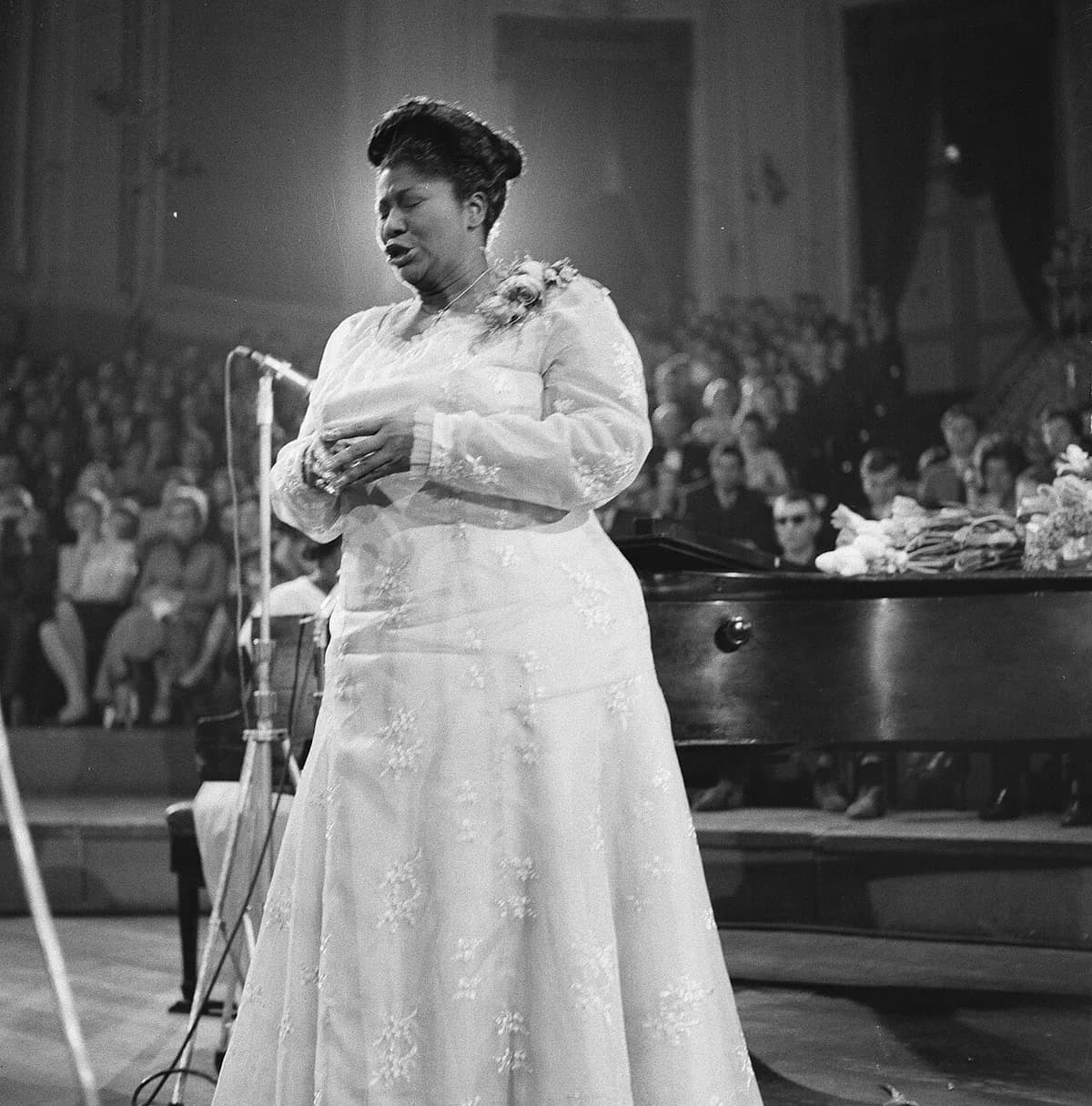
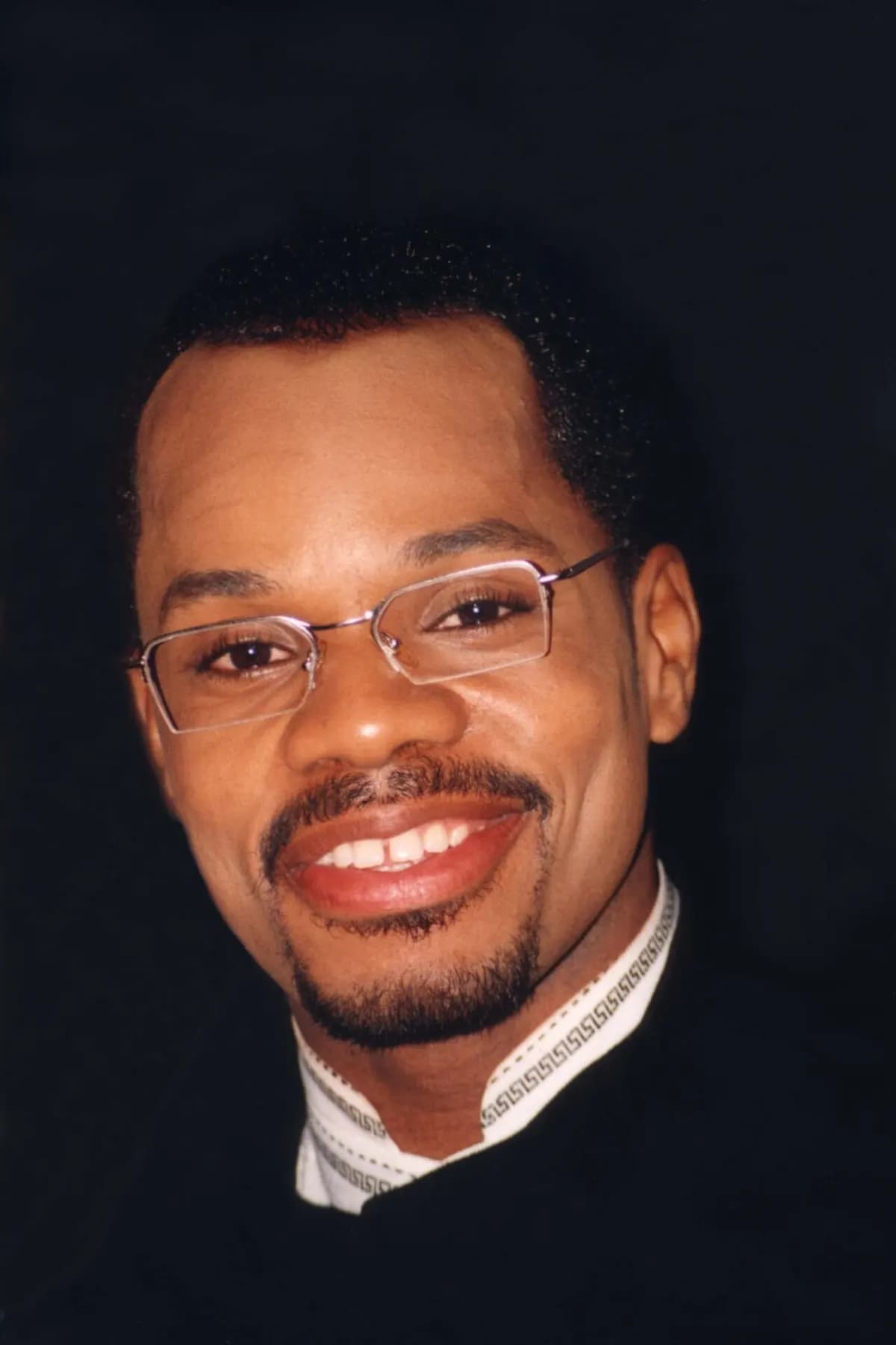
The genre's golden age ran roughly from the 1940s to the 1960s. Mahalia Jackson, whose "Move On Up a Little Higher" sold in the millions, became gospel's best-known singer, alongside quartets such as The Soul Stirrers (with a young Sam Cooke) and The Dixie Hummingbirds. Gospel songs were sung at civil rights marches and meetings, and Tindley's hymn "I'll Overcome Some Day" is usually cited as a source for "We Shall Overcome." In 1963 James Cleveland recorded the live album Peace Be Still with the Angelic Choir, a model for the mass-choir sound, and in 1968 he founded the Gospel Music Workshop of America. In the 1990s Kirk Franklin took gospel onto the pop and R&B charts and opened the contemporary era.
Key Characteristics & Sound
You can usually identify gospel by these traits:
- Vocals: a strong lead singer with a wide range, backed by a full choir; the voice is always at the front.
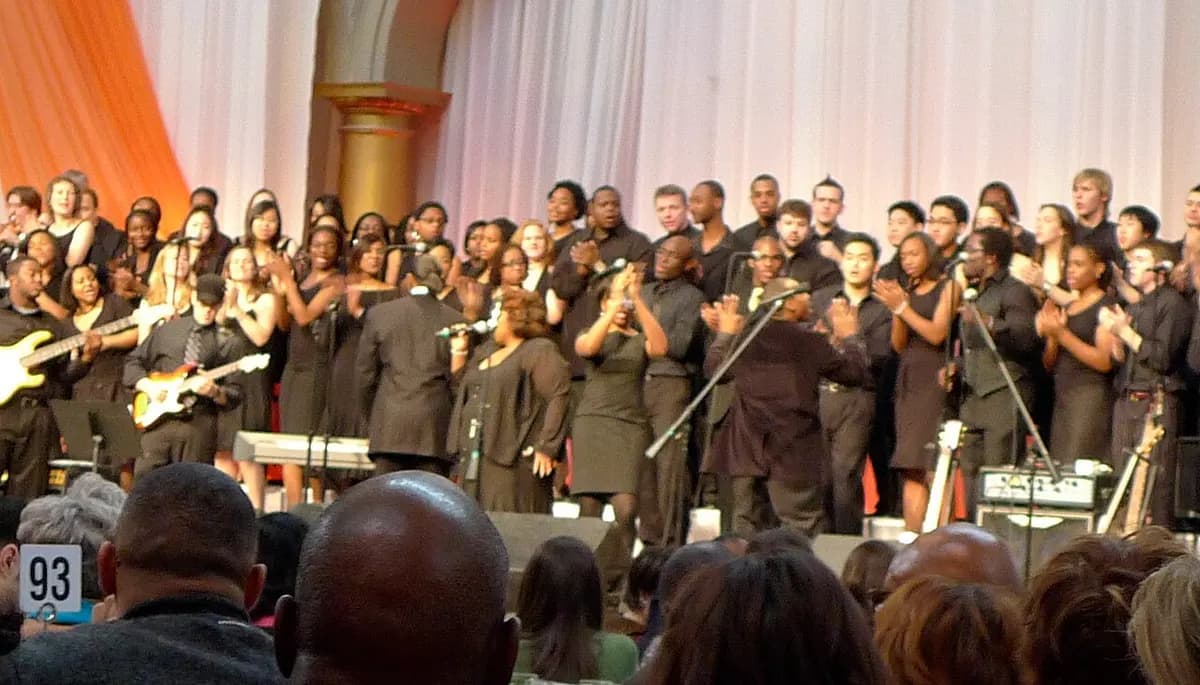
- Call-and-response: the lead sings a line and the choir or congregation answers, a device with African roots.
- Melisma & "runs": many notes sung on a single syllable, the ornamental style gospel passed on to soul and R&B.
- Harmony: extended chords (sevenths, ninths) and gospel-specific voicings on piano and Hammond organ.
- Rhythm: a strong backbeat with hand-claps and tambourine, from slow, rubato ballads to fast praise numbers.
- Emotion: a build toward a climax, the "shout," meant to lift the whole room.
If you hear a lead voice trading lines with a choir over organ and piano, climbing to an emotional peak, you're hearing gospel. Tempo and feel vary a lot across its styles:
| Style | Typical BPM | Feel |
|---|---|---|
| Traditional / choir gospel | 70–100 | Warm, communal, organ-led |
| Gospel ballad / worship | 60–80 | Slow, emotional, rubato |
| Praise & worship (up-tempo) | 100–130 | Jubilant, driving, celebratory |
| Contemporary / urban gospel | 90–115 | R&B/hip-hop grooves, modern |
| Southern / country gospel | 90–120 | Quartet harmony, acoustic |
Instruments & Production
Gospel centres on the human voice, but its instruments are easy to recognise:
- Hammond organ: the signature gospel instrument, with swelling drawbar tones and the rotating Leslie speaker that defines the church sound.
- Piano: percussive, gospel-voiced chords and improvised fills that carry the harmony.
- Choir: the mass choir of sopranos, altos and tenors, arranged in call-and-response with the lead.
- Rhythm section: bass, drums and tambourine driving the backbeat, with hand-claps as a constant.
- Modern additions: electric guitar, synths, programmed drums and hip-hop production in contemporary gospel.
Recordings range from raw live albums made in front of a congregation, the format James Cleveland made popular with Peace Be Still, to polished studio records that borrow directly from R&B and pop. In both, the arrangement is there to support the voice as it builds to a peak.
Subgenres of Gospel
Gospel has branched into several distinct styles:
- Traditional (Black) gospel: the choir-and-organ church sound of Mahalia Jackson and James Cleveland.
- Contemporary gospel: modern productions mixing gospel with R&B, funk and pop, with Kirk Franklin as its best-known name.
- Urban / hip-hop gospel: gospel messages over hip-hop beats and grooves.
- Southern gospel: white quartet harmony from the American South, close to country.
- Praise & worship: congregational, often up-tempo modern worship music.
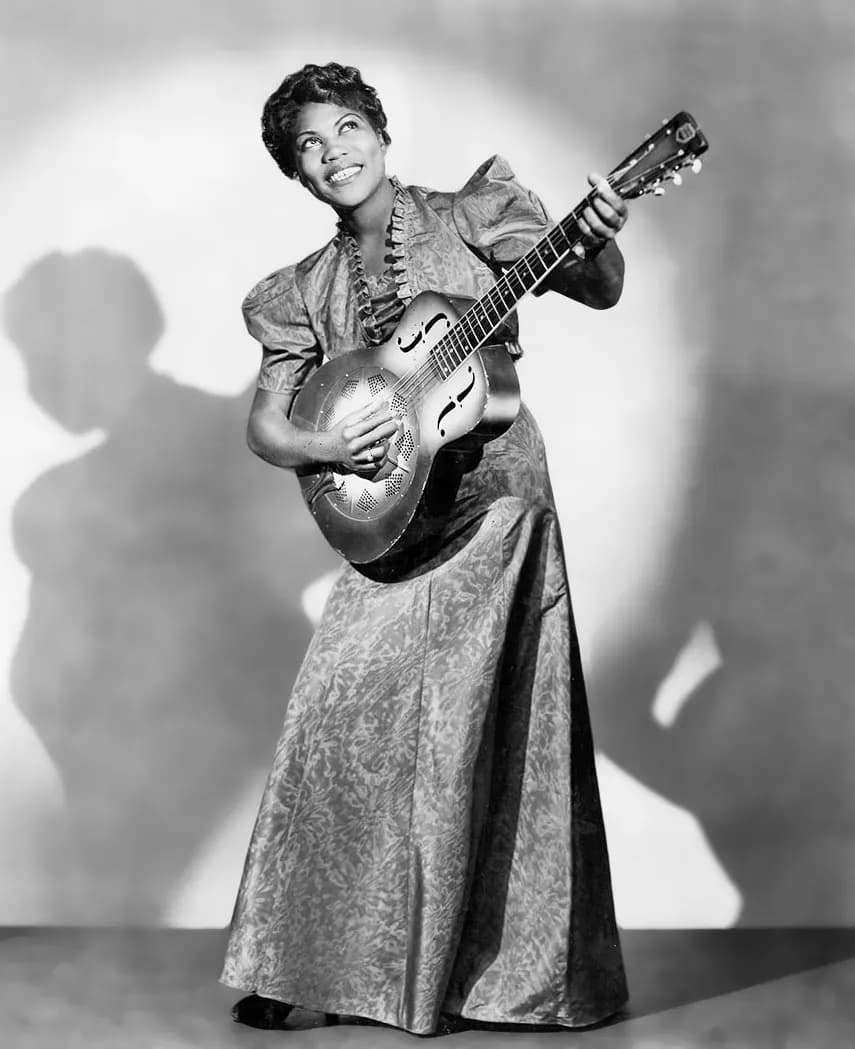
- Gospel blues: sacred songs in a blues style, led by guitar evangelists such as Blind Willie Johnson and Reverend Gary Davis.
Gospel sits at the root of a whole family of Black American music, and its influence runs straight through soul, R&B, funk and rock and roll.
Notable Artists & Tracks
Foundational and influential gospel artists include:
- Mahalia Jackson: "Move On Up a Little Higher," "How I Got Over"; often called the Queen of Gospel.
- Thomas A. Dorsey: "Take My Hand, Precious Lord"; the Father of Gospel Music.
- Sister Rosetta Tharpe: "Strange Things Happening Every Day"; often called the "Godmother of Rock and Roll."
- The Soul Stirrers: "Touch the Hem of His Garment," with Sam Cooke on lead.
- James Cleveland: "Peace Be Still"; a key figure in the modern mass-choir sound.
- Aretha Franklin: Amazing Grace (1972), recorded live in a Los Angeles church and her return to gospel.
- Kirk Franklin: "Why We Sing," "Stomp"; the leading name in crossover contemporary gospel.
- The Clark Sisters, Andraé Crouch, CeCe Winans: leading voices of gospel's modern eras.
Start with "Take My Hand, Precious Lord," Aretha's Amazing Grace and Kirk Franklin's "Stomp" to hear gospel move from 1930s Chicago churches to the pop charts.
Gospel vs Soul vs Blues
Gospel is closely tied to the secular Black music that grew up alongside it. They share vocal techniques and Southern roots, but their purpose and mood differ:
| Trait | Gospel | Soul | Blues |
|---|---|---|---|
| Subject | Faith & worship | Love & everyday life | Hardship & heartbreak |
| Mood | Celebratory, communal | Passionate, romantic | Melancholy, solitary |
| Vocals | Lead + full choir | Lead with backing vocals | Solo, expressive |
| Core instruments | Organ, piano, choir | Rhythm section, horns | Guitar, harmonica |
| Rooted in | Black church, spirituals | Gospel + R&B | Field hollers, spirituals |
How AI Detects Gospel
An AI model recognises gospel through a combination of cues: a strong, melismatic lead vocal answered by a choir in call-and-response, Hammond organ and gospel-voiced piano harmony, a hand-clapping backbeat, and a dynamic arc that builds toward a peak. It compares that fingerprint with hundreds of genre profiles, and because gospel shares so much vocal and harmonic ground with soul and R&B, the result comes back as several weighted possibilities, with the closest one on top.
Try it yourself: open the Genre AI music genre detector, give it a few seconds of audio, and it will tell a traditional choir number apart from a contemporary R&B-flavoured worship track. For the theory behind that call, read our breakdown of how AI music genre detection works.
From the tracks we have fed to Genre AI, the surest Gospel readings come from a melismatic lead vocal trading call-and-response lines with a full choir over Hammond organ, most often in the 70–110 BPM band with a hand-clapping backbeat. Drop the choir and secularise the lyric and the model drifts toward Soul; add programmed beats and modern production and it edges into R&B; strip it back to a lone voice and guitar and it leans toward Blues. Those near-neighbour scores ride alongside the top result, so you can see how close the call was.