Neo soul is the 1990s revival of live, organic soul music, with Rhodes pianos, played bass, jazz harmony and a deliberately loose, behind-the-beat groove. It was a reaction to the heavily programmed R&B on radio at the time, and its central records came out between 1995 and 2000, from D'Angelo's Brown Sugar to his Voodoo.
This guide covers what neo soul is, how the Soulquarians collective and J Dilla's rhythmic feel shaped it, the harmony and instrumentation that define it, its lasting influence on modern R&B, and the artists to start with. Not sure whether a record is neo soul or contemporary R&B? Play a few seconds into our free AI music genre detector.
What Is Neo Soul?
Neo soul is soul music made with the instrumentation and values of the late 1960s and 70s (a live rhythm section, warm keys, horns, layered background vocals) but written and recorded by people who grew up on 1990s hip-hop. The chords are richer than mainstream R&B, drawing on jazz voicings with sevenths, ninths, and elevenths. Tempos are slow, typically 70–100 BPM, and the rhythm is deliberately imperfect: drums, bass, and keys sit slightly apart from the grid, which gives the music its drunken, dragging feel.
The lyrics are written for adults and tend toward self-knowledge, relationships, spirituality and Black identity; club themes are rare. Vocals are conversational, breathy and layered, and are often mixed into the band instead of sitting on top of it, the opposite of the vocal-forward radio mixes of the time.
History & Origins
The name came from the industry. Kedar Massenburg, who managed D'Angelo and Erykah Badu and became president of Motown in 1997, coined "neo soul" in the late 1990s as a marketing term. Several of the artists it described disliked it, but it stuck because it accurately named a shift already underway.
The musical foundation was laid by D'Angelo's Brown Sugar (1995), Maxwell's Urban Hang Suite (1996) and Erykah Badu's Baduizm (1997), records built on live playing at a time when most R&B was sequenced. Lauryn Hill's The Miseducation of Lauryn Hill (1998) took the approach to a mass audience and won five Grammys, including Album of the Year.
The genre's creative centre was the Soulquarians, a loose collective working largely at Electric Lady Studios in New York around 1997–2002: D'Angelo, Questlove, J Dilla, Erykah Badu, Q-Tip, James Poyser, Common, Bilal, and Mos Def. Their best-known record is D'Angelo's Voodoo (2000), on which the band played deliberately out of alignment, copying the feel of Dilla's unquantised drum programming. That rhythmic idea outlived the scene by decades.
Commercial visibility faded in the mid-2000s, but the sound never went away. Anderson .Paak, H.E.R., SZA, Cleo Sol, Sault, Snoh Aalegra and Ari Lennox all borrow from it, and much of 2010s alternative R&B grew out of it.
Key Characteristics & Sound
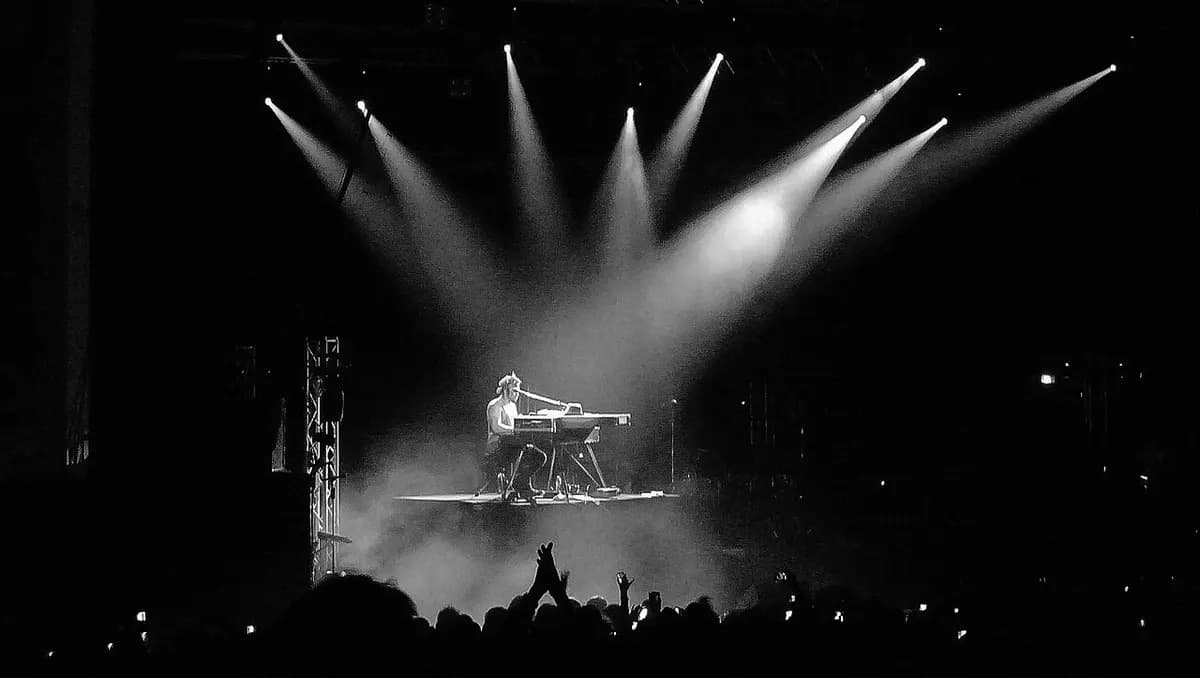
The identifying traits:
- Tempo: 70–100 BPM, unhurried and conversational.
- Timing: intentionally loose, with instruments placed ahead of or behind the beat and left unquantised.
- Harmony: extended jazz chords, modal movement, and unexpected turnarounds.
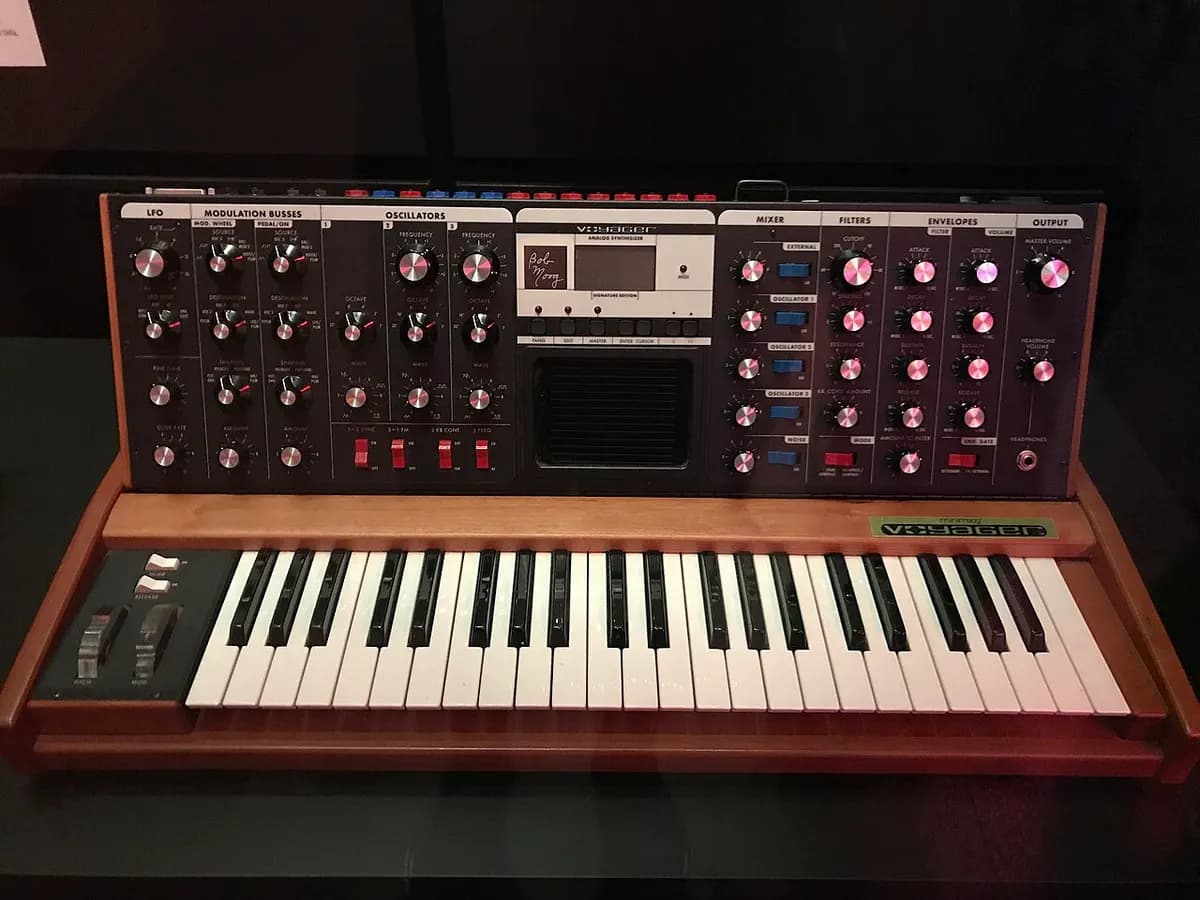
- Keys: Fender Rhodes and Wurlitzer electric pianos as the harmonic centre.
- Bass: played, melodic and prominent, often a second lead voice.
- Drums: live kit recorded warm and dry, or hip-hop-style programming with human feel.
- Vocals: layered, breathy, textural; harmony stacks used as instrumentation.
- Production: analogue warmth, minimal compression, room sound left intact.
Set against mainstream R&B of the same years, the differences are easy to list:
| Trait | Neo Soul | Contemporary R&B (1990s) |
|---|---|---|
| Tempo | 70–100 BPM | 80–110 BPM |
| Rhythm section | Live band, loose timing | Programmed, quantised |
| Harmony | Jazz-extended chords | Simple triads and sevenths |
| Vocal mix | Layered, blended into the band | Forward, bright, compressed |
| Vocal style | Conversational, textural | Melismatic, virtuosic |
| Lyrics | Introspective, spiritual, social | Romance, seduction, club |
| Reference era | 1970s soul and jazz | Contemporary pop production |
The Dilla Feel: Why Neo Soul Sounds Loose
The technical idea neo soul is best known for is the deliberate rejection of quantisation. Producing on an Akai MPC, J Dilla turned the swing and timing correction off, placing hits by hand so that the kick, snare, and hi-hat sat at slightly different distances from the beat. The result sounds like a drummer who is rushing and dragging at the same time.
On Voodoo, D'Angelo and Questlove translated that idea back onto live instruments: Questlove played deliberately behind the beat, and the band was not locked to a click, so the push and pull between players stayed on the record. The approach spread well beyond the genre: you can hear it on Kendrick Lamar's To Pimp a Butterfly (2015), on Robert Glasper's Black Radio (2012) and across lo-fi hip-hop.
Related Styles & Descendants
Neo soul sits inside a family of soul-adjacent styles:
- Alternative R&B: the 2010s descendant with electronic and ambient textures (Frank Ocean, SZA, dvsn).
- Jazz rap: the hip-hop cousin sharing personnel and harmony (Common, A Tribe Called Quest).
- Modern funk / soul revival: band-led and retro-facing (Anderson .Paak, Tuxedo, Leon Bridges).
- UK soul: the British branch, from Omar and Soul II Soul to Cleo Sol and Sault.
- Nu-jazz / spiritual jazz crossover: Robert Glasper and the London scene around Ezra Collective and Nubya Garcia.
- Lo-fi hip-hop: inherits the Dilla feel and the Rhodes palette, minus the vocals.
Notable Artists & Albums
The core listening:
- D'Angelo: Brown Sugar (1995), Voodoo (2000).
- Erykah Badu: Baduizm (1997), Mama's Gun (2000).
- Maxwell: Maxwell's Urban Hang Suite (1996).
- Lauryn Hill: The Miseducation of Lauryn Hill (1998).
- Jill Scott: Who Is Jill Scott? (2000).
- Bilal: 1st Born Second (2001).
- Musiq Soulchild: "Just Friends (Sunny)" (2000), "Love" (2001).
- India.Arie: "Video" (2001).
- Anderson .Paak: Malibu (2016).
- Cleo Sol: Mother (2021).
- Sault: Untitled (Black Is) (2020).
Start with Voodoo, Baduizm, and Malibu to hear the genre's peak and its modern continuation.
How AI Detects Neo Soul
Neo soul gives a classifier several strong cues: slow tempo, harmonic content far richer than pop or mainstream R&B, the spectral signature of a Fender Rhodes, live drum and bass timbres with natural room tone, and onset timing that measurably deviates from a strict grid far more than programmed music does.
That last feature is unusual and useful: most modern productions align to a click, so a record whose beat placement wanders consistently is either live or deliberately unquantised. Expect scores to spread across soul, R&B, and jazz. Try it in the Genre AI music genre detector and read how AI music genre detection works for the details.
Testing this genre in Genre AI ourselves, the clearest Neo Soul readings come from tracks at 72–95 BPM that combine Rhodes-based extended harmony, an audible played bass, live drums with loose timing, and layered breathy vocals. Tighten the timing and brighten the vocal and the model moves to R&B; push the harmony further and drop the vocal and it reads Jazz; add horns and a driving backbeat and Funk and Soul climb. The spread across those four labels is usually the most accurate description of a neo soul record.