Memphis rap is the hip-hop scene that grew up in Memphis, Tennessee, in the late 1980s and 1990s, first as an underground of DJ-made cassette tapes and then as a commercial force through Three 6 Mafia, 8Ball & MJG and Project Pat. The sound is dark and raw. Roland TR-808 drums carry ringing cowbells, hooks are chanted by several voices, verses run in rapid triplets, and the hiss on the tapes came from cheap duplication, not from anyone's plan.
Decades later that tape sound became the raw material of phonk, and its chants and energy fed crunk and trap. This guide covers the scene's history, how its records were made, the artists who defined it, and how it differs from its descendants. To hear how a Memphis tape reads to a classifier, try a clip in our free AI music genre detector.
What Is Memphis Rap?
Memphis rap names both a place and a sound. As a place, it covers any rap made in the city; as a sound, it usually means the 1990s underground — music made by local DJs and rappers on drum machines and four-track recorders, sold on cassette in record shops, at car washes and from car trunks, and copied from tape to tape until the sound degraded.
The underground style is recognisable within seconds. Beats are built almost entirely on a Roland TR-808 or similar drum machine, with booming kicks, sharp hi-hats and the 808's metallic cowbell used as a melodic hook. Vocals alternate between low, menacing verses and chanted group hooks repeated like a mantra. Many tracks use eerie keyboard lines, horror-film atmosphere or slowed vocal snippets. The mood is grim and claustrophobic, and themes run from street life and partying to occult imagery that overlaps with horrorcore.
Alongside that underground there was a smoother, more commercial Memphis strand, led by 8Ball & MJG's soul-sampling, pimp-themed records. So "Memphis rap" has always covered more than one sound.
History & Origins
Memphis already had Sun Records, Stax and Hi Records in its past, and its hip-hop scene grew up largely apart from New York and Los Angeles. In the late 1980s and early 1990s local DJs such as DJ Spanish Fly, DJ Squeeky and DJ Zirk began making mixtapes that were really original productions: their own 808 beats, often with their own vocals, sold locally on cassette. DJ Spanish Fly is usually named among the first, and is often described as the bridge between 1980s electro-funk and the harder gangsta rap of the 1990s.
Two young DJs, DJ Paul and Juicy J, were part of that tape economy. In 1991 they formed Triple Six Mafia with Lord Infamous, DJ Paul's half-brother; Koopsta Knicca, Gangsta Boo and Crunchy Black joined by 1995, and the name was later shortened to Three 6 Mafia. Their early tapes and the album Mystic Stylez (1995, on the local Prophet label) put 808 programming, occult imagery, chanted hooks and fast triplet flows together, and Mystic Stylez is still the record people reach for when they describe the Memphis underground.
Other artists built parallel careers. Tommy Wright III put out his own records independently and built a following that outlasted the decade. Kingpin Skinny Pimp, Playa Fly, Gangsta Pat, Indo G and La Chat all came out of the same circuit. 8Ball & MJG released their debut Comin' Out Hard (1993) on Houston's Suave House, produced it themselves, and took a slicker Memphis sound beyond the city.
From the late 1990s Three 6 Mafia moved into the mainstream through Hypnotize Minds, the label DJ Paul and Juicy J set up in 1996. "Tear da Club Up '97" anticipated crunk's mosh-pit energy, Juicy J's brother Project Pat had a hit with "Chickenhead" (2001), and "Stay Fly" (2005) reached No. 13 on the Billboard Hot 100. In 2006 the group won the Academy Award for Best Original Song for "It's Hard out Here for a Pimp" from the Memphis-set film Hustle & Flow.
The underground tapes had a second life online. From the late 2000s, producers such as SpaceGhostPurrp and his Raider Klan collective in Miami sampled and imitated them, and the name phonk attached itself to that revival. By the 2020s, drift phonk had carried fragments of 1990s Memphis cassettes onto streaming charts around the world, often to listeners who had never heard the originals.
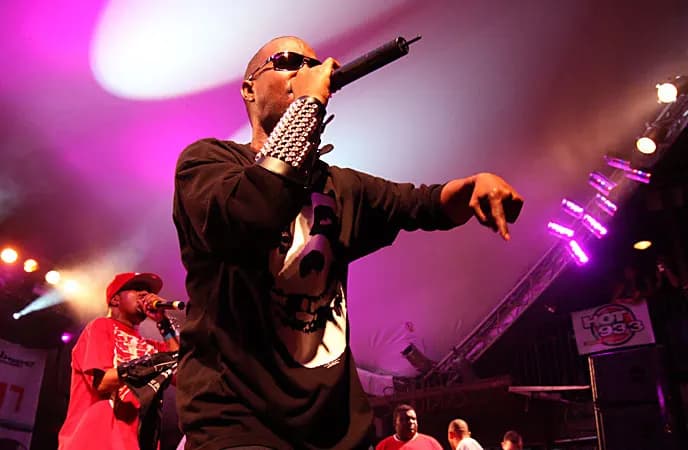
Key Characteristics & Sound
Hallmarks of the Memphis underground sound:
- Tempo: varied, but commonly felt around 65–80 BPM in a slow, heavy half-time, with hi-hats running at double speed; some club tracks are faster.
- Roland TR-808 as the whole rhythm section: long, distorted kicks, crisp hats and claps.
- The 808 cowbell played as a melody; phonk later made it a trademark.
- Chanted hooks: a short phrase repeated by several voices, closer to a chant than a tune.
- Triplet flows: rapid, rolling cadences in groups of three, often cited as an influence on later Southern and Atlanta rap.
- Dark keys and atmosphere: minor-key synth lines, horror-film textures, slowed or pitched vocal samples.
- Tape degradation: hiss, saturation, wobbling pitch and muffled highs from repeated cassette dubbing.
- Lyrics spanning street life, partying, threats and, in the darker corners, occult and horror imagery.
How the original compares with the styles it fed:
| Trait | Memphis Rap | Phonk | Crunk | Trap |
|---|---|---|---|---|
| Era | Late 1980s–2000s | ≈2010 onward | Late 1990s–2000s | ≈2000 onward |
| Origin | Memphis, Tennessee | Online (SoundCloud) | Memphis and Atlanta | Atlanta |
| Format | Local cassette tapes | Streaming, short videos | Club singles, albums | Mixtapes, albums |
| Signature sound | 808 cowbell, chants, hiss | Memphis samples, cowbell, distortion | Shouted chants, heavy 808 | 808 sub, hi-hat rolls |
| Vocals | Original, menacing, triplet flows | Sampled, chopped, pitched | Call-and-response shouts | Rapped, front of mix |
| Reference | Mystic Stylez (1995) | Drift phonk playlists | "Get Low" (2003) | Trap Muzik (2003) |
Production & Tape Culture
The Memphis sound is inseparable from how it was made and distributed:
- Drum machines and cheap samplers: the 808 and its imitators, plus basic keyboards, because that is what local producers could afford.
- Four-track and home recording, with vocals recorded in bedrooms and small studios, often in one take.
- The DJ as producer: a "mixtape" by a Memphis DJ was usually original material, mixing his own beats, guest rappers and short interludes.
- Cassette duplication. Tapes were copied in batches and then re-copied by fans, so each generation lost fidelity. The hiss and murk that later producers imitate were the accidental result.
- Sampling of soul records, horror and crime films, and other local tapes; recycling of vocal lines and hooks between artists was common.
- Local sales through record shops, flea markets and hand-to-hand, which kept the scene regional and made original tapes scarce. That scarcity is one reason the sound felt like a rediscovery when it surfaced online.
Strands & Related Styles
The main strands of Memphis rap and the genres around it:
- The underground tape scene: DJ Spanish Fly, DJ Squeeky, early Three 6 Mafia, Tommy Wright III; dark, raw, cowbell-heavy.
- The commercial Memphis sound: 8Ball & MJG's smoother, soul-sampling records and Three 6 Mafia's later Hypnotize Minds output.
- Horrorcore: the overlapping tradition of horror-themed rap; Memphis supplied many of its darkest records.
- Crunk: the high-energy club style that grew partly out of Memphis chants and was taken national from Atlanta.
- Phonk: the internet-era genre built directly on Memphis tape samples; read our posts on what phonk is and drift phonk.
- Cloud rap: SpaceGhostPurrp and Raider Klan worked on both sides, linking Memphis revivalism to the hazy internet rap of the early 2010s.
- Gangsta rap: the national tradition Memphis rap belongs to lyrically.
Key Artists & Records
Where to start:
- Three 6 Mafia: Mystic Stylez (1995), Chapter 2: World Domination (1997) with "Tear da Club Up '97", "Stay Fly" (2005).
- DJ Spanish Fly: the early-1990s tapes that defined the underground template.
- DJ Paul and Juicy J: their pre-Three 6 tapes and production for the Hypnotize Minds roster.
- Tommy Wright III: independently released 1990s albums and tapes, heavily sampled in phonk.
- Lord Infamous: the "Scarecrow", the group's darkest voice, whose horror imagery set the tone of the early tapes.
- 8Ball & MJG: Comin' Out Hard (1993).
- Project Pat: "Chickenhead" (2001), from Mista Don't Play: Everythangs Workin'.
- Gangsta Boo: a Three 6 Mafia member from the mid-1990s who also recorded solo for Hypnotize Minds.
- Kingpin Skinny Pimp, Playa Fly, La Chat: more names from the 1990s tape circuit.
For the arc in three steps: an early DJ Spanish Fly tape for the raw underground, Mystic Stylez for its definitive statement, and "Stay Fly" for the mainstream breakthrough.
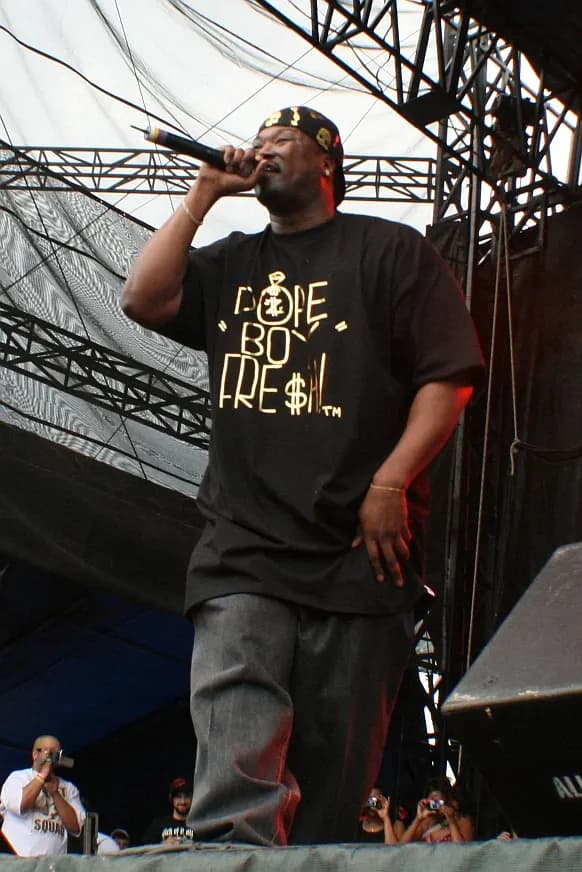
Memphis Rap vs Phonk, Horrorcore & Crunk
These styles are often confused because they share sounds and history. The relationship is chronological and functional: Memphis rap is the source; phonk is a later, mostly instrumental genre that samples it; horrorcore is a thematic category that overlaps with part of it.
- Memphis rap vs phonk: Memphis tapes are songs with original rappers. Phonk producers lift those vocals, chop and pitch them, and set them over new beats. Modern drift phonk is also much faster, typically 130–160 BPM, and far more distorted.
- Memphis rap vs horrorcore: horrorcore is defined by horror-film subject matter and exists in Detroit, Houston, the Midwest and elsewhere. Some Memphis records, especially early Three 6 Mafia and Lord Infamous, are horrorcore; many others are party, street or pimp records with no horror content at all.
- Memphis rap vs crunk: crunk took the shouted, chant-based energy into the club and made it brighter, louder and simpler.
How AI Detects Memphis Rap
Memphis tapes are acoustically unusual for rap. The 808 drums and rapped vocals point clearly to hip-hop, but the tape degradation (rolled-off highs, hiss, saturation, wobbling pitch) changes the spectrum in ways that can make a 1990s recording resemble lo-fi or degraded material. The 808 cowbell and chanted hooks are strong cues to a human listener, yet they are short, repetitive events that a model may weight less than the overall texture.
The cleaner the source, the more confidently a track reads as rap. Try one in the Genre AI music genre detector, and see phonk vs trap for how the modern descendants differ.
Genre AI's live model has no separate "Memphis Rap" label. Memphis records reach its rap branch through their 808 drums and rapped vocals, and two of its rap labels fit the style by history: Gangsta Rap for the lyrical tradition and Trap for the drum programming Memphis helped shape. A very hissy or heavily dubbed tape can blur the reading, because the model is hearing the cassette as much as the music; a clean digital reissue of the same track will usually give a sharper result.