Emo rap is the strand of hip-hop that took the confessional voice and guitar melancholy of emo and set them over trap drums. It surfaced on SoundCloud around 2015–2016 and broke into the mainstream in 2017–2018. Its songs deal openly with depression, addiction, heartbreak and self-loathing, and they are sung about as often as they are rapped.
This page is the genre reference: the scenes and crews that built emo rap, how its beats are put together, the records that define it, and where it ends and its neighbours begin. For a shorter, story-first introduction read our post What Is Emo Rap? How Emotion Reshaped Hip-Hop. To hear how a track reads to a machine, drop a clip into our free AI music genre detector.
What Is Emo Rap?
Emo rap draws on two parents. From hip-hop it takes the rhythm section (Roland TR-808 sub-bass, half-time snares, rolling hi-hats) and the habit of building a song on a short loop. From emo and the pop-punk end of 2000s alternative rock it takes the harmonic material, mostly clean or lightly distorted guitar figures in minor keys, along with the first-person confessional lyric and a look built on dyed hair, band shirts and tattoos.
Hip-hop has always had sad lyrics; what emo rap changed was the register. The vocal is usually melodic and half-sung through Auto-Tune, the mix is often deliberately rough, and the songs dwell on weakness. A great deal of rap is written to project control. Emo rap is mostly about losing it.
The genre is closely tied to SoundCloud rap, the wider wave of mid-2010s artists who uploaded bedroom recordings straight to the platform. The two are not identical: SoundCloud rap also covers aggressive, distorted styles with no emo content at all. Emo rap is the part of that wave whose material came from emo, pop-punk and indie rock.
History & Origins
The term is older than the sound it now describes. In the early 2000s critics occasionally applied "emo rap" to introspective underground rappers such as Atmosphere, whose lyrics dealt with relationships and self-doubt over sample-based beats. That usage was loose and mostly descriptive; it did not name a scene.
The modern genre draws on three lines that converged in the mid-2010s. The first is mainstream rap's turn inward: Kanye West's 808s & Heartbreak (2008) and Kid Cudi's Man on the Moon: The End of Day (2009) made sung, Auto-Tuned loneliness acceptable in hip-hop. The second is the internet underground of cloud rap (Bones, Yung Lean and the Sad Boys, Raider Klan), which supplied the lo-fi production, the reverb and the habit of giving music away online. The third is the emo and pop-punk records that a generation born in the late 1990s had grown up on.
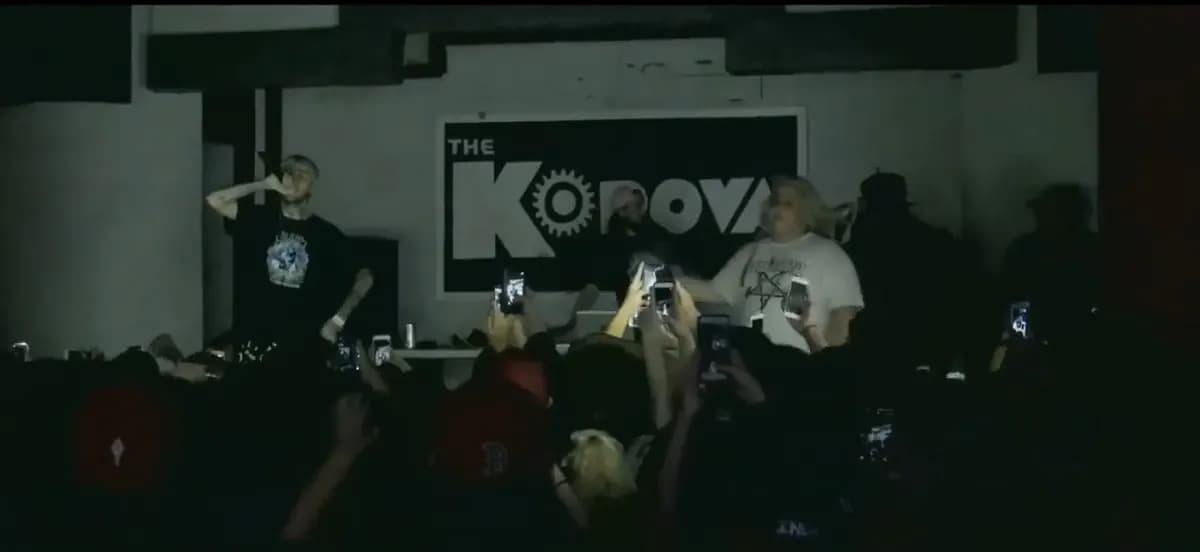
The scene that fused them was GothBoiClique, a loose Los Angeles collective founded by Wicca Phase Springs Eternal, Cold Hart and Horse Head, later joined by Lil Tracy and, in 2016, Lil Peep. Wicca Phase Springs Eternal is the solo project of Adam McIlwee, formerly of the emo band Tigers Jaw, so the traffic ran both ways: emo musicians moved into rap as rappers borrowed from emo. Lil Peep, from Long Island, released the mixtapes Crybaby and Hellboy (both 2016) and tracks such as "Star Shopping" and "Beamer Boy" that became the scene's calling cards.
In Florida, XXXTentacion was building a parallel following on SoundCloud, alternating distorted, aggressive tracks with sparse acoustic laments; his albums 17 (2017) and ? (2018) leaned heavily on the latter. In 2017 Lil Uzi Vert's "XO Tour Llif3", produced by TM88, carried the mood onto mainstream radio. Lil Peep's debut album Come Over When You're Sober, Pt. 1 was released in August 2017; he died in November that year at 21. XXXTentacion was shot dead in June 2018 while facing criminal charges, including domestic-violence charges, and that history shapes how his catalogue is discussed.
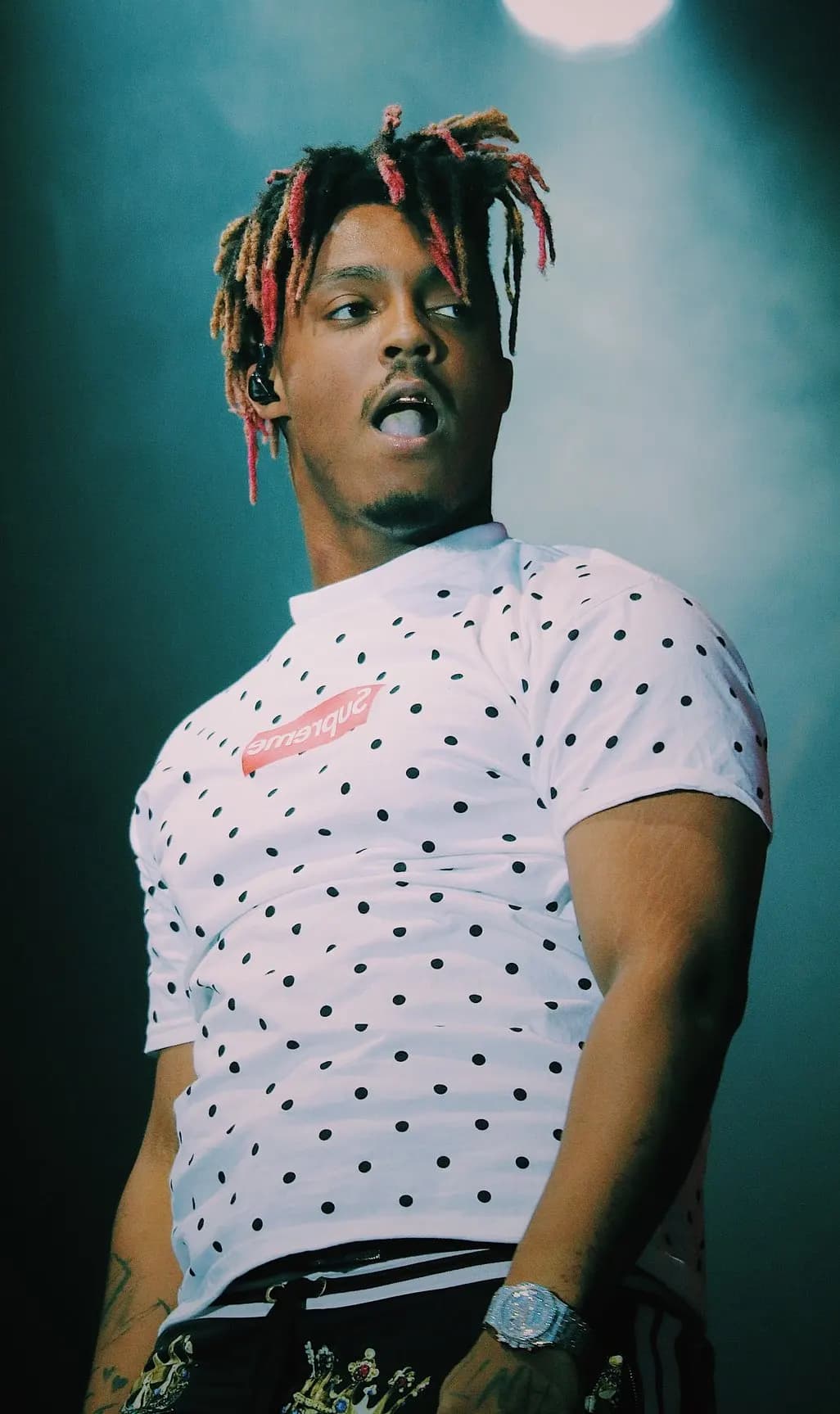
Juice WRLD took the genre to its commercial height. His "Lucid Dreams" (2018), produced by Nick Mira and built around an interpolation of Sting's "Shape of My Heart", turned the guitar-loop formula into a major-label hit. Juice WRLD died in December 2019. By the early 2020s emo rap had partly merged into neighbouring trends: a pop-punk revival led by Machine Gun Kelly's Tickets to My Downfall (2020), produced by Travis Barker, and the internet microgenres around hyperpop and digicore.
Key Characteristics & Sound
What separates emo rap from ordinary trap:
- Tempo: most songs sit on the trap grid, roughly 130–160 BPM counted in full and felt as 65–80 BPM in half-time. Acoustic ballads in the style can drop well below that.
- Guitar as the lead instrument: a looped figure, arpeggiated, clean or lightly overdriven, often with audible fret noise, carries the harmony where trap would use a synth or piano.
- Minor-key progressions of three or four chords, repeated without development for the length of the song.
- 808 bass that follows the guitar's root notes, frequently distorted or clipped.
- Sung-rapped vocals through Auto-Tune, set hard enough to be heard as an effect; hooks are melodic and repeated.
- Rough mixing: vocals recorded on cheap microphones, clipping left in, heavy reverb that smears the edges.
- Short songs, frequently under three minutes, with a hook-verse-hook structure and little bridge material.
- Lyrics about mental health, drug use, breakups and mortality, written in the first person.
The style sits between two parent genres and borrows unevenly from each:
| Element | From trap / hip-hop | From emo / pop-punk | Emo rap result |
|---|---|---|---|
| Drums | 808 kick and sub, rolling hats | Live kit, driving eighths | Programmed trap drums, almost always |
| Harmony | Synth or piano loop | Guitar riffs and arpeggios | Looped guitar figure |
| Vocal | Rapped, rhythm-first | Sung, strained, emotive | Half-sung through Auto-Tune |
| Lyric stance | Status and control | Confession and hurt | Confession, sometimes mixed with flexing |
| Production | Polished, loud | Band recording | Bedroom, lo-fi, clipped |
| Distribution | Mixtapes, radio | Labels, touring | SoundCloud uploads, then streaming |
Production Techniques
Emo rap beats are simple to describe, but the details are specific:
- The guitar loop. Early tracks sampled emo, post-hardcore and indie records directly. As the genre grew, producers moved to recording their own figures or using royalty-free guitar loop packs, which is part of why the sound became so uniform around 2018–2019.
- Producer collectives built the commercial version. Internet Money, founded by Taz Taylor with Nick Mira and DT, produced for Juice WRLD and many others and sold beats and loops to a large online audience of aspiring producers.
- Minimal arrangement: guitar, 808, a clap or snare, hi-hats, vocal. Adding layers tends to push a track toward pop-trap; subtracting them toward lo-fi.
- Lo-fi treatments borrowed from cloud rap: bit-crushing, low-pass filtering, tape-style saturation and long reverb tails.
- Vocal processing as identity. Hard-tuned Auto-Tune, doubled hooks and pitched-down ad-libs make individual artists recognisable within a few seconds.
- Home studios. FL Studio, a USB microphone and a laptop were enough to release a track the same day it was made, and that speed was part of the appeal.
Scenes, Crews & Related Styles
Emo rap was never one city's sound. The main clusters and adjacent styles:
- GothBoiClique: the collective around Lil Peep, Lil Tracy, Cold Hart and Wicca Phase Springs Eternal; the most direct emo-to-rap bridge, with goth imagery to match.
- South Florida SoundCloud: XXXTentacion, Ski Mask the Slump God and the circle around them, mixing emo laments with abrasive, distorted rap.
- Internet Money and the pop wing: Juice WRLD and the guitar-loop formula at its most radio-ready.
- Rock-leaning rap: nothing,nowhere., the project of Joe Mulherin, who wrote and played guitar parts himself and drew directly on emo and post-hardcore.
- Cloud rap: the hazy predecessor that supplied emo rap's reverb, lo-fi textures and online distribution.
- Mumble rap: the overlapping melodic-trap wave of the same years; it shares the Auto-Tune and the trap grid but not the guitar or the confessional focus.
- Pop-punk revival: the 2020–2021 swing back to live guitars and drums, often by artists who had started in emo rap.
- Hyperpop and digicore: younger internet scenes that kept the confessional voice and pushed the production toward pitched-up, maximalist pop.
Key Artists & Records
The records most often used to define the genre:
- Lil Peep: Hellboy (2016), Come Over When You're Sober, Pt. 1 (2017), "Star Shopping", "Awful Things".
- XXXTentacion: 17 (2017), ? (2018), "Jocelyn Flores", "Sad!".
- Juice WRLD: Goodbye & Good Riddance (2018), "Lucid Dreams", "All Girls Are the Same"; Death Race for Love (2019).
- Lil Uzi Vert: "XO Tour Llif3" and Luv Is Rage 2 (2017).
- Lil Tracy and Wicca Phase Springs Eternal: the GothBoiClique catalogue around Lil Peep.
- Trippie Redd: A Love Letter to You (2017), with "Love Scars".
- nothing,nowhere.: Reaper (2017) and Ruiner (2018), the most rock-literate end of the genre.
- Bones: the prolific underground rapper whose lo-fi uploads came before much of the style and point toward it.
Three entry points for the arc: Lil Peep's "Star Shopping" for the bedroom origin, "XO Tour Llif3" for the crossover, and "Lucid Dreams" for the commercial form.
Emo Rap vs Emo, Cloud Rap & Trap
The genre is most often confused with three neighbours. The short version: emo is a rock genre played by bands; cloud rap is about atmosphere, not confession; trap supplies the drums but not the mood.
| Trait | Emo Rap | Emo | Cloud Rap | Trap |
|---|---|---|---|---|
| Family | Hip-hop | Rock / punk | Hip-hop | Hip-hop |
| Emerged | ≈2015 | Mid-1980s | ≈2010 | ≈2000 |
| Lead instrument | Looped guitar | Live guitars, band | Sampled ambient pads | Synths, piano, brass |
| Drums | Programmed 808 trap | Live kit | Programmed 808, soft | Programmed 808, punchy |
| Vocal | Auto-Tuned, half-sung | Sung, often strained or shouted | Drifting, buried in reverb | Rapped, front of mix |
| Central theme | Depression, heartbreak, drugs | Personal emotion | Mood, haze, flexing | Hustle, status, street life |
| Reference record | Come Over When You're Sober, Pt. 1 | Diary (Sunny Day Real Estate) | "I'm God" (Lil B) | Trap Muzik (T.I.) |
Criticism & Legacy
Emo rap drew criticism on two fronts. Rap traditionalists objected to its loose, sung delivery and simple loops, in much the same terms used against mumble rap. More seriously, commentators and mental-health organisations questioned how the music treated drug use, particularly after the deaths of Lil Peep (2017) and Juice WRLD (2019), both from accidental overdoses. Defenders replied that the songs described problems that already existed, and that many listeners found in them a direct way to talk about depression.
The influence is wide. Melodic, confessional rap is now ordinary in the mainstream; guitar loops are a standard trap texture; and the pop-punk revival of 2020–2021 was driven largely by artists and audiences who arrived through emo rap. The genre also made it normal for a rap career to start with a single SoundCloud upload recorded the same night.
How AI Detects Emo Rap
For an audio classifier, emo rap sits on a fault line. The drum programming says trap; the harmonic content, a clean guitar loop in a minor key, says rock or indie; and a melodic, Auto-Tuned vocal pulls toward pop. Which of these wins depends on the mix: a loud 808 and busy hi-hats keep the reading in rap, while a ballad with acoustic guitar and soft drums can be read as pop or even folk-adjacent.
No audio model can hear the lyrics' subject, which is half of what defines emo rap. What it can hear is the combination of trap rhythm and guitar harmony, and that combination is the clearest mark of the genre in the audio itself. Try a track in the Genre AI music genre detector, and see how AI music genre detection works for what is and is not measurable from audio.
Genre AI's live model has no separate "Emo Rap" label. Its rap branch distinguishes Trap, Gangsta, Pop Rap, Jazzy Hip-Hop and Contemporary R&B, so an emo rap track is reported through those and through the top-level families around them. The cues should pull in predictable directions: heavy 808s and rolled hi-hats point to Trap; a hard-tuned sung hook moves the reading toward Pop Rap or Pop; and a guitar-forward track with quiet drums can drift out of hip-hop altogether into rock or indie. A split result here is not an error. It reflects a genre that really does have two parents.