
Cloud rap is the hazy, reverb-soaked branch of hip-hop that took shape between 2009 and 2011: slow 808 drums under blurred, pitch-shifted vocal samples, with rappers drifting over the top instead of attacking the beat. Its home was the internet more than any city. Lil B was in Berkeley, the producer Clams Casino in Nutley, New Jersey, and the audience on blogs, YouTube and free mixtape sites. Its long reverbs and buried samples are now common in mainstream rap.
This guide covers who built the sound, what makes a beat "cloudy", how it differs from trap, and what it turned into. To hear how a cloud rap beat reads to a classifier, run a few seconds through our free AI music genre detector.
What Is Cloud Rap?
Cloud rap is defined by its production. The beat is built from a heavily processed vocal or ambient sample, stretched, pitched and drowned in reverb until the source is hard to recognise, laid over sparse trap drum programming: booming 808 bass, snapping snare or clap on the third beat, and rolling hi-hats. Everything is soft-edged. There is no aggressive mid-range, few hard transients, and often no clear song structure at all.
Over that, the rapping is deliberately unhurried: melodic or half-sung, frequently drenched in the same reverb as the beat, sometimes mixed under the instrumental. Where a traditional rap mix puts the voice at the centre and the beat behind it, cloud rap treats the voice as another texture in the haze.
The name came from a blog. In 2010 the writer Walker Chambliss (Walkmasterflex) called Squadda B of the Oakland duo Main Attrakionz "the king of cloud rap", and the tag stuck to the whole scene. The metaphor works twice: the music sounds like weather, and it lived online, uploaded free to YouTube, Bandcamp and DatPiff and spread through Tumblr, with few physical releases.
History & Origins
The origin point is a collaboration. Lil B, a prolific Berkeley rapper working under the "Based God" persona, was releasing hundreds of tracks a year, many of them stream-of-consciousness "based freestyles" over unconventional beats. In the late 2000s a New Jersey producer named Michael Volpe, then studying physical therapy, started sending him beats over MySpace under the name Clams Casino. Their track "I'm God", built from a slowed sample of Imogen Heap's "Just for Now" and first released on Lil B's 2009 mixtape 6 Kiss, is the record most often named as the start of the style.
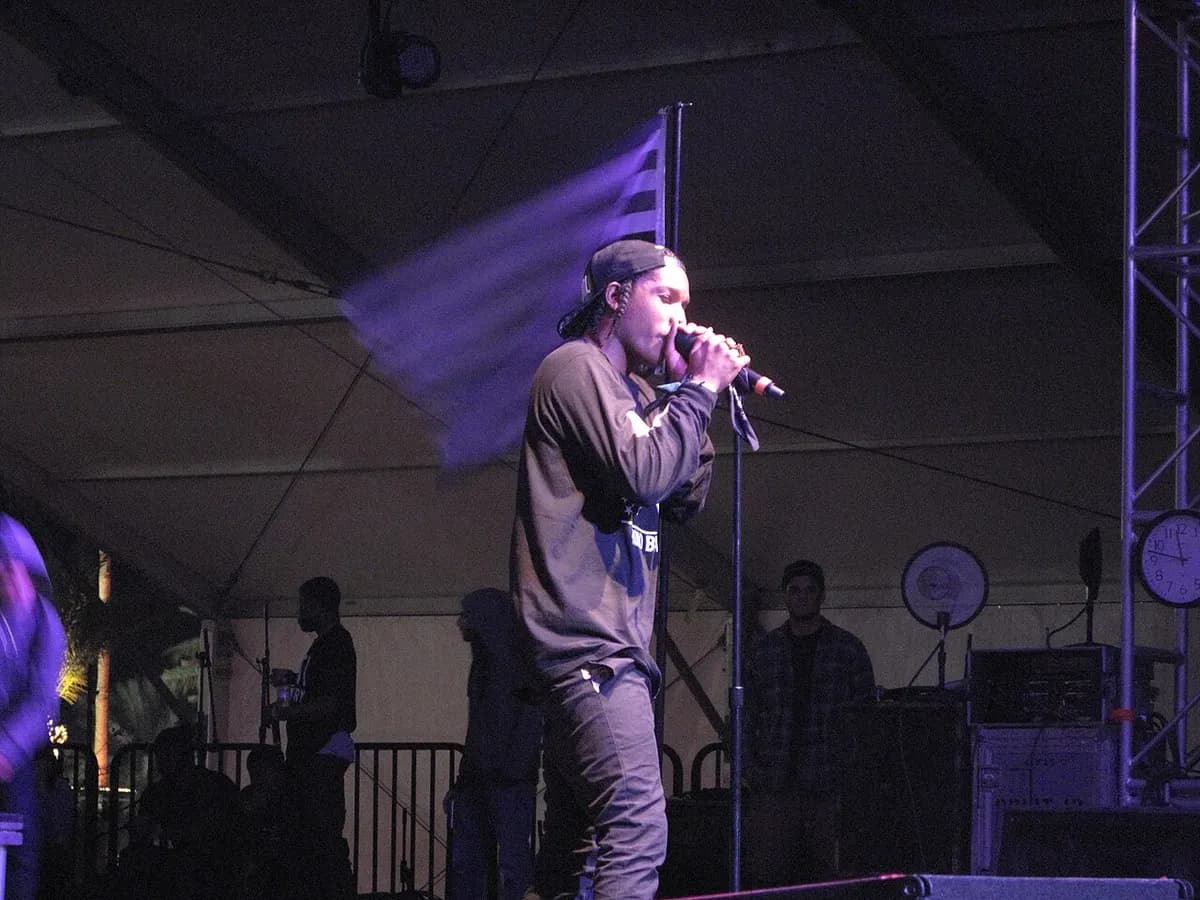
Clams Casino's Instrumental Mixtape (March 2011), a free download that Type Records reissued on vinyl that summer, put those beats into general circulation, and listeners started following the producer as much as any rapper. In October 2011 A$AP Rocky's mixtape Live.Love.A$AP, with beats by Clams Casino, SpaceGhostPurrp, Beautiful Lou and others, took the sound to a much larger audience, mixing it with Houston chopped-and-screwed choruses and a Harlem rapper's polish.
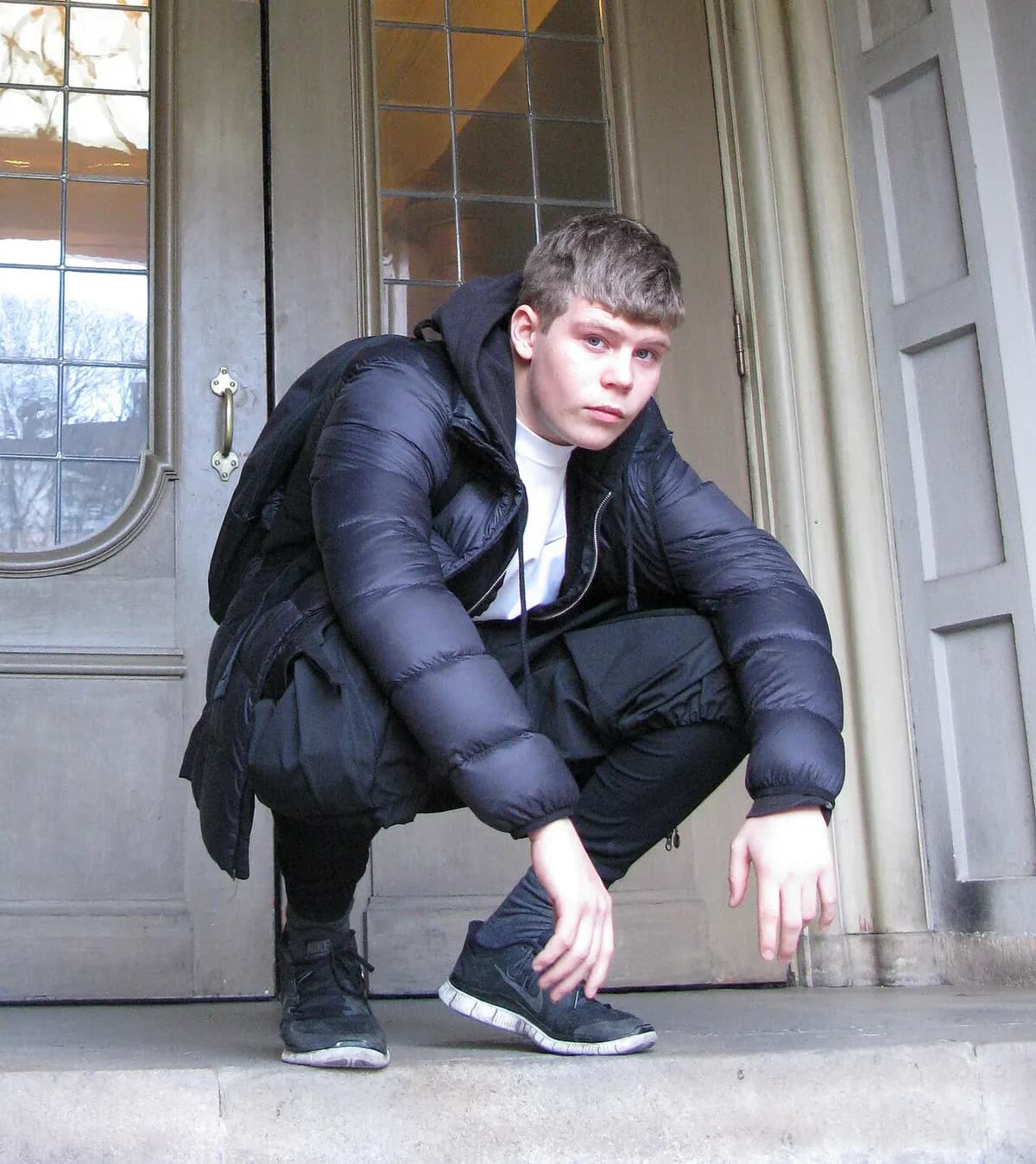
Around them the scene filled in fast: Main Attrakionz with producers such as Friendzone and Keyboard Kid, SpaceGhostPurrp and Raider Klan in Miami, and Shlohmo and Ryan Hemsworth on the beat side. In 2013 the video for "Ginseng Strip 2002" by Yung Lean, a Stockholm teenager reported at the time as sixteen, went viral and showed the style could travel far from American rap. His Sad Boys crew, with producers Yung Gud and Yung Sherman, had an internet following before they had a live show.
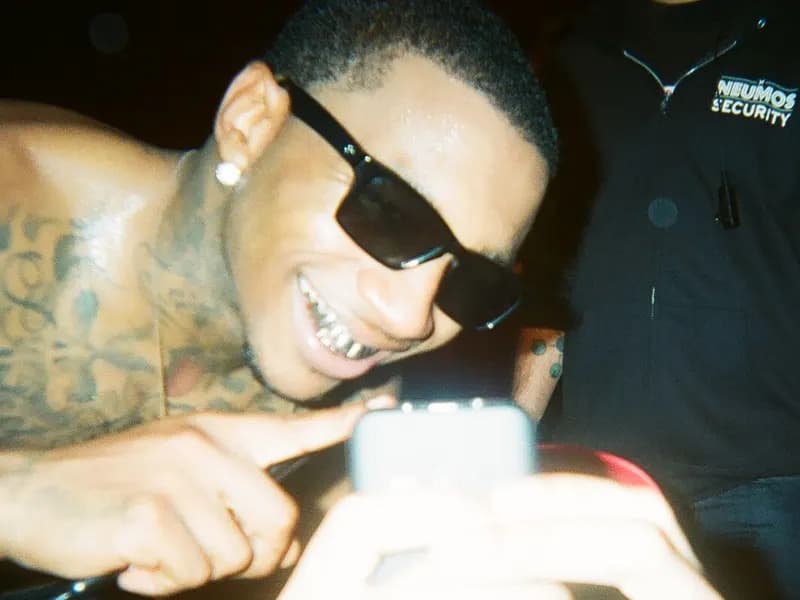
The scene's second wave ran through SoundCloud between 2014 and 2017. Bones, Lil Peep, XXXTentacion, Playboi Carti and others took the atmosphere and pushed it in several directions at once: toward emo, toward lo-fi noise, and toward the minimal ad-lib style Carti later made mainstream. By the time the term "cloud rap" faded from use, its production ideas had been absorbed: the washed-out sample layer, the reverb-heavy vocal and the sparse mix are now common in commercial rap and pop.
Key Characteristics & Sound
What identifies a cloud rap track:
- Tempo: usually counted at 60–80 BPM in half-time, which is the same grid as 120–160 BPM trap; the perceived pulse is slow and heavy.
- 808 bass: long, tuned, sliding sub-bass notes that carry the bassline as well as the kick.
- Rolling hi-hats in triplets and thirty-second-note bursts, inherited directly from trap.
- Sampled vocal pads: a female or falsetto vocal, pitched and time-stretched into an instrument, often the most prominent element in the track.
- Reverb and delay on everything, including the lead vocal, producing an unusually high wet-to-dry ratio compared with other rap.
- Sparse arrangement: four or five elements, a wide stereo field, deliberate empty space.
- Melodic, unhurried delivery: half-sung, repetitive phrasing, Auto-Tune used as an effect more than for pitch correction.
- Lyrics that drift between flexing, melancholy and non sequitur; mood carries the track more than narrative.
Where it sits among its neighbours:
| Trait | Cloud Rap | Trap | Phonk | Lo-Fi Hip-Hop |
|---|---|---|---|---|
| Emerged | ≈2010 | ≈2000 | ≈2015 | ≈2013 |
| Perceived tempo | 60–80 (half-time) | 70–80 (half-time) | 60–75 | 70–90 |
| Sample source | Ambient and vocal pads | Synth leads, orchestral | Memphis rap tapes | Jazz and soul loops |
| Mix character | Wet, reverb-heavy | Dry, punchy | Distorted, saturated | Warm, filtered |
| Vocal role | Blended into the haze | Front and centre | Chopped, buried | Usually absent |
| Reference track | I'm God | Rubber Band Man | Murder in My Mind | Instrumental playlists |
Production Techniques
Cloud rap is a producer's genre, and its techniques are unusually easy to name:
- Sample obliteration: take a recognisable vocal, pitch it down, stretch it, low-pass it and bury it in reverb until only the contour survives. Clams Casino's Imogen Heap flip on "I'm God" is the reference case.
- 808 sub-bass from the Roland TR-808 kick, tuned to notes and given a long release so it plays the bassline.
- Convolution and plate reverb with long tails, applied to drums as well as melodic parts, which is what removes the transient snap of ordinary trap.
- Bedroom production chains: FL Studio or Ableton, stock plugins, cheap microphones. The scene's sound owes as much to limited equipment as to intent.
- Sidechain-free layering: parts overlap and blur instead of ducking each other, the opposite of club-oriented mixing.
- Free distribution as part of the aesthetic: YouTube uploads with a single static image, Bandcamp, DatPiff mixtapes, Tumblr reblogs. The visual identity (vaporwave-adjacent, low-resolution, ironic) arrived with the music.
Related Styles & Descendants
The family around it:
- Trap: the rhythmic foundation cloud rap borrowed and slowed down.
- Chopped and screwed: DJ Screw's Houston tradition of pitching records down, the direct ancestor of the tempo and texture.
- Witch house: the parallel internet genre of 2009–2010 with the same reverb, the same Tumblr audience and far more occult imagery.
- Vaporwave: the sibling movement in electronic music, sharing the slowed-sample method and the online-only distribution.
- Phonk: the later Memphis-sampling style that took the murk in a harder, more distorted direction.
- SoundCloud rap and emo rap: the mid-2010s successors, adding punk and emo influence; Lil Peep is the hinge.
- Lo-fi hip-hop: the instrumental branch that kept the haze and dropped the rapping.
Key Artists & Tracks
Where to start:
- Lil B: "I'm God" (on 6 Kiss, 2009), Rain in England (2010).
- Clams Casino: Instrumental Mixtape (2011), which opens with "Motivation"; "I'm God" finally reached streaming services in 2020 after the Imogen Heap sample was cleared.
- A$AP Rocky: Live.Love.A$AP (2011), "Palace" and "Bass", both produced by Clams Casino.
- Main Attrakionz: 808s & Dark Grapes II (2011).
- SpaceGhostPurrp: Mysterious Phonk (2012).
- Yung Lean: "Ginseng Strip 2002" (2013), Unknown Memory (2014).
- Bones: TeenWitch (2014).
- Friendzone: the production duo behind Main Attrakionz's "Perfect Skies".
- Lil Peep: Come Over When You're Sober, Pt. 1 (2017), where cloud rap turns into emo rap.
- Playboi Carti: Playboi Carti (2017), where minimal, atmosphere-first rap reached the mainstream.
Three tracks for the arc: "I'm God" for the invention, "Palace" for the polish, "Ginseng Strip 2002" for the moment it became a global internet genre.
How AI Detects Cloud Rap
Cloud rap is a genuinely difficult label, and the difficulty is structural: its rhythm section is trap and its harmonic layer is closer to ambient. A classifier looking at drums will say trap; a classifier weighting timbre and spectral flatness will say ambient or downtempo. Most models land on rap, with the atmospheric styles close behind, which is a fair description of the music.
The features that actually mark it out are the high reverb-to-dry ratio, the low transient density for a rap track, and the presence of a sustained pitched pad where a rap beat normally has a dry loop. The vocal is what usually settles it: audible rapping over that texture reads as hip-hop, and the same instrumental without a vocal frequently reads as downtempo or lo-fi. Try a track in the Genre AI music genre detector.
Testing this style in Genre AI ourselves, cloud rap shows the widest gap we see between a vocal track and its own instrumental. With the rapping present, results land on Hip-Hop or Trap with solid confidence. Strip the vocal (Clams Casino's Instrumental Mixtape is a good test case) and the same beats drift toward Ambient, Downtempo and Trip-Hop, because without a voice there is very little percussive attack left for the model to hold on to. Yung Lean and the Sad Boys catalogue behaves differently again: the Auto-Tuned melodic delivery pushes results toward Pop more often than any other corner of rap we have tested.