Power pop is the strain of guitar rock that keeps the volume of the late 1960s and the songwriting discipline of the singles that came before it: two and a half minutes, a chorus that arrives early, ringing chords, and three voices stacked in harmony over a hard backbeat. Pete Townshend coined the name in 1967 to describe The Who. Since then the style has had one huge hit, a handful of smaller ones, and a long life as a critics' and musicians' favourite with modest sales.
This guide covers where the style came from, what separates a power pop record from plain melodic pop-rock, why its central bands failed commercially, and how it fed pop punk and Britpop. To hear how a jangling three-minute single reads to a classifier, run a few seconds through our free AI music genre detector.
What Is Power Pop?
Power pop is a set of songwriting choices before it is a sound. The songs are short and front-loaded: a hook early, a chorus within the first minute, little instrumental development and no fade into a jam. The arrangements are loud, with distorted rhythm guitar, a snare hit hard and the whole band audibly playing at once, but the chords stay legible underneath the distortion. That legibility is what separates it from hard rock.
Its second defining feature is emotional: bright arrangements carrying unhappy lyrics. The standard power pop subject is longing, rejection, or a specific evening that went wrong, delivered over a major-key progression and cheerful harmonies. Big Star's "September Gurls" and The Raspberries' "Go All the Way" both sound like celebrations and read on paper like complaints. Writers often describe the style as bittersweet for this reason. Wikipedia's summary of the genre notes a related habit: lyrics that dwell on adolescent longing and refer to "tonight" or "Saturday night".
The harmonic vocabulary is the third marker. Power pop lives in major keys, but it borrows chords often: a flattened seventh dropped into a bright verse, a sudden minor turn before the chorus, suspended voicings that hang before resolving. The songs stay obviously pop while the chord changes keep taking small detours.
History & Origins
The term is precisely dated. In May 1967, promoting The Who's single "Pictures of Lily", Pete Townshend told Keith Altham of the New Musical Express: "Power pop is what we play — what the Small Faces used to play, and the kind of pop the Beach Boys played in the days of 'Fun, Fun, Fun'." He was contrasting direct singles such as "I Can't Explain" (1965) and "Substitute" (1966) with the more experimental direction bands like the Beatles were taking, and he was describing his own band, not naming a movement. The wider use of the term came only after the early-1970s records of Badfinger, the Raspberries, Big Star and Todd Rundgren.
The raw material was already in place: The Beatles' singles for melody and vocal arrangement, The Who for volume and the crashing suspended chord, The Byrds for the ringing 12-string guitar, and The Beach Boys for stacked harmony. The style developed mainly among American musicians who had come of age during the British Invasion and kept writing short singles after 1969, while much of rock moved towards long album tracks and virtuosity.
Badfinger, signed to the Beatles' own Apple Records, provided the first run of hits with "Come and Get It" (1969), "No Matter What" (1970) and "Day After Day" (1971), and paid for the resemblance by being dismissed as imitators. In Cleveland, The Raspberries, fronted by Eric Carmen, cut one of the genre's defining singles: "Go All the Way", released on Capitol in July 1972, reached number 5 on the Billboard Hot 100 and sold more than 1.3 million copies. Its shape became a template: hard guitar riff, sweet chorus, the two joined head to head.
The band most often named as the genre's centre sold almost nothing. Big Star formed in Memphis in 1971 around Alex Chilton, already a veteran of The Box Tops, and Chris Bell, with Jody Stephens on drums and Andy Hummel on bass, recording at Ardent Studios with the engineer John Fry. #1 Record (1972) was well reviewed and badly distributed: after Columbia took over distribution of the Stax catalogue, existing copies were even pulled from shops. Radio City (1974), which contains "September Gurls", ran into a dispute between Stax and Columbia and sold around 20,000 copies. A third album, recorded from September 1974 into early 1975, did not get a proper release until 1978, under the titles Third and Sister Lovers. Bell left after the first record and died in a car accident in December 1978, aged 27. The band's reputation was built afterwards, as R.E.M., the Replacements and others cited it during the 1980s.
Other 1970s pieces belong in the same account: Todd Rundgren's Something/Anything? (1972), The Flamin' Groovies' "Shake Some Action" (1976), the Dwight Twilley Band's "I'm on Fire" (1975), and The Nerves, a San Francisco band that moved to Los Angeles, whose self-released 1976 EP contained Jack Lee's "Hanging on the Telephone", a hit for Blondie in 1978.
The commercial peak came between 1978 and 1980, when punk and new wave had made short, sharp guitar singles marketable again. Cheap Trick, from Rockford, Illinois, took the style to arenas. At Budokan, billed as the band's Tokyo shows of April 1978 (producer Jack Douglas later said the released audio came mostly from a smaller Osaka concert), came out in Japan that October and in the United States in February 1979, and made "I Want You to Want Me" and "Surrender" standards. Then The Knack's "My Sharona" spent six weeks at number one on the Billboard Hot 100 in August and September 1979.
That success turned against the genre. The song's constant airplay that summer produced a popular and critical backlash against The Knack and then against power pop in general. Once the band failed to follow it up, labels stopped signing power pop acts, and most of the 1970s bands broke up in the early 1980s. That wave included 20/20, The Records ("Starry Eyes", 1979), Illinois's Shoes and Detroit's The Romantics, whose "What I Like About You" (released December 1979) was a fixture of early MTV.
Through the 1980s the style survived in fanzines, on college radio and among bands who never used the label: The dB's, The Plimsouls and The Replacements, who wrote a song called "Alex Chilton". The revival arrived with the 1990s. Teenage Fanclub's Bandwagonesque (1991) and Matthew Sweet's Girlfriend (1991) put the sound back on college radio; Jellyfish (Bellybutton, 1990; Spilt Milk, 1993), The Posies, Material Issue, Redd Kross and Velvet Crush worked the same ground. Rykodisc reissued the Big Star albums in 1992, and the band reformed in 1993 with Chilton and Stephens joined by Jon Auer and Ken Stringfellow of The Posies. From August 1998 the International Pop Overthrow festival in Los Angeles, named after Material Issue's 1991 debut album, gave the scene a regular meeting point.
Some later bands sold far more than the originals. Weezer's 1994 debut joined power pop melody to distorted alternative rock, and Fountains of Wayne had their biggest hit with "Stacy's Mom" from Welcome Interstate Managers (2003), a song built on the same riff-and-chorus plan as the Raspberries' singles.
Key Characteristics & Sound
What identifies a power pop record:
- Tempo: roughly 120–170 BPM, straight eighths, a hard backbeat with the snare high in the mix.
- Song length: two to three and a half minutes, usually verse, chorus, verse, chorus, bridge, chorus, with the hook arriving early.
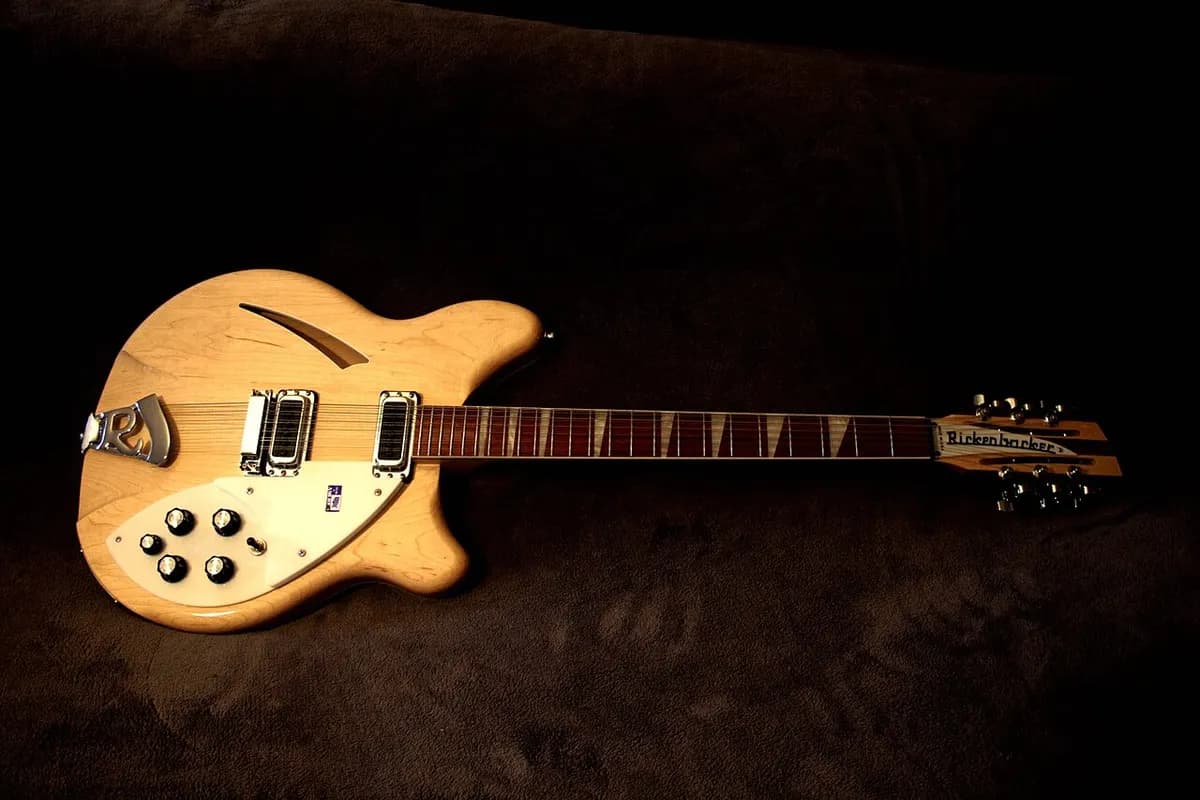
- Ringing chords: open voicings, suspended fourths and the 12-string jangle inherited from The Byrds, kept bright under the distortion.
- Vocal harmony: two or three parts stacked in thirds, often double-tracked, modelled on The Beatles and The Beach Boys.
- Major key with borrowed chords: flattened sevenths and sixths, unexpected minor turns, secondary dominants pushing into the chorus.
- Bass as a countermelody, on the McCartney model.
- Handclaps and tambourine on the chorus, borrowed from mid-1960s pop production.
- Lyrics of longing: unrequited attachment, a name in the title, "tonight" or "Saturday night", sung over a cheerful arrangement.
Where it sits among its neighbours:
| Trait | Power Pop | Pop Punk | Britpop | Garage Rock |
|---|---|---|---|---|
| Peak period | 1972–1980 | 1994–2005 | 1994–1997 | 1963–1967 |
| Typical BPM | 120–170 | 150–200 | 100–150 | 120–170 |
| Signature colour | Ringing 12-string | Fast power chords | Retro British guitars | Fuzz and combo organ |
| Vocals | Stacked harmony | Nasal, gang chorus | Accented, laconic | Shouted, snarling |
| Track length | 2–3.5 min | 2–3 min | 3–5 min | 2–3 min |
| Reference track | September Gurls | All the Small Things | Wonderwall | 96 Tears |
Instruments & Production
The gear is unusually specific for a style defined by songwriting:
- Rickenbacker guitars: the 360/12 for chiming 12-string figures and the 330 for rhythm.
- Loud valve amplifiers: Vox AC30 and Marshall stacks driven to the edge of breakup, giving weight without losing chord definition.
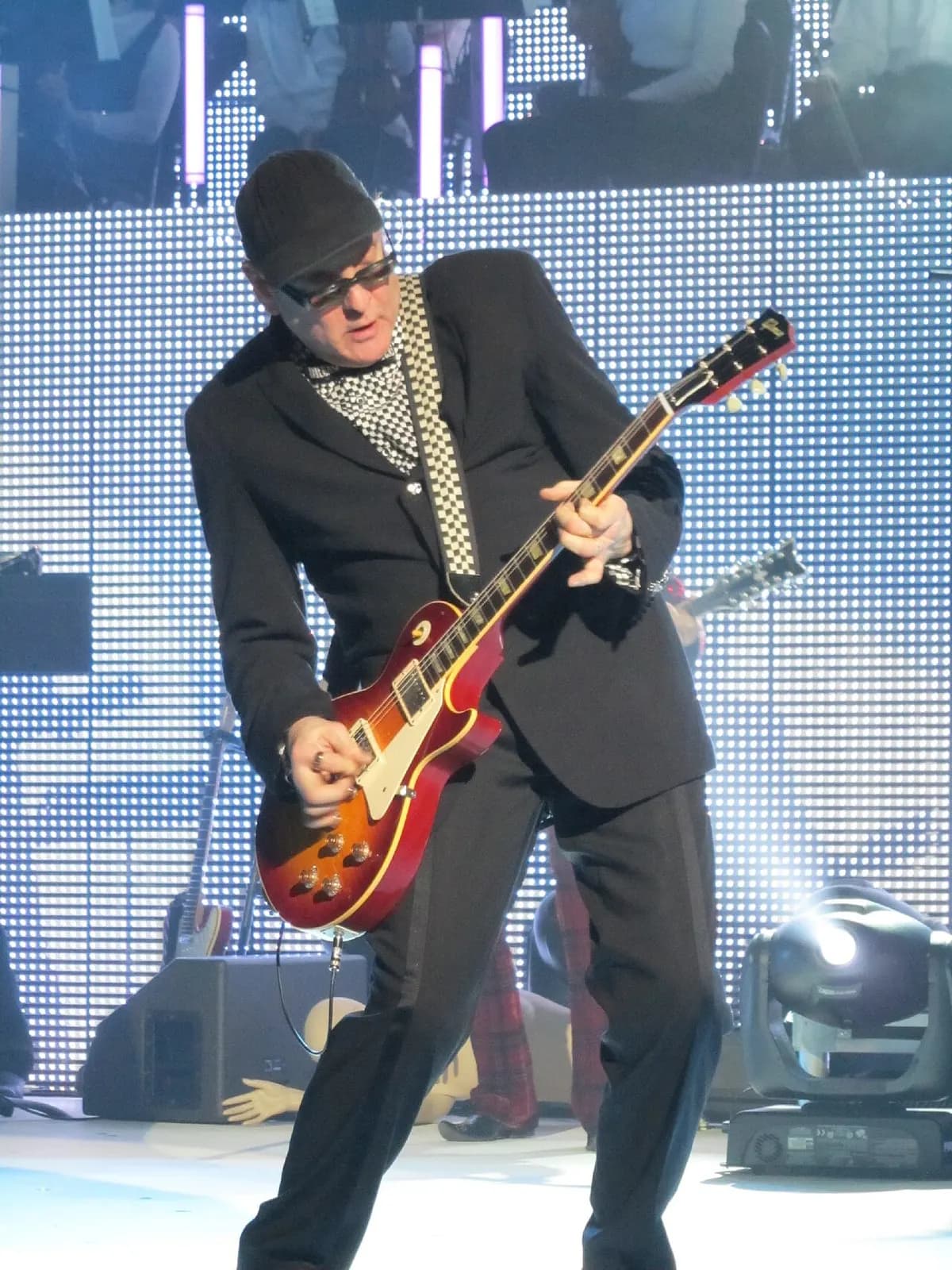
- Gibson SG and Les Paul for the crunching end of the sound, following Townshend and The Who; Rick Nielsen of Cheap Trick built the arena version around Hamer guitars.
- Melodic bass on a Rickenbacker 4001 or Hofner, mixed loud enough to be heard as a second tune.
- Drums recorded dry and close, snare-forward.
- Double-tracked lead vocals and wide-panned rhythm guitars, mid-1960s studio habits applied to late-1970s equipment.
- Piano, Mellotron and acoustic 12-string, used sparingly to thicken choruses.
Two recording histories show the range. Big Star worked at Ardent Studios in Memphis with John Fry engineering, so records that sold poorly still sound like professional studio releases. Shoes, formed in Zion, Illinois, in 1974, made Black Vinyl Shoes (1977) at home and put it out on their own Black Vinyl label; they later recorded three albums for Elektra, beginning with Present Tense (1979).
Related Styles & Descendants
The family around it:
- Jangle pop: the 1980s American strain that kept the ringing guitars and dropped the volume; The dB's, Let's Active, early R.E.M.
- Mod revival: the British parallel of 1978–1981, The Jam at its centre, sharing the tempo and the tailoring.
- New wave: the commercial category power pop was marketed inside during 1979, which is why so many of its records are filed there.
- Pop punk: a close descendant with the same hooks and harmonies, faster and with punk phrasing; Green Day is the best-known case.
- Britpop: the mid-1990s British revival of the same 1960s sources, arranged for bigger rooms.
- Indie rock: the American underground that adopted Big Star as an influence in the 1980s, through R.E.M. and the Replacements.
- Garage rock: the same 1960s starting point taken towards noise and amateurism.
Key Bands & Tracks
Where to start:
- Badfinger: "No Matter What" (1970), "Day After Day" (1971).
- The Raspberries: "Go All the Way" (1972).
- Big Star: #1 Record (1972) and Radio City (1974); "September Gurls", "Thirteen", "In the Street".
- The Flamin' Groovies: "Shake Some Action" (1976).
- Dwight Twilley Band: "I'm on Fire" (1975).
- Cheap Trick: "Surrender" (1978) and At Budokan (US release 1979).
- The Knack: "My Sharona" (1979), six weeks at US number one.
- Shoes: Black Vinyl Shoes (1977), Present Tense (1979).
- The Records: "Starry Eyes" (1979); 20/20: "Yellow Pills" (1979).
- The Romantics: "What I Like About You" (1980), "Talking in Your Sleep" (1983).
- Teenage Fanclub: Bandwagonesque (1991); Matthew Sweet: Girlfriend (1991).
- Jellyfish: Spilt Milk (1993); The Posies: Frosting on the Beater (1993).
- Weezer: the 1994 debut; Fountains of Wayne: "Stacy's Mom" (2003).
How AI Detects Power Pop
Power pop is hard for a classifier because it has no exclusive sonic marker. Distorted rhythm guitar, a straight backbeat, major-key harmony, stacked vocals and a three-minute form are all shared with larger genres. What a model can pick up is the balance: clear chords through moderate distortion, a lot of the track taken up by sung chorus, and a steady tempo.
Production era is likely to matter as much as the songwriting. Records cut between 1972 and 1980, with their mid-range-forward, dry-drum sound, are likely to sit near rock and roll and soft rock, which in Genre AI's Rock family are the RocknRoll and Soft / Pop Rock labels. 1990s revival records, with heavier compression and thicker guitars, are more likely to drift towards alternative and indie rock, the Indie / Alternative label. Try a track in the Genre AI music genre detector and compare a 1974 single with a 1994 one.
Genre AI's production taxonomy has no power pop class, and the phrase is not among any label's text prompts. Pop is a broad label with no subgenres, and because the model prefers a family that has subgenres whenever one is in its top five, a guitar-band record is likely to come back under Rock. Within Rock, the likely answers are Soft / Pop Rock for the sweeter 1970s singles, Hard Rock when the guitars are pushed as hard as Cheap Trick's, RocknRoll for the dry, period-sounding records, and Indie / Alternative for 1990s revival bands such as Teenage Fanclub or Matthew Sweet; the alternatives shown will be other Rock labels. Faster, pop-punk-leaning songs may land on Punk, whose prompts include "pop punk". A quiet acoustic track such as Big Star's "Thirteen" may move to Folk Rock, or out of Rock to Folk. These are expectations from how the labels are defined, not measured results.