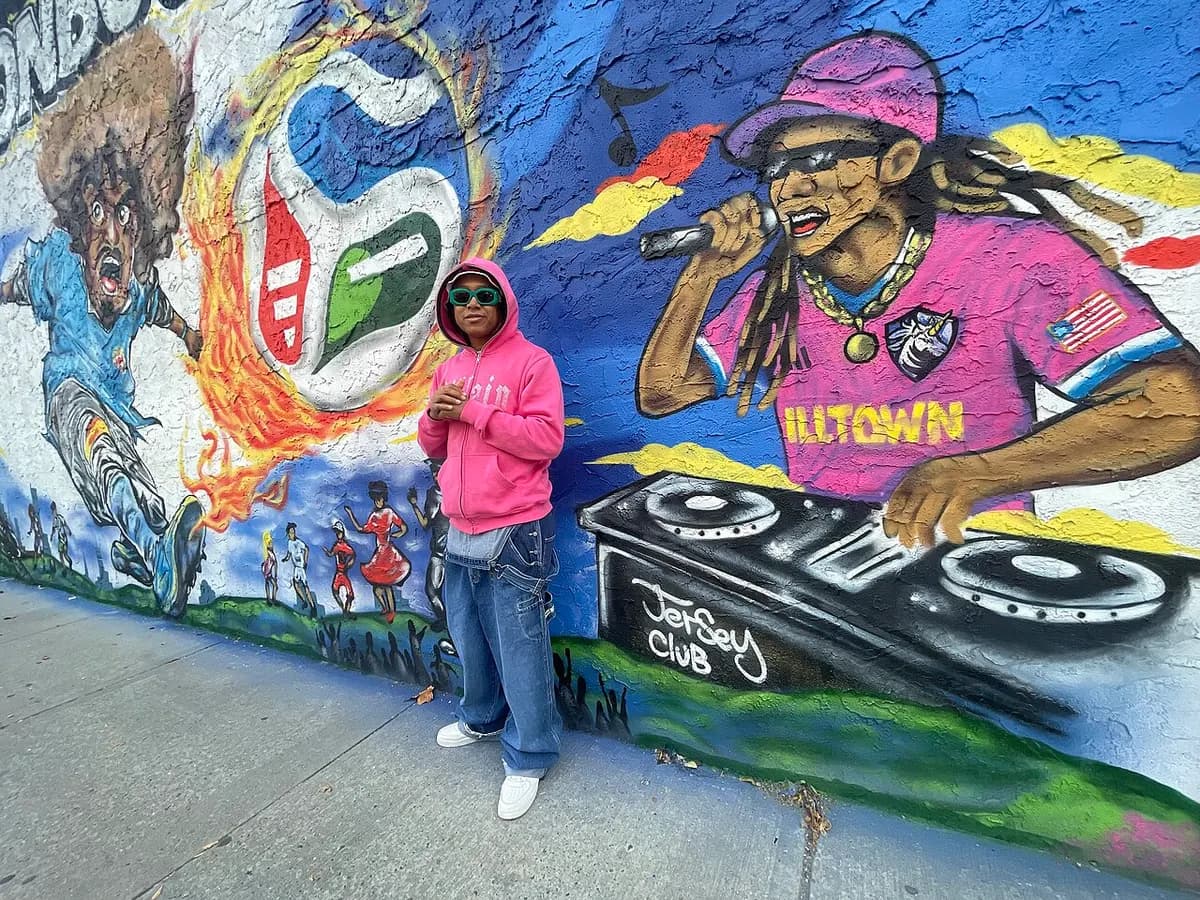
Jersey club is a fast, bouncy dance music from Newark, New Jersey. It runs at roughly 130–140 BPM on a syncopated kick-drum pattern, usually heard as five kicks in a bar with the last ones rolling in a triplet, and it is topped with chopped and retriggered vocal samples, stuttering hooks and stock sound effects such as the famous "bed squeak". It grew out of Baltimore club around the turn of the 2000s, developed through local DJ crews and dance battles, and in the 2020s crossed into mainstream rap, pop and K-pop.
This hub covers the genre's sound in detail: how the beat is built, the production tools, the scene's lineage from Baltimore and the regional styles around it, the producers to know, and how it compares with footwork, house and drill. For a shorter, story-led introduction, see our blog post What Is Jersey Club Music?. To check how a club track reads to a classifier, drop a clip into our free AI music genre detector.
What Is Jersey Club?
Jersey club is a music made by DJs for dancers. Tracks are short, repetitive and functional: they give dancers a beat to battle to and give DJs something that mixes cleanly. Most are built from a sample (an R&B hook, a rap line, a pop chorus, a TV clip) chopped into fragments and fired rhythmically over the kick pattern, so that a recognisable song becomes a percussion instrument. That is also why the genre spreads through remixes: a "Jersey club remix" of a hit is one of the scene's basic formats.
It belongs to a wider family of East Coast club music, with Baltimore club as the parent and Philly club as a later sibling, and the three share a tempo range, a sampling style and a dance culture. The Jersey variant stands apart in its kick pattern: the kicks cluster and bounce instead of marching, and the vocal chops tend to be faster and more aggressive.
Dance and music grew up together here. The Running Man, which The Fader describes as the centre of Jersey club dance, was worked out by dancers at Jersey club parties in late 2009, and related moves such as the Pattycake use the same footwork. Many tracks are named after dances or made for specific crews. The relationship is similar to that of footwork in Chicago, where the music is also named after, and built for, the dancing.
History & Origins
The story begins one state south. Baltimore club developed in the late 1980s and 1990s as a fast, breakbeat-heavy hybrid of house and hip-hop, around 130 BPM, built on chopped vocal phrases and two drum breaks above all: Lyn Collins' "Think (About It)" (1972) and the break from Gaz's 1978 disco record "Sing Sing". Baltimore records circulated on vinyl and mixtapes along the I-95 corridor, and DJs in Newark started playing them.
DJ Tameil is widely credited as the principal pioneer of the local sound. He started with Chicago house mixtapes, then got to know the Baltimore scene, and in 2001 released the Dat Butt EP on his own label, Anthrax Records; he called the style "Brick City club", after Newark's nickname. Around the same time DJ Tim Dolla and Mike V began producing their own club tracks as the Brick Bandits. That crew, which Tameil later joined, became the scene's backbone: a DJ and producer collective that ran parties, released tracks and trained the next generation. Tim Dolla's "Swing Dat" was named after a popular dance move.
Through the late 2000s and early 2010s the sound spread via high-school parties, dance battles, YouTube dance videos and SoundCloud. A second wave of producers, among them DJ Sliink, DJ Jayhood, Nadus and UNiiQU3, took it to international club and festival stages and into the electronic music press. Baltimore and Jersey club also fed the 2010s US and UK bass scenes, where many producers adopted the triplet kick pattern.
The crossover came in the early 2020s. Cookiee Kawaii's "Vibe (If I Back It Up)", released in 2019, went viral on TikTok in February 2020 and was described at the time as perhaps the first true Jersey club hit on the platform. In 2022 the rhythm reached the charts: Lil Uzi Vert's "Just Wanna Rock" was built on a Jersey club beat and peaked at number 10 on the Billboard Hot 100, and Drake's Honestly, Nevermind used the bed squeak on "Currents" and the Baltimore club five-beat kick on "Sticky". The K-pop group NewJeans brought the rhythm to "Ditto" (2022) and, more openly, "Super Shy" (2023). In Newark, Bandmanrill's 2021 viral clip of drill lyrics over a Jersey club beat led to his single "HeartBroken", produced by MCVertt, and to a style often called "Jersey drill" or club rap.
The Jersey Club Beat & Sound
What makes a track sound like Jersey club:
- Tempo: around 130–140 BPM, with many tracks near 135–140.
- The kick pattern, which is the signature. Instead of four even kicks per bar, the kicks cluster, commonly described as kicks on the first beats followed by a quick triplet roll into the next bar, so you hear five hits per bar. Wikipedia describes the result as a tresillo or shuffled-triplet pattern; it gives the beat its lurching bounce.
- Vocal chops: short fragments of a hook, retriggered in rhythm, pitched up or down, stuttered and repeated. They are often the most melodic element in the track.
- Stock sounds: the bed squeak, taken from the intro of Trillville's 2004 single "Some Cut" (produced by Lil Jon) and, according to Vice, first chopped into a club pattern by DJ Tameil that same year; also gunshot and reload effects, horn and siren stabs and shouted phrases. Together they mark a track as club music.
- Claps and snares: sharp, dry claps on the backbeat, plus snare rolls into transitions.
- Hi-hats: fast, often in triplets or rolls, filling the top end.
- Structure: two to three minutes, with simple builds and drops designed for DJs and dancers.
- Harmony: minimal; when there is a melody, it usually comes from the sampled song, not from new chords.
How it compares with its closest relatives:
| Trait | Jersey Club | Baltimore Club | Footwork | House |
|---|---|---|---|---|
| Origin | Newark, NJ, late 1990s–2000s | Baltimore, MD, late 1980s–1990s | Chicago, 2000s | Chicago, 1980s |
| Typical BPM | 130–140 | Around 130 | Around 160 | 118–128 |
| Kick pattern | Syncopated, five-kick bounce | Breakbeat-driven, steady kicks | Sparse, stuttering, polyrhythmic | Four-on-the-floor |
| Core sample | Chopped hooks, bed squeak | "Think" and "Sing Sing" breaks | Chopped vocals, 808s | Soul vocals, piano |
| Dance | Battles, crew routines | Club, breakdance roots | Footwork battles | Club, house dance |
Production Tools & Techniques
Jersey club has always been a bedroom-producer music. The tools are cheap and the techniques are learned from other producers:
- DAWs: FL Studio is widely used, as it is across US rap and club production; its step sequencer suits the kick pattern.
- Sample chopping: a vocal is sliced into short pieces mapped across pads or keys and played as a rhythm, often with pitch automation for builds.
- Drum kits: shared kits of club kicks, claps and effects circulate among producers, which is why the same sounds recur across hundreds of tracks.
- Remix-first workflow: a popular song is turned into a club edit within days of release, and the speed of response is part of the culture.
- DJ-friendly arrangement: clean intros and outros, a steady tempo and repetitive sections let DJs blend tracks quickly.
Because so much of the genre is remixes of copyrighted songs, many classic tracks were shared as free downloads or on SoundCloud instead of official releases, which makes the discography harder to trace than most genres of the same era.
Regional Scenes & Related Styles
- Baltimore club: the parent style, with DJ Technics, Rod Lee, Scottie B and the Unruly Records circle; later carried on by artists such as TT the Artist.
- Philly club: Philadelphia's own scene, which grew in the late 2000s under the influence of the Jersey style.
- Jersey drill / club rap: rappers over club beats; Bandmanrill and producer MCVertt are central names.
- Footwork: Chicago's faster, sparser battle-dance music, the Midwestern cousin of the East Coast club styles.
- Breakbeat: the wider family of break-based dance music that Baltimore club drew on.
- UK garage and UK bass: they share the chopped-vocal approach, and in the 2010s borrowed club rhythms.
- Moombahton: another US DJ-born hybrid of the same era, slower and Latin-leaning.
Key Producers & Tracks
Names and records to start with:
- DJ Tameil: the Newark pioneer who bridged Baltimore club and the Jersey sound; Dat Butt EP (2001).
- Brick Bandits: the collective that organised and spread the scene; many of the producers below came through it.
- DJ Tim Dolla: Brick Bandits co-founder, producer of "Swing Dat".
- DJ Sliink: took the genre to festival and EDM stages in the 2010s.
- UNiiQU3: started DJing in 2009, when she was probably the only woman DJ in the scene; her "Microdosing" soundtracked the Versace x Fendi "Fendace" runway show in 2021.
- Nadus and DJ Jayhood: 2010s producers of club edits and originals; Jayhood's singles include "Patty Cake".
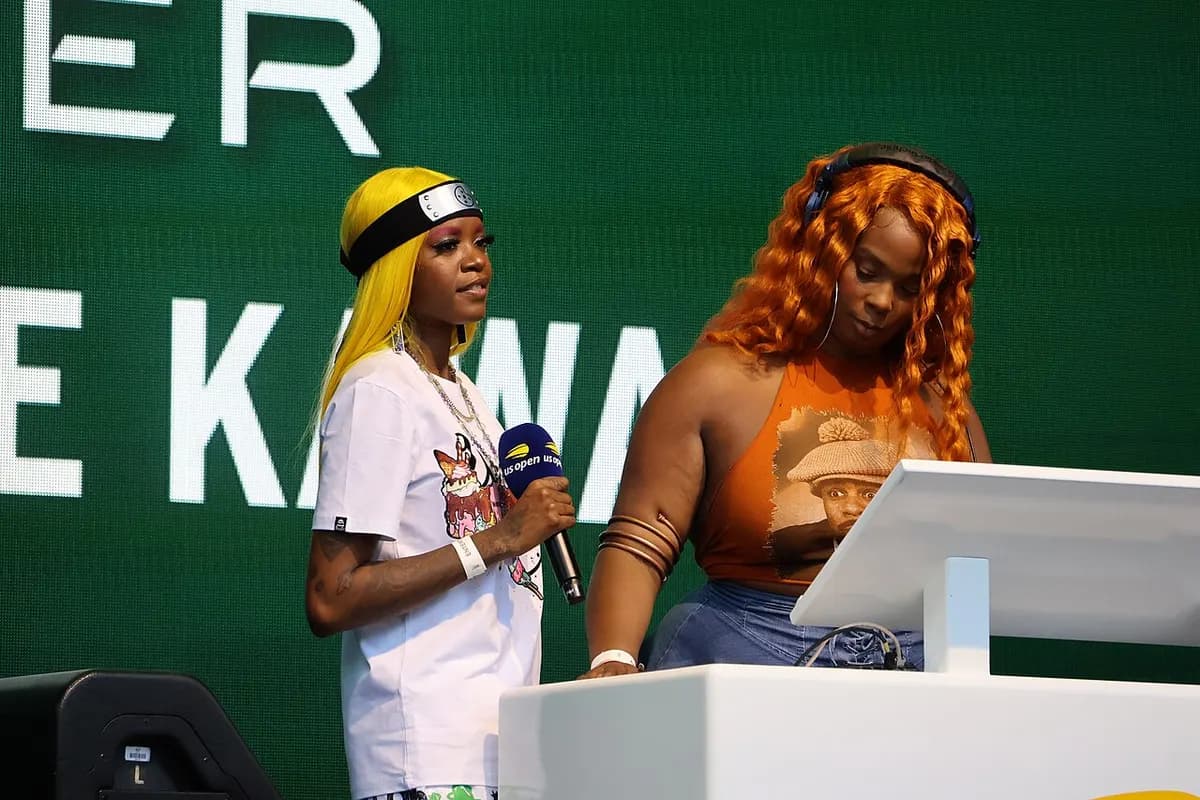
- Cookiee Kawaii: "Vibe (If I Back It Up)" (2019), the track that went viral on TikTok in 2020.
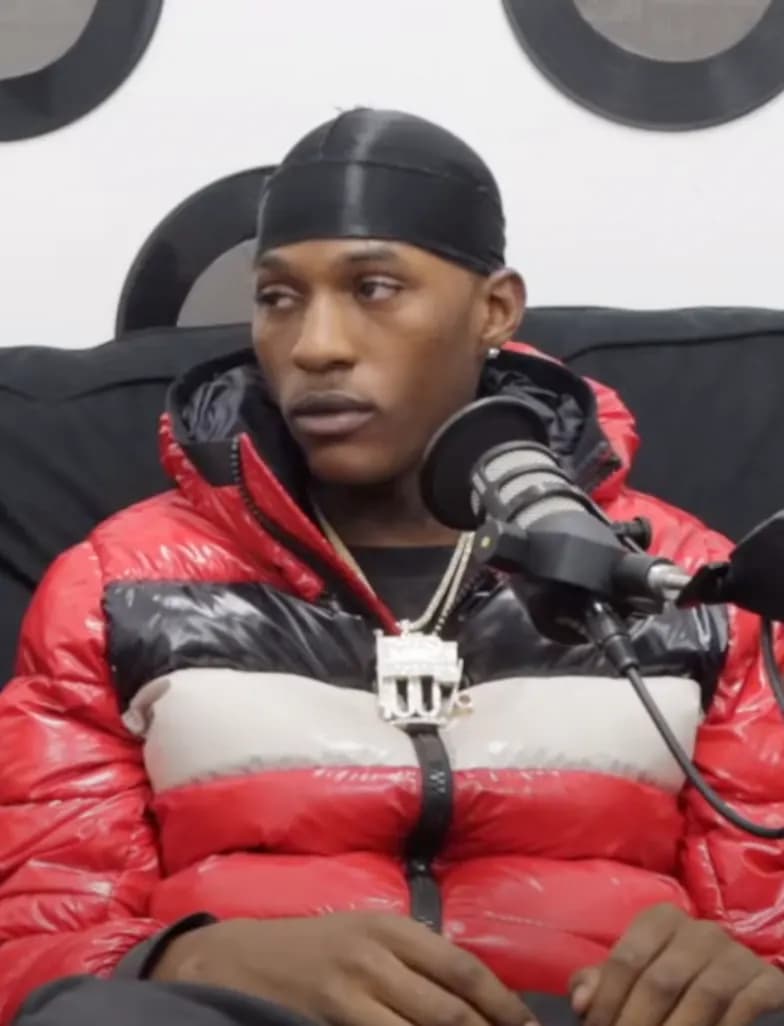
- Bandmanrill & MCVertt: "HeartBroken" and the Jersey drill wave of the early 2020s.
- Lil Uzi Vert: "Just Wanna Rock" (2022), a top-10 rap hit on a Jersey club beat.
- NewJeans: "Ditto" (2022) and "Super Shy" (2023), Jersey club rhythm in K-pop.
How AI Hears Jersey Club
The kick pattern is the genre's fingerprint, and it is also what makes it awkward for a general classifier. A model listening to a few seconds of audio hears a dense, syncopated low-end pulse at a dance tempo, sharp claps, fast hats and fragments of a sung or rapped vocal. Those features point clearly to electronic dance music with hip-hop material in it, but most taxonomies, including the broad ones used in genre detection, have no separate slot for East Coast club music.
The vocal chops add another twist. Because Jersey club tracks are often built from R&B and rap hooks, the vocal timbre can pull a classifier toward rap even though the rhythm is pure club. Try a track and its source song in the Genre AI music genre detector and compare: the difference between the two readings shows how much the club rhythm changes the picture. Our article on how AI genre detection works explains why rhythm and timbre compete in a model like this.
Genre AI's production taxonomy has no Jersey club label, so the answer will be a parent category. The most likely one is the coarse Electronic Dance label, and the result then names one of its sub-labels: Breakbeat / Drum & Bass or House are the probable picks for the dance tempo and syncopated drums, with the other Electronic Dance sub-labels (Tech House, Electro and so on) as the possible alternatives. When a rapper carries the whole track, as in club rap, the Rap Hip-Hop label may rank higher and win instead, with Pop Rap or Trap as the likely answer. Only sibling labels of the winning category appear as alternatives, so the result will not show "electronic or hip-hop" side by side, and the R&B label, which has no sub-labels, is unlikely to come up even on tracks built from an R&B hook. The neighbour Jersey club is most likely to be mistaken for is breakbeat: both have off-grid kicks and chopped samples, and the five-kick bounce that defines Jersey club is a rhythmic detail a short listening window may not resolve.